
AGFC Outdoor Education Initiative Full STEM Ahead
ON 04-30-2026
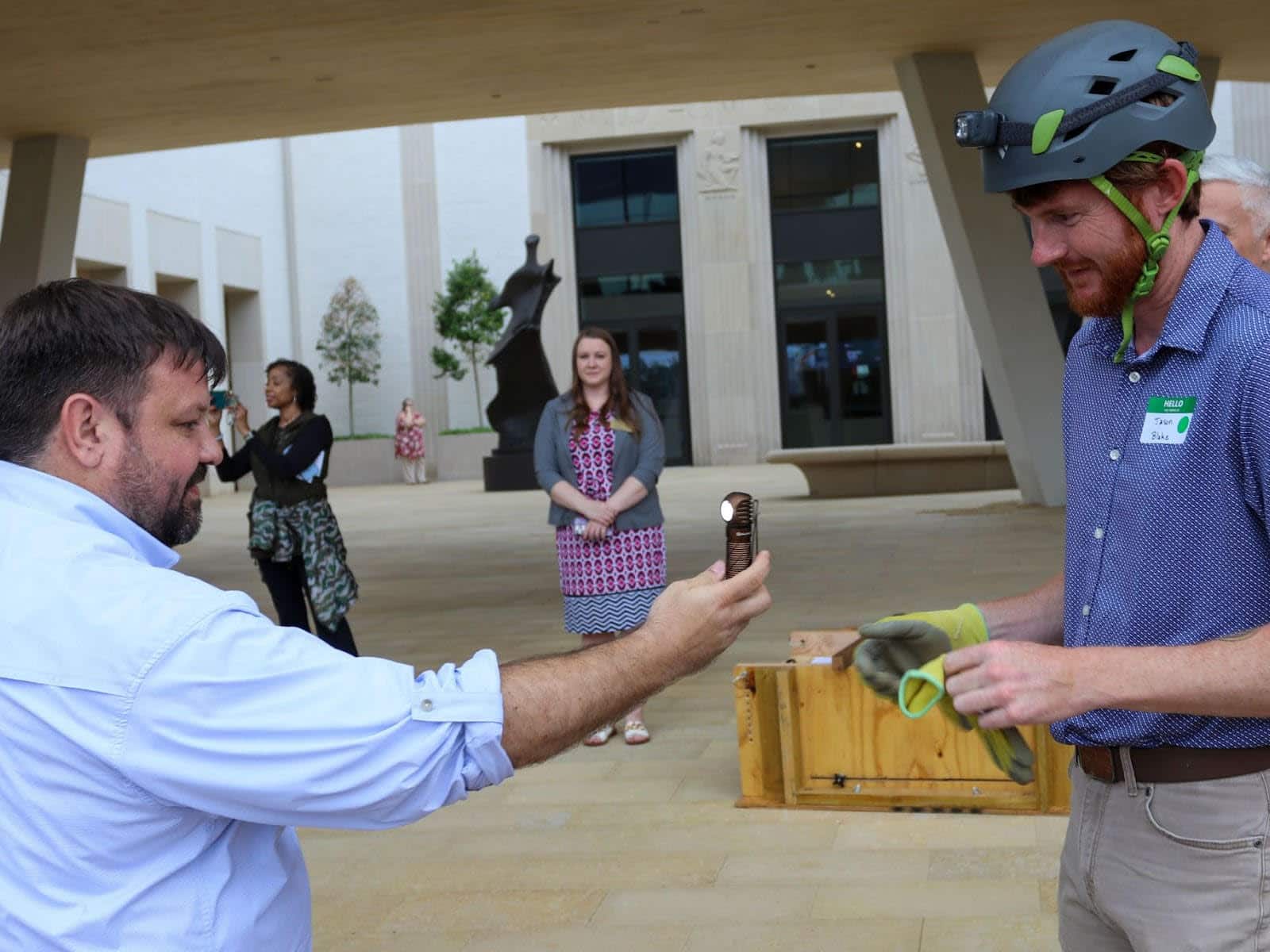
More than 100 educators and administrators from across Arkansas got an up-close look at some of the ways outdoor education can be incorporated into their schools at the Arkansas Department of Education’s STEM Advisory Partners Meeting on Tuesday at the Museum of Fine Arts in Little Rock.
In addition to keynote speakers and discussions on how to incorporate more science, technology, engineering and math curricula at their schools, attendees saw many new components aligned with Gov. Sarah Huckabee Sanders’ Outdoor Education Initiative, preparing students for future careers and contributions in conservation, outdoor recreation and tourism in Arkansas.
Derek Ratchford, Arkansas Outdoor Education Manager for the AGFC, said the goal of the initiative is to highlight everything that makes Arkansas true to its Natural State nickname.
“It’s about what we can give back and what we can do to prepare them for the workforce and what we can do to connect them with conservation,” Ratchford said. “But just like all STEM programming, the most important thing we can teach our children is how to ask questions, how to question and build that curiosity around them. Nature is everywhere; outdoor education can be everywhere, too. It’s just sitting there through a 2-inch piece of glass. It’s our job to take students on the other side of that window and learn through that curiosity.”
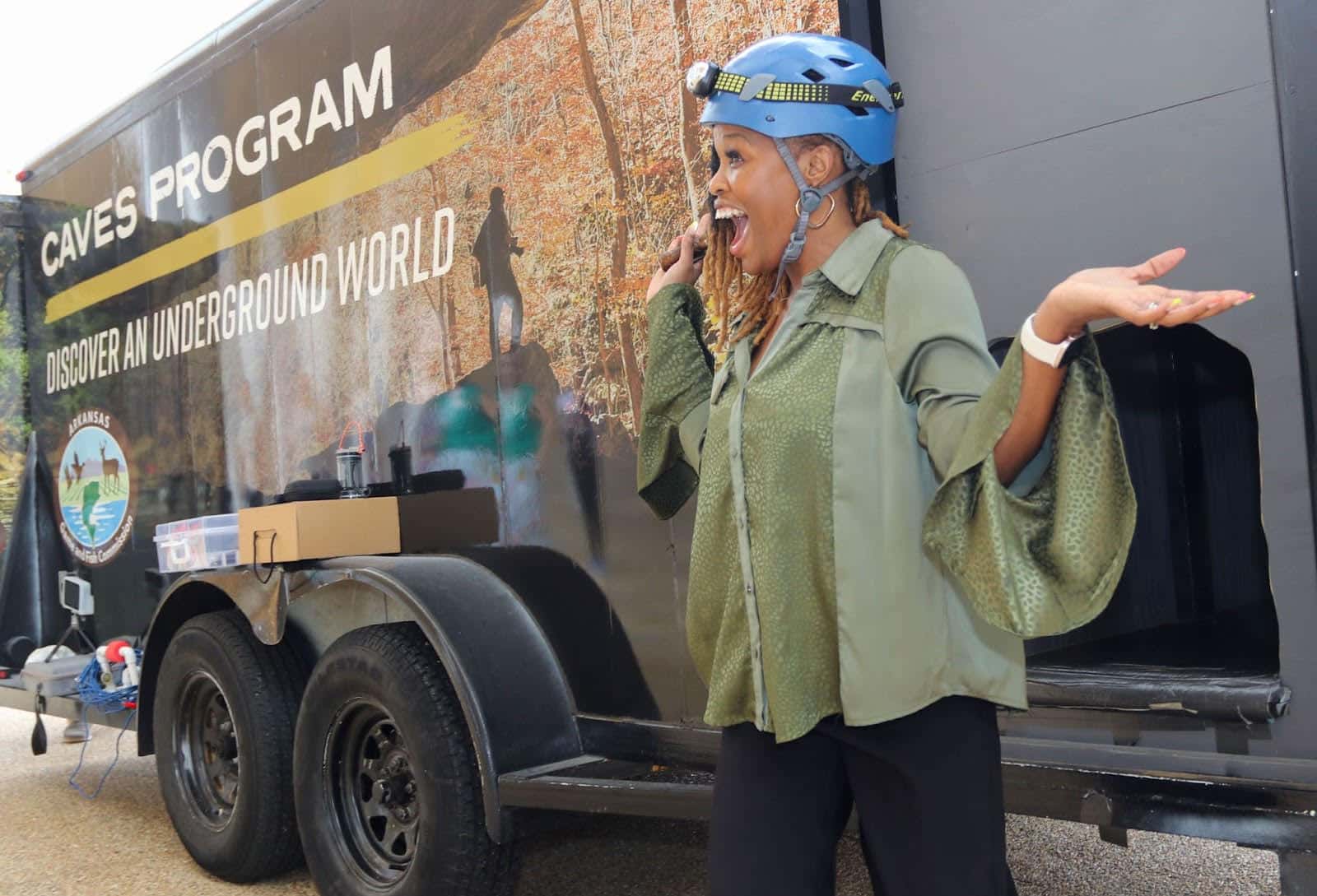
Ratchford manned the AGFC’s new mobile cave exhibit at the event, which was created by the Mt. Judea/Deer School District to foster imaginative lessons about Arkansas’s underground world.
“The cave is a great way to capture students’ attentions while you’re teaching them about science, and not just natural sciences, but the concepts of data gathering and analysis,” Ratchford told a group of educators in attendance.
He had them carry a carbon dioxide monitor through the cave and held up the results once they were out. As the teachers expended more energy on difficult portions of the cave, they breathed harder, increasing carbon dioxide levels.
“This is just one of the many ways we can incorporate different science-based learning into the cave,” Ratchford said. “Some schools have come forward with ideas to improve the cave and are taking it upon themselves to develop everything from movable fake stalagmites and stalactites to 3D-scanned and printed objects to place in the cave and represent some of the creatures found in these environments. The students and educators are asking those questions and the experience is improving with each visit, largely through their creativity.”
Marla Edwards, AGFC Virtual Education Coordinator, manned another AGFC station, one focused on fishing activities that educators could bring into their classrooms and schoolyards. She set up a series of plastic fish spaced out on a large outdoor section of the museum grounds. Attendees were able to cast non-hooked, weighted plugs to the “fish” and try to catch them by catching the plug onto a groove in the plastic form and reeling it in.
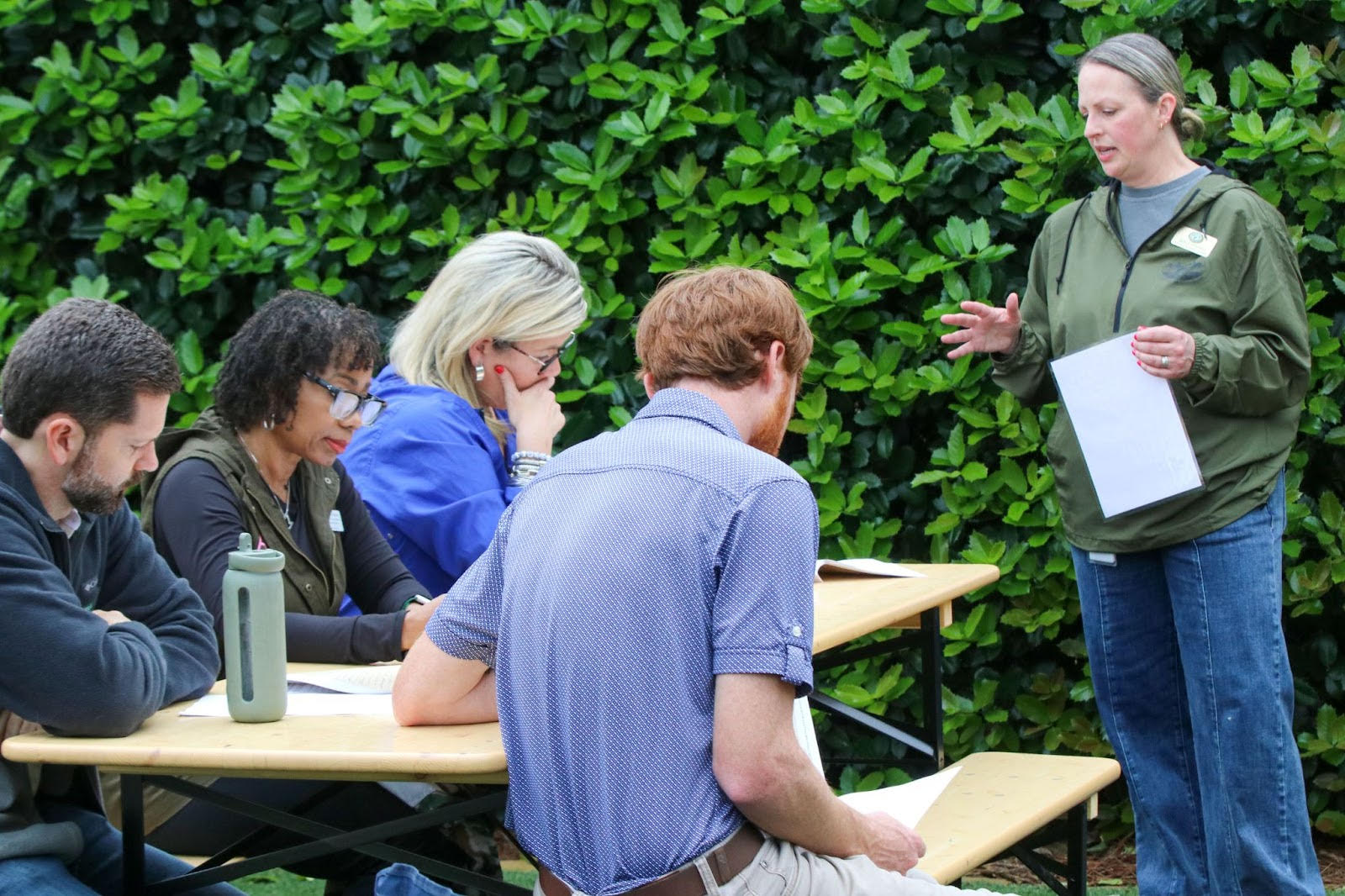
“Backyard Bass is just an activity that is combined with all the lessons in our fishing program,” Edwards said. “You’ll actually be able to teach the kids a variety of subjects once you get their attention. They’ll learn history, like what Native Americans used to fish, and how fishing was part of people’s lives in early America. As we move into culinary lessons, the students will learn how people preserved fish before refrigeration by smoking it or salting it. And you can even branch off into maps and settlements of early Arkansas. The kids may come home telling their parents they went fishing that day, but they’ve actually learned so many more things than just casting a line. Of course, that part is important, too.”
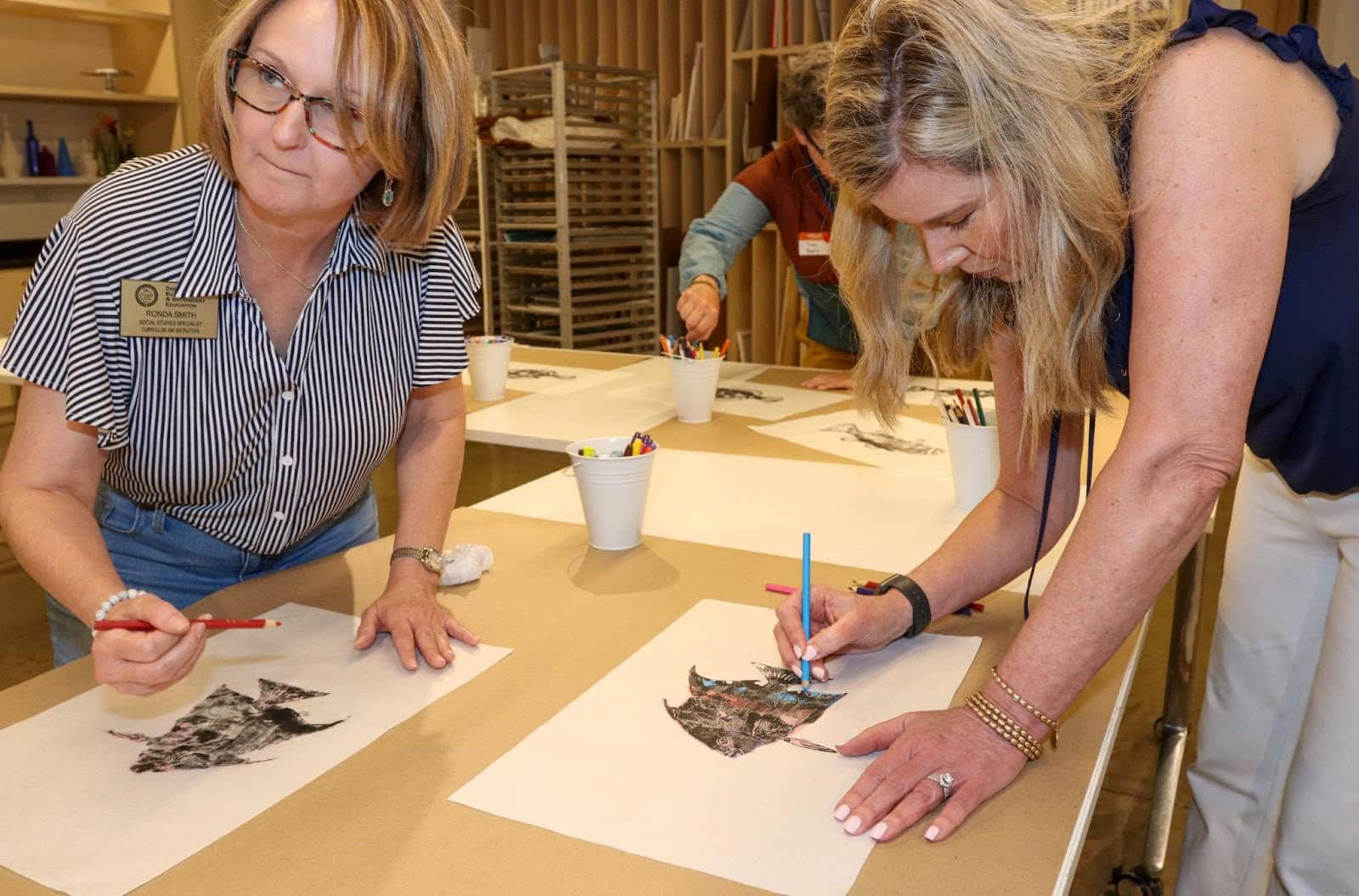
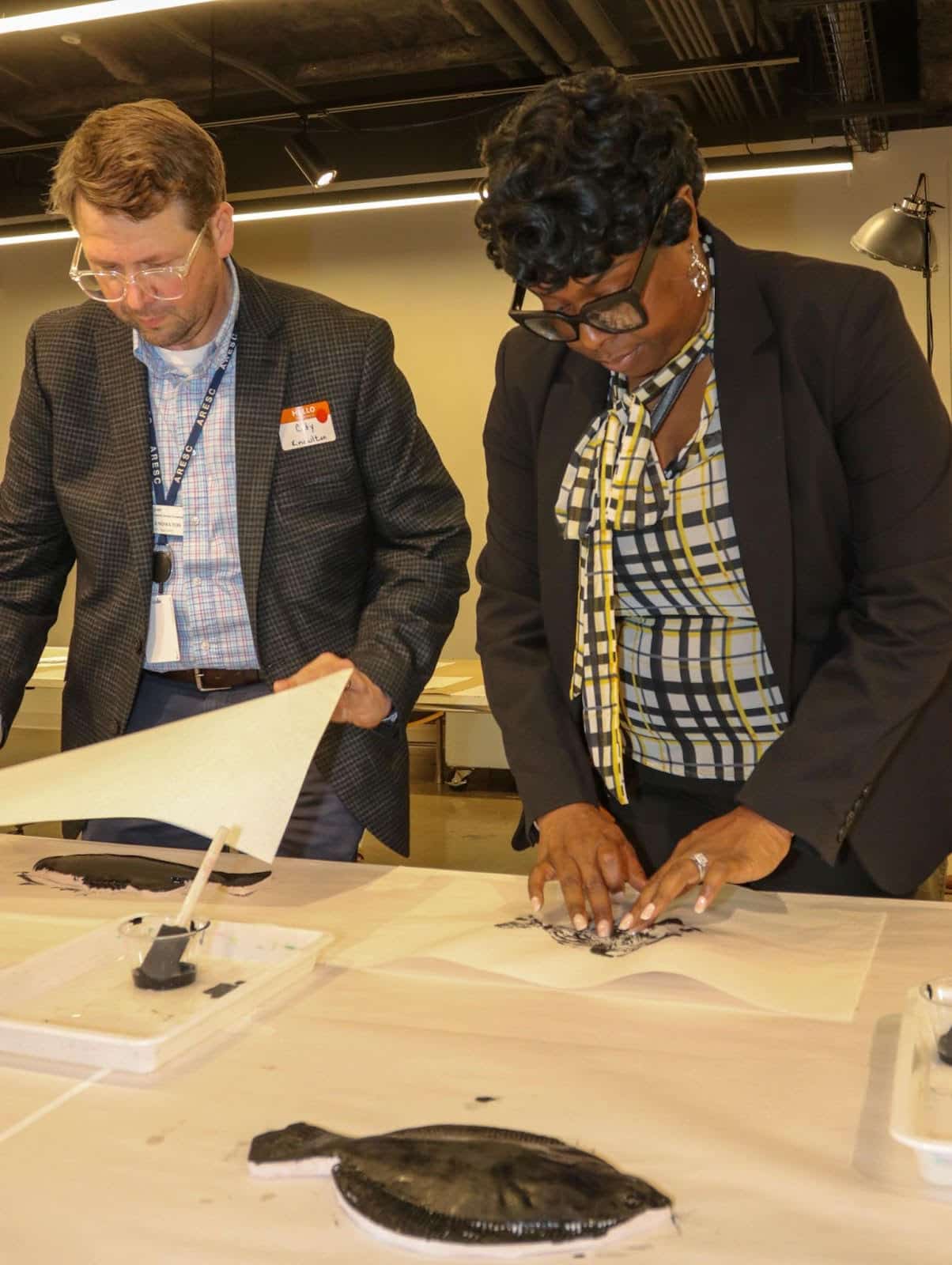
Another station, led by museum staff, showed educators the ancient Japanese art of Gyotaku (fish prints), and how they could bring those into the classroom as an art project.
“A lot of STEM educators are now including art in their curriculum, and it’s becoming more like ‘STEAM,’” Edwards said. “The whole outdoor-based initiative can be tailored to fit any teacher’s needs, that’s part of the beauty, I think, of the lessons; that the teacher can make it fit where they are, who they’re teaching, and where they are in their units of study. It’s really quite flexible for them. Here you can talk about other cultures and work in all sorts of art concepts while you’ve captured the student’s imaginations.”
Edwards says all of the programs offered through the Outdoor Education Initiative are available for teachers to reach out and incorporate at their schools.
Thanks to Tuesday’s STEM workshop, many administrators now have a better idea of what their teachers want to bring to their school as well.
“We usually have one or two teachers who are trying to incorporate outdoor curriculum because it’s a personal passion of theirs, but if they can get buy-in from their administrators, that’s really when we start seeing these programs take off,” Edwards said. “Through events like this, we’re able to show many of those administrators firsthand what their teachers want to incorporate. Many of them not only support the effort, but also ask questions and offer suggestions on how we can further improve the programs.”
Mary Beth Hatch, AGFC Education Division Chief, agrees that administrator support is a key to a school excelling in many of the AGFC’s education programs.
“We have a few teachers who are able to pull it off on their own, and we’ve brought many of them into our Teacher Leadership Council to help flesh out many of our latest programs and navigate any barriers,” Hatch said. “But if we can get the administrators to help champion some of these initiatives, the effort becomes school-wide, and students throughout the campus benefit because everyone is on the same page.”
Visit www.agfc.com/education to learn more about some of the programs available through the AGFC. For more information about the Outdoor Education Initiative, contact Ratchford at Derek.ratchford@agfc.ar.gov.
####
CUTLINES:
GEARING UP
Ratchford equips a teacher with safety gear needed for spelunking before entering the AGFC’s mobile cave exhibit. AGFC photo.
HAPPY CAVE
A teacher emerges from the cave experience, excited about the possibilities for learning. AGFC photo.
FISHY HISTORY LESSON
Edwards guides teachers through possible lessons they can incorporate with fishing activities in their classrooms. AGFC photo.
FISH ART
Teachers learn about a 200-year-old Japanese art form connected to angling opportunities in The Natural State. AGFC photo.
ADMINISTRATORS
Administrators attending Tuesday’s event received firsthand experience at the activities their teachers will be bringing back to their schools. AGFC photo.
Recent News
Subscribe to Our Weekly Newsletter E-mails
Don’t miss another issue. Sign up now to receive the AGFC Wildlife Weekly Newsletter in your mailbox every Wednesday afternoon (Waterfowl Reports are published weekly during waterfowl season and periodically outside the season). Fishing Reports arrive on Thursdays. Fill in the following fields and hit submit. Thanks, and welcome!