Bear
Arkansas is home to the American black bear, the only bear species that lives in the state.
The black bear is the smallest bear species in the United States and the most common bear found in North America. Black bears are not always black – their coats can also range in color from brown to gray to cinnamon.
Arkansas was actually known as the Bear State long before it was known as The Natural State, with pre-settlement estimates of up to 50,000 bears. However, by the 1930s, black bears were almost hunted completely out of the state.
Today, there are over 5,000 bears in the state, thanks to the Black Bear Restoration Program from 1958-1968. This reintroduction effort is recognized as the most successful reintroduction of a large carnivore in history. The AGFC currently allows carefully regulated bear hunting each season.
Tagging and Checking a Bear
Resident hunters will have a bear tag with their valid Arkansas Annual Hunting License to tag a bear. Resident youth will need a free Youth Game Tag (YGT). Nonresidents must have a $300 Nonresident Bear Tag (NRB) in addition to a $410 Nonresident All Game License. Nonresident youth need a product code tag (YBTN).
Option 1. Immediately upon taking a bear (before moving it), you must check your harvest online, by the AGFC mobile app or phone (833-289-2469) and have confirmation number readily available.
Option 2. Fill out the game tag in ink. You may substitute a piece of paper for this tag; it must include the hunter’s name, the date and bear zone of harvest or confirmation number written legibly in ink. After tagging your game, call 833-289-2469, visit www.agfc.com or use the AGFC mobile app within 12 hours to complete checking.
Before freezing or processing, collect a premolar and hair to submit later. While no longer required, successful hunters are encouraged to submit a premolar and a hair sample for research purposes.
Hunters who harvest a bear are encouraged to submit a premolar after requesting and receiving a premolar package from AGFC. A hair sample from the bear also is highly encouraged.
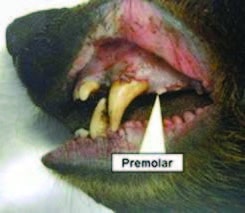
The upper and lower premolar tooth is right behind the canine tooth (see photo). Premolars generally come out of the jaw easily with a small flat awl, screwdriver or locking knife blade (be careful). First, cut the gum around the tooth. Then lift the tooth out gently by undercutting the premolar, using the curve of the canine tooth to guide you. The bear’s age can only be determined by the root of the tooth, so be careful not to break the root as you extract the tooth. If you break the root, try extracting another premolar from the top or bottom.
A tuft of hair can be extracted anywhere on the back or neck using pliers. Be sure to collect 20-30 guard hairs with follicles.
Watch a video on how to remove a black bear’s premolar and collect hair samples.
Pulling a hair sample allows for DNA analysis. Aging harvested bears from an extracted tooth lets biologists accurately model bear populations and monitor the population structure.