
Lake Wilhelmina renovation complete; ribbon-cutting May 15
ON 05-07-2026
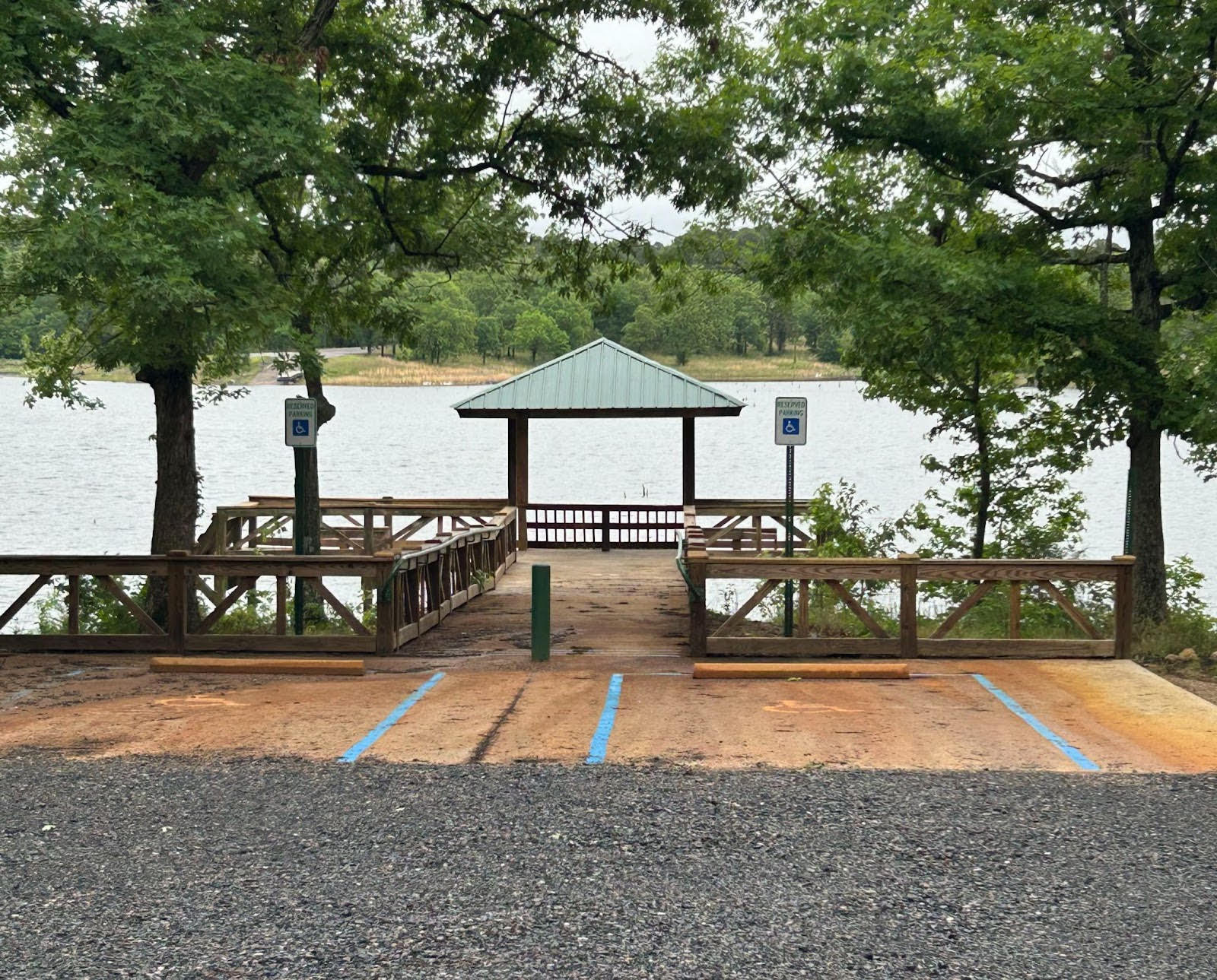
The Arkansas Game and Fish Commission will hold a special ribbon-cutting and rededication ceremony May 15 at 10:30 a.m. at the newly constructed Lake Wilhelmina fishing pier to announce the reopening of the lake. The 200-acre, 68-year-old Lake Wilhelmina underwent a renovation starting in June 2024 to address failing infrastructure.
The lake was renovated following uncontrollable falling water levels in 2019, which indicated a failure in the water-control tower. Upon inspection, it was discovered that two large holes had formed in the lakebed from ruptures in the lake’s outflow pipe that traveled through the dam and emptied into Powell Creek.
“We made temporary repairs with sandbags to stop the water loss, but we needed to drain the lake to perform a complete fix from the downstream end of the 30-inch outflow pipe,” Reid Phifer, assistant chief of operations, said.
Contractors under AGFC supervision re-sleeved the outflow pipe with new piping and injected grout from the outfall pipe to the water control structure to replace the antiquated hardware.
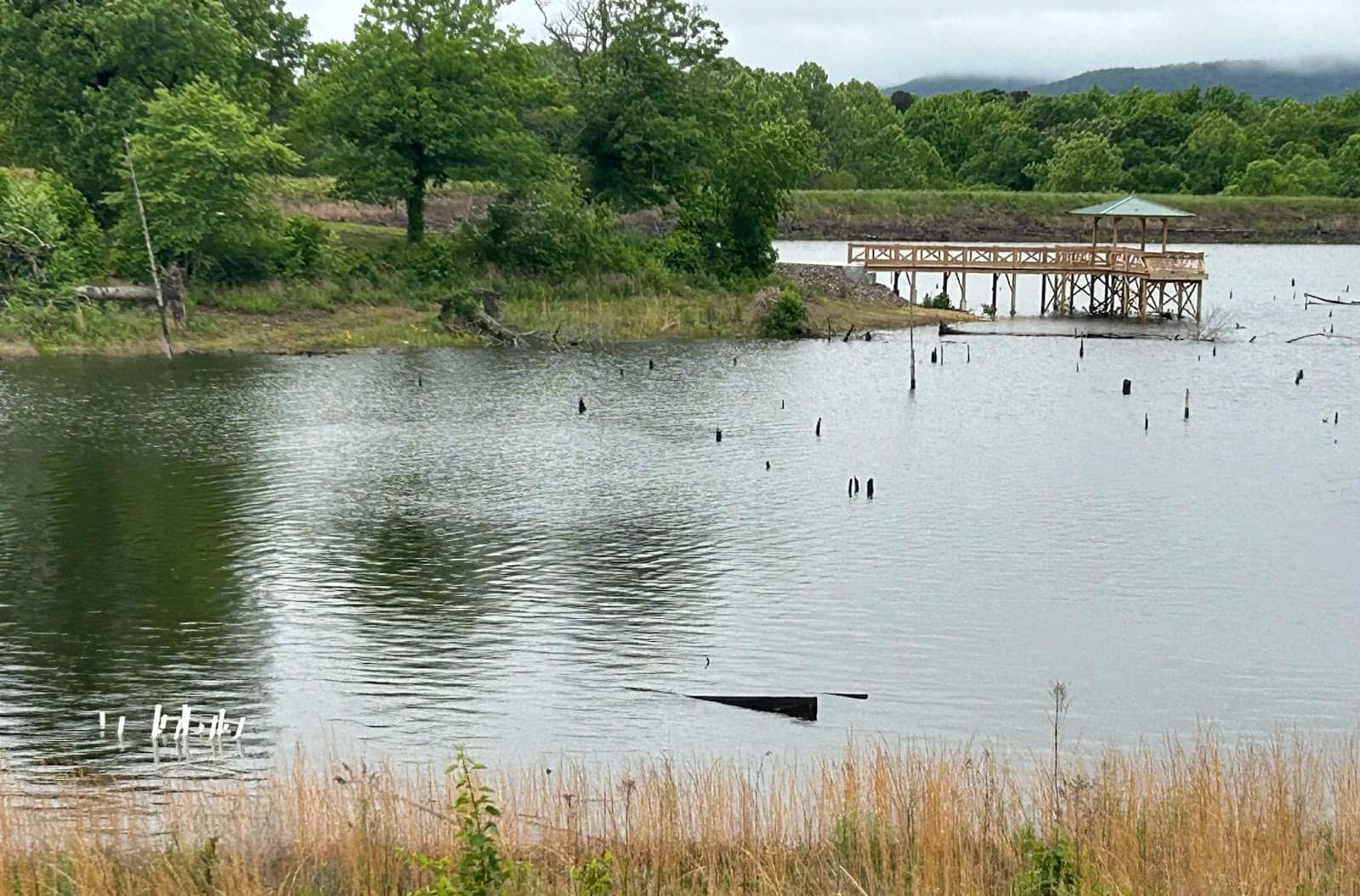
“That pipe lasted nearly 70 years underwater, which is well past the life expectancy of that sort of material in those conditions,” Phifer said. “But we didn’t stop with the outflow pipe. The drawdown gave us an opportunity to make major upgrades to the controls and equipment on the water control tower. We replaced the two lower gates, which included installing new stems and actuators. We also replaced the hardware, stem and actuator on the top gate.”
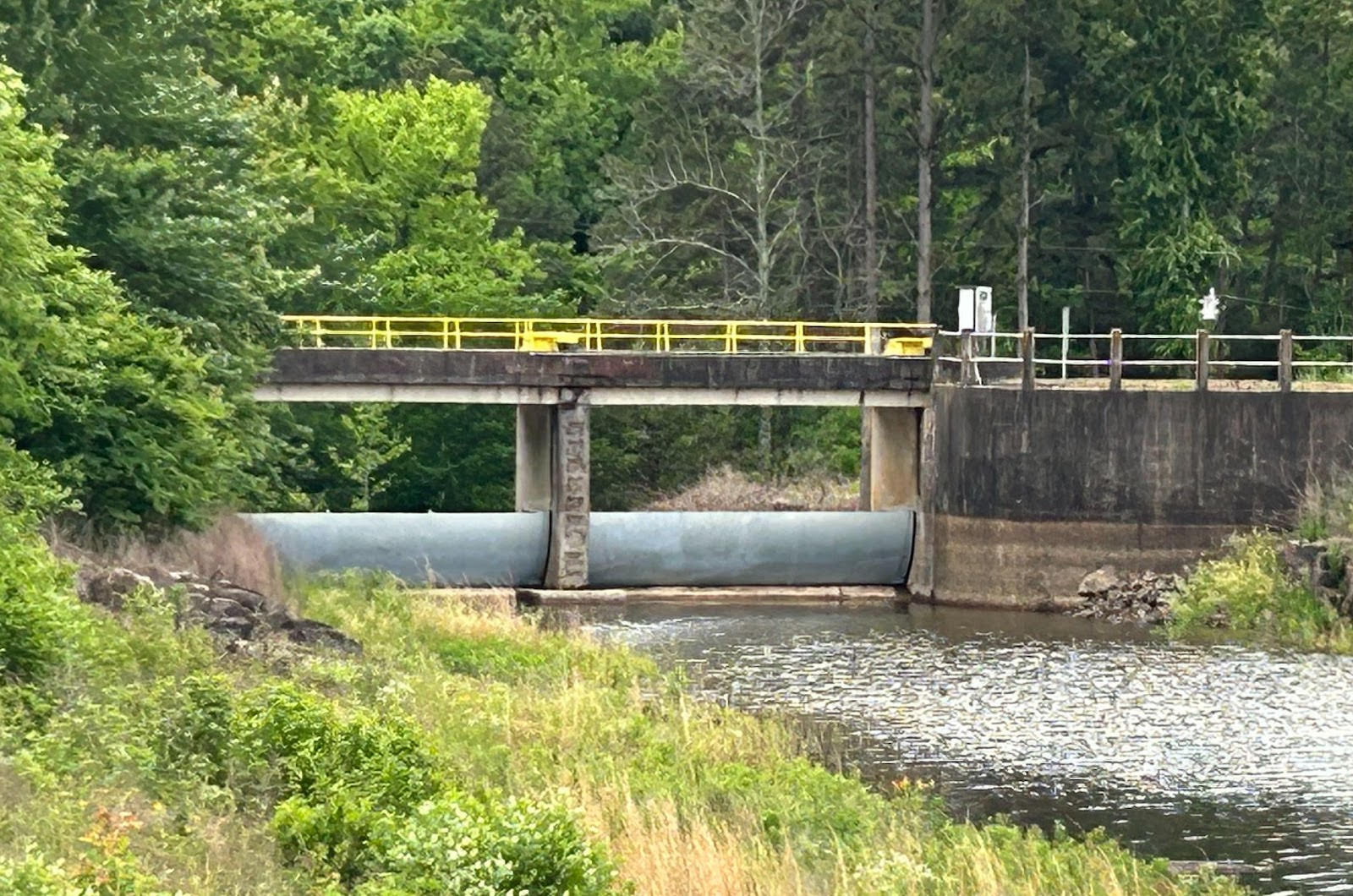
In addition to the outflow pipe and water control tower work, contractors replaced the aging radial gates, which also regulate water levels in the lake. Construction crews added a floating courtesy dock for boaters, and a new fishing pier added the final touches to the construction work.
“Construction wrapped up earlier this year on all of the infrastructure improvements, but there was just as much effort funneled into aquatic habitat work from the Fisheries team,” Phifer said.
The lakebed was allowed to dry and crack, which helped compact the silt, increasing fish spawning potential. Vegetation also grew during the drawdown, providing short-term nursery habitat for baitfish. As that vegetation decomposes, it will also feed microorganisms at the base of the food chain, giving the entire lake’s food web a boost.
“Mother Nature does a great job of rejuvenating herself when you give her the opportunity in the right setting, but we helped her along quite a bit this time,” Andy Yung, AGFC Fisheries Supervisor in Hot Springs, said. “As lakes age, they lose a lot of the complex cover that young fish need to hide from predators and larger fish use to ambush prey. We’re always placing brushpiles and complex structures in our lakes by dumping them off barges, but being able to work right on the lake bottom really lets us fine-tune the placement and shape of the structures we added to Wilhelmina.”
Large corrugated pipes were placed vertically and horizontally among forests of inert PVC tubing to create myriad shapes of cavities for catfish, crappie, bass and bream. Additional PVC towers were anchored to the lakebed in key areas to give small fish a sanctuary to grow, and the lake was filled with many stakebeds, a favorite among crappie anglers like Yung.
“Stakebeds are really fast and easy to make, and they’re extremely effective at attracting crappie,” Yung said.
Also added were 19 beds of pea gravel, which will be highly attractive to bream and bass looking to make spawning beds. And three semi-truck loads of 8-foot-long, 4-inch by 6-inch rough-cut oak timbers were used to create many “log cribs,” each roughly the size of a Volkswagen Beetle.
“Best of all, most of these fish attractors are within casting distance of the bank,” Yung said. “Boaters will find some nice ones out in the deeper water, but there are plenty of fish attractors to satisfy shorebound anglers throughout many fishing trips.”
The gates were officially closed in March to allow rainwater to fill the lake, and the most recent rains have done an excellent job of bringing this fishery back to life.
“Wilhelmina has a pretty large watershed that feeds it, and it’s only 200 acres, so the spring rain has already filled it to within 5 feet of normal pool elevation,” Yung said. “We’ve already begun stocking forage species to build the food chain, and game fish are being stocked as well. We even had the first load of bluegill fingerlings delivered March 23.”
Anglers will need to practice catch-and-release fishing only, as the AGFC has instituted a “no harvest” regulation while the fish population rebounds. But anglers should begin seeing a few smaller catchable fish next year.”
####
CUTLINES:
FISHING PIER
The AGFC will hold a special ribbon-cutting ceremony for Lake Wilhelmina May 15 at the lake’s newest fishing pier. AGFC photo.
LAKEVIEW
In addition to infrastructure repairs, workers loaded Lake Wilhelmina with fish attractors and complex habitat to benefit the fishery. AGFC photo.
GATES
Two radial gates which help regulate water levels also saw repairs while contractors renovated the main water-control tower and outflow pipe. AGFC photo.
Recent News
Subscribe to Our Weekly Newsletter E-mails
Don’t miss another issue. Sign up now to receive the AGFC Wildlife Weekly Newsletter in your mailbox every Wednesday afternoon (Waterfowl Reports are published weekly during waterfowl season and periodically outside the season). Fishing Reports arrive on Thursdays. Fill in the following fields and hit submit. Thanks, and welcome!