Biologists gathering public comments on possible Lake Atkins fishery reset
ON 05-04-2026
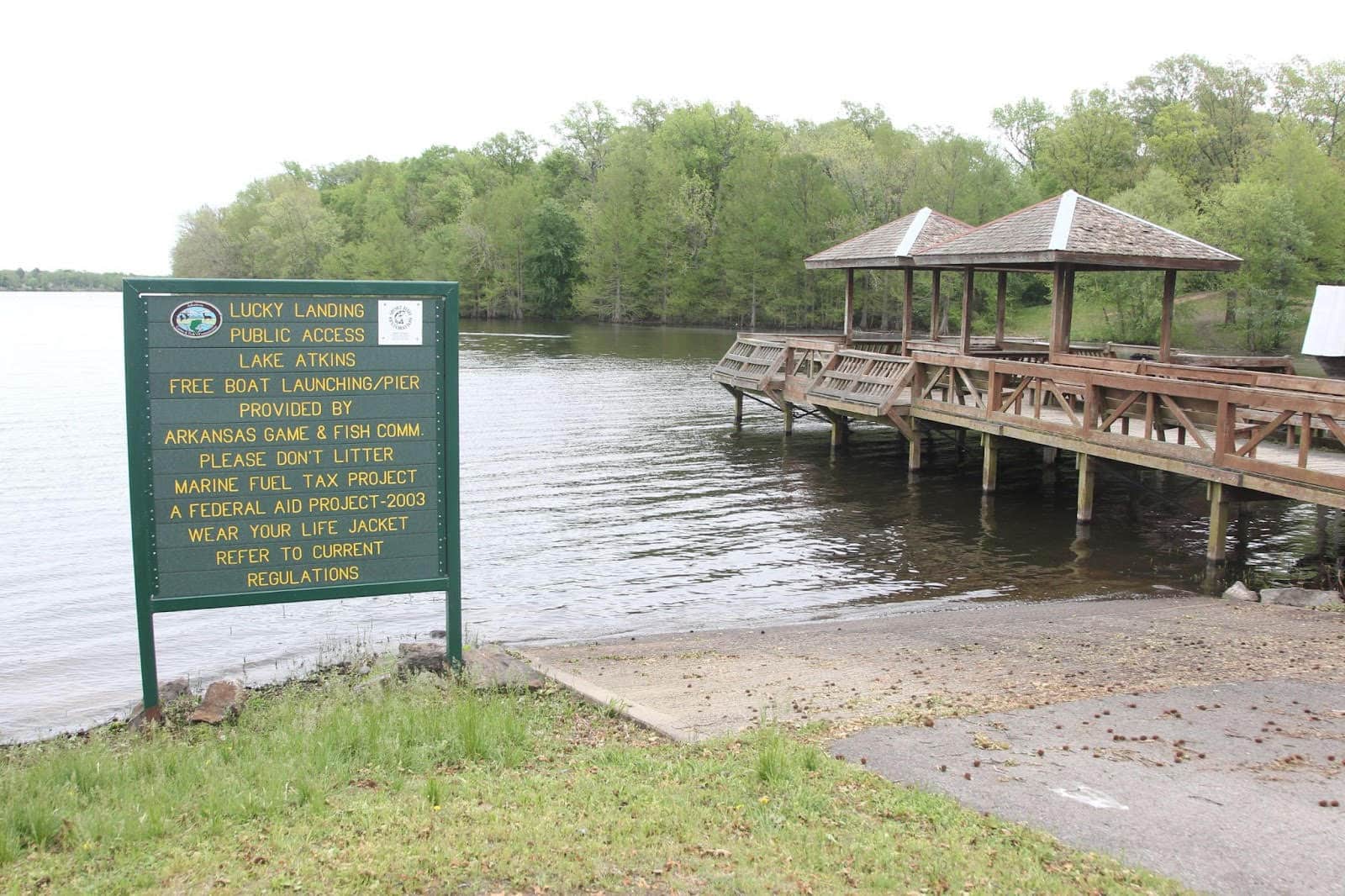
Lake Atkins is at a crossroads, and fisheries biologists are looking to the anglers to decide the best path forward for the fishery.
According to Frank Leone, AGFC fisheries supervisor in Russellville, Lake Atkins has steadily declined in productivity during the last few years.
This isn’t the first time the AGFC has drawn down Atkins to reset its aquatic habitat.
“The lake underwent a full renovation in 2002 similar to what we’re proposing now,” Leone said. “It was refilled in 2003, and since then it has been stocked annually with channel catfish and Florida bass, known for faster growth rates and much better trophy potential than northern largemouth bass. The lake is also fertilized annually to maintain fish production.”
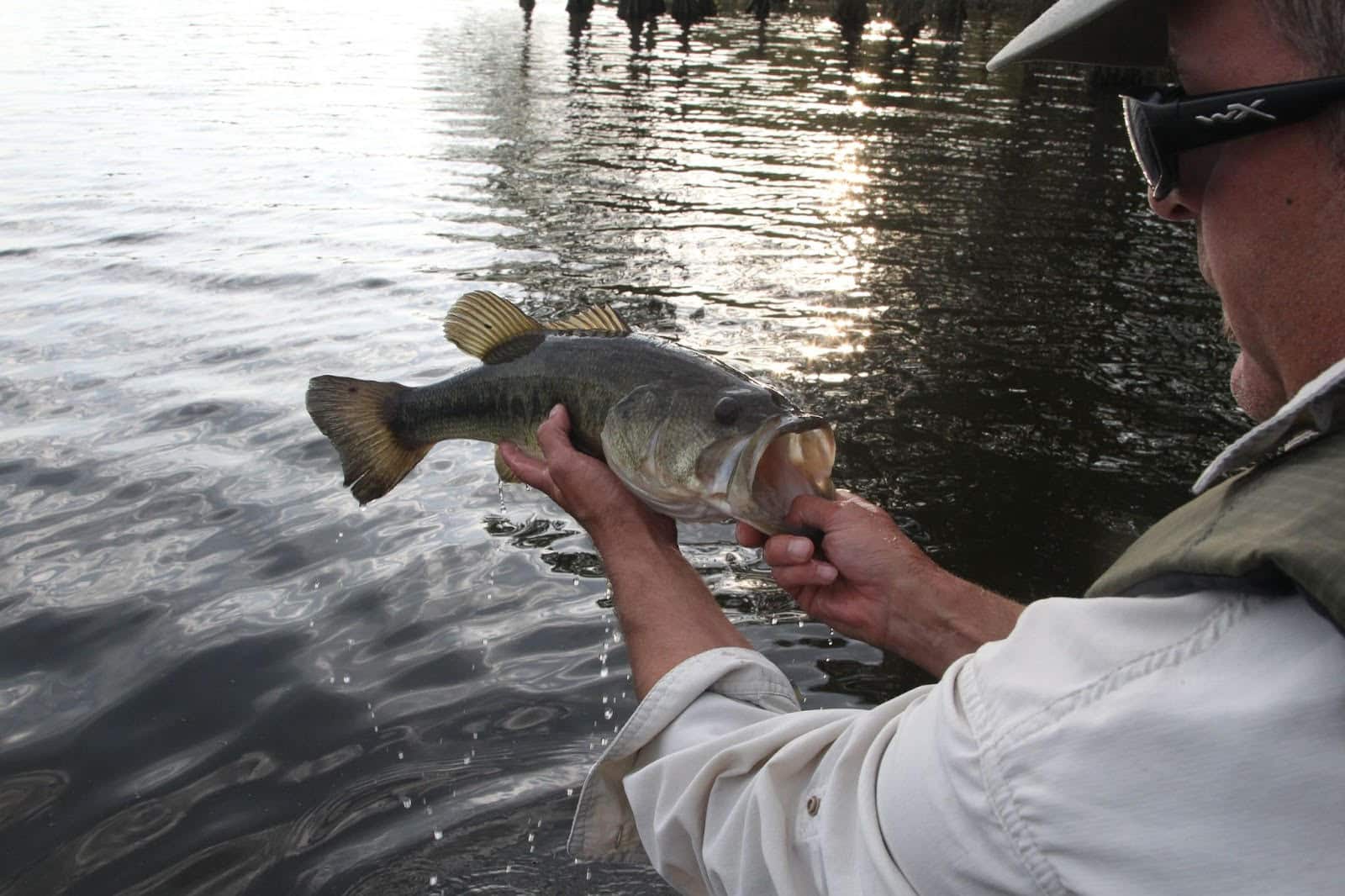
Creel surveys and annual fish sampling efforts show a decline in the number of “memorable” size bass in the lake. While some of this may be due to natural aging in the reservoir, Leone says the larger culprit is the dilution of Florida bass genetics from northern largemouths entering the system since its reset.
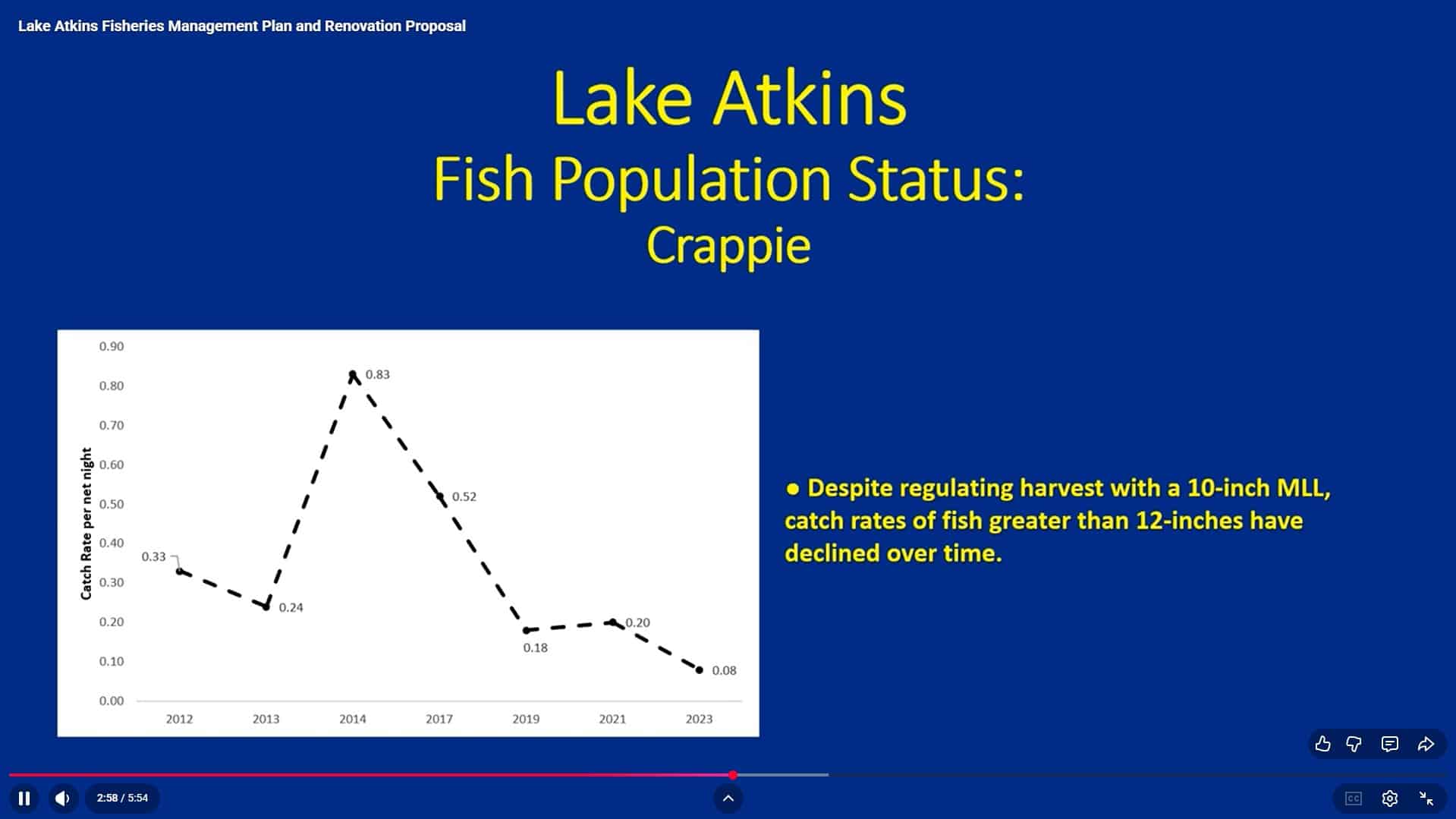
The crappie population continues to be fair, but the number of 12-inch-or-better individuals also has declined, despite a 10-inch minimum length limit being established for this species in 2017.
“Annual crappie mortality is pretty high at 82 percent, with much of that being attributed to angler harvest,” Leone said. “The crappie grow fast, but very few live to be 3 years or older.”
At the same time the two most popular game fish are beginning to falter, yellow bass in the lake have seen a boom and are taking up a significant amount of the lake’s resources.
“Yellow bass are undesirable because they rarely reach a decent size for harvest and they are extremely aggressive, which slows growth of (black) bass, crappie and bream species in the lake,” Leone said.
During the renovation, Leone says the lake would be drawn down for one summer and the fish population would be removed, knocking back the undesirable species. Fish habitat improvements could be performed, including the creation of complex cover through brush piles and stake beds and increased spawning areas through gravel beds for bream, crappie and black bass.
“We also could potentially create 2 miles of marked boat lanes for safer navigation, depending on the budget we are allocated for the project,” Leone said. “Public support will be the key in how much we are able to plan, and, of course, weather conditions during the drawdown year.”
When the lake is refilled, it will be restocked with forage species, then with Florida bass, white crappie, black crappie, bluegill, redear sunfish and channel catfish.
Leone explains that he is aware that a few anglers are seeing good stringers of crappie currently coming from the lake, and that it did produce one of the 19 Legacy Lunker-class fish during this year’s trophy bass donation period, but these size fish are not in the abundance they were only 10 years ago.
“There are always going to be a few large fish in the system, but the overall productivity of the system has slowed and the lake is not reaching its potential for anglers,” Leone said. “Anglers who remember the last renovation know how well the lake responded to that effort, and anglers are currently enjoying the results of similar renovations at Lower White Oak Lake and Lake Monticello, which also produced Legacy Lunker-class fish this year.
“The earliest we would propose a renovation at Atkins would be 2028, but we are asking for public input before any decisions are made. If we were to move forward, the Legacy Lunker fingerlings gathered from Lake Atkins this year would go to another lake, but the lake would receive fingerlings from Legacy Lunkers when it is refilled post renovation to help get it started with the right genetics from day one.”
An in-depth video of the lake’s assessment and renovation proposal is available at https://www.agfc.com/education/fisheries-scientific-reports-and-management-plans/proposed-fisheries-management-plans/. Once viewers have the opportunity to watch that video, they are encouraged to complete the Lake Atkins Renovation Proposal Survey on the same page. Survey responses will be collected through May 15.
“The AGFC has completed many renovations like this on our smaller and mid-sized lakes throughout the years, and we know the benefits they provide,” Leone said. “One year of inconvenience can lead to decades of improved fishing and memories on the water.”
####
CUTLINES:
BOAT RAMP AND FISHING PIER
Lake Atkins enjoyed incredible popularity as a big bass, crappie and bream fishery following its last renovation in 2002. AGFC photo.
LARGEMOUTH BASS
Over time, Florida bass genetics introduced through stockings by the AGFC have been watered down with northern largemouth genetics coming from the streams that feed Lake Atkins. AGFC photo.
CRAPPIE GRAPH
Crappie productivity remains good, but has waned in the last five years, prompting a call to the public to ask for their thoughts on a reset. AGFC photo.
Recent News

Subscribe to Our Weekly Newsletter E-mails
Don’t miss another issue. Sign up now to receive the AGFC Wildlife Weekly Newsletter in your mailbox every Wednesday afternoon (Waterfowl Reports are published weekly during waterfowl season and periodically outside the season). Fishing Reports arrive on Thursdays. Fill in the following fields and hit submit. Thanks, and welcome!