
Arkansas Wildlife Weekly Fishing Report
BY Jim Harris
ON 02-05-2026
February 5, 2026
Managing Editor Arkansas Wildlife Magazine
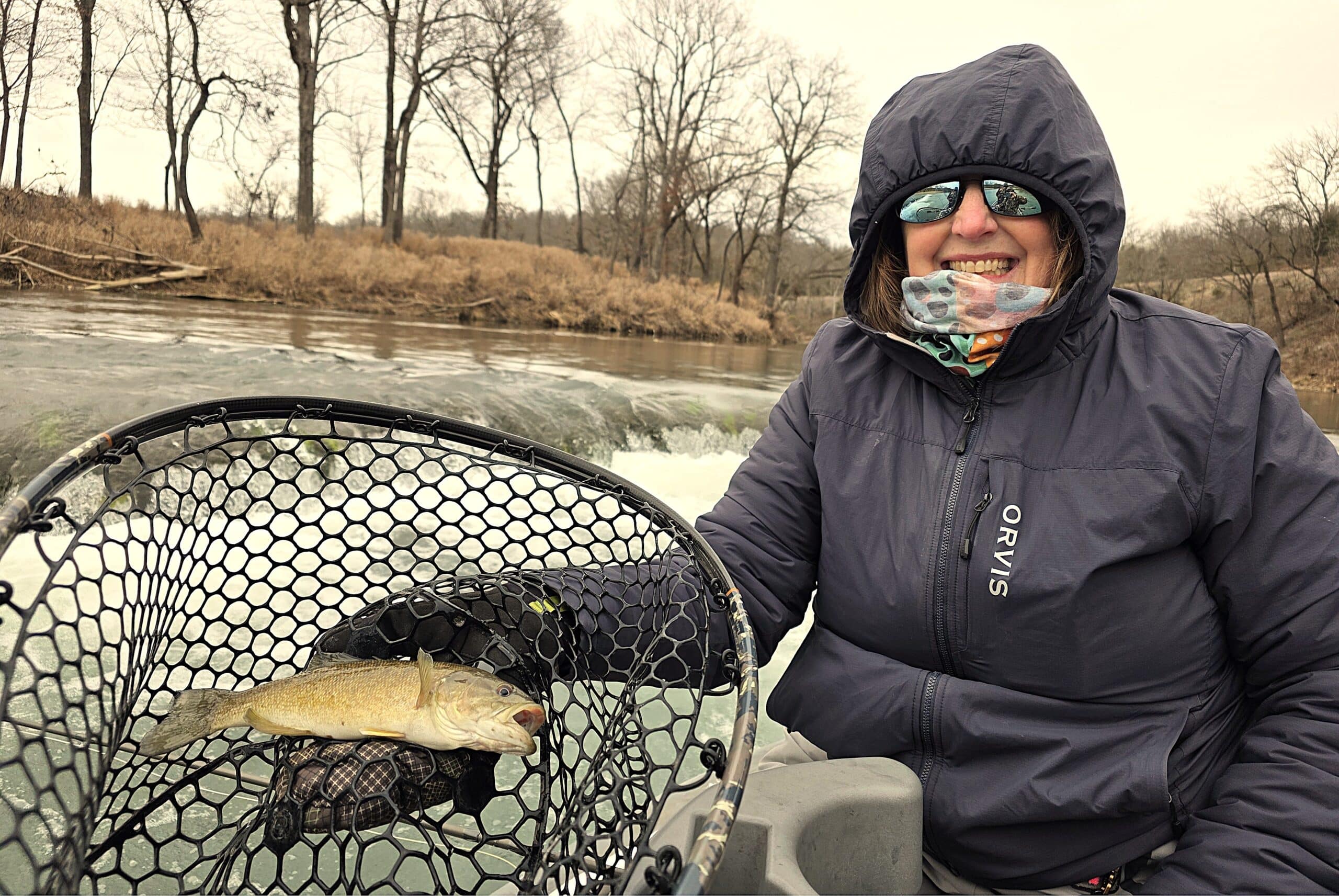
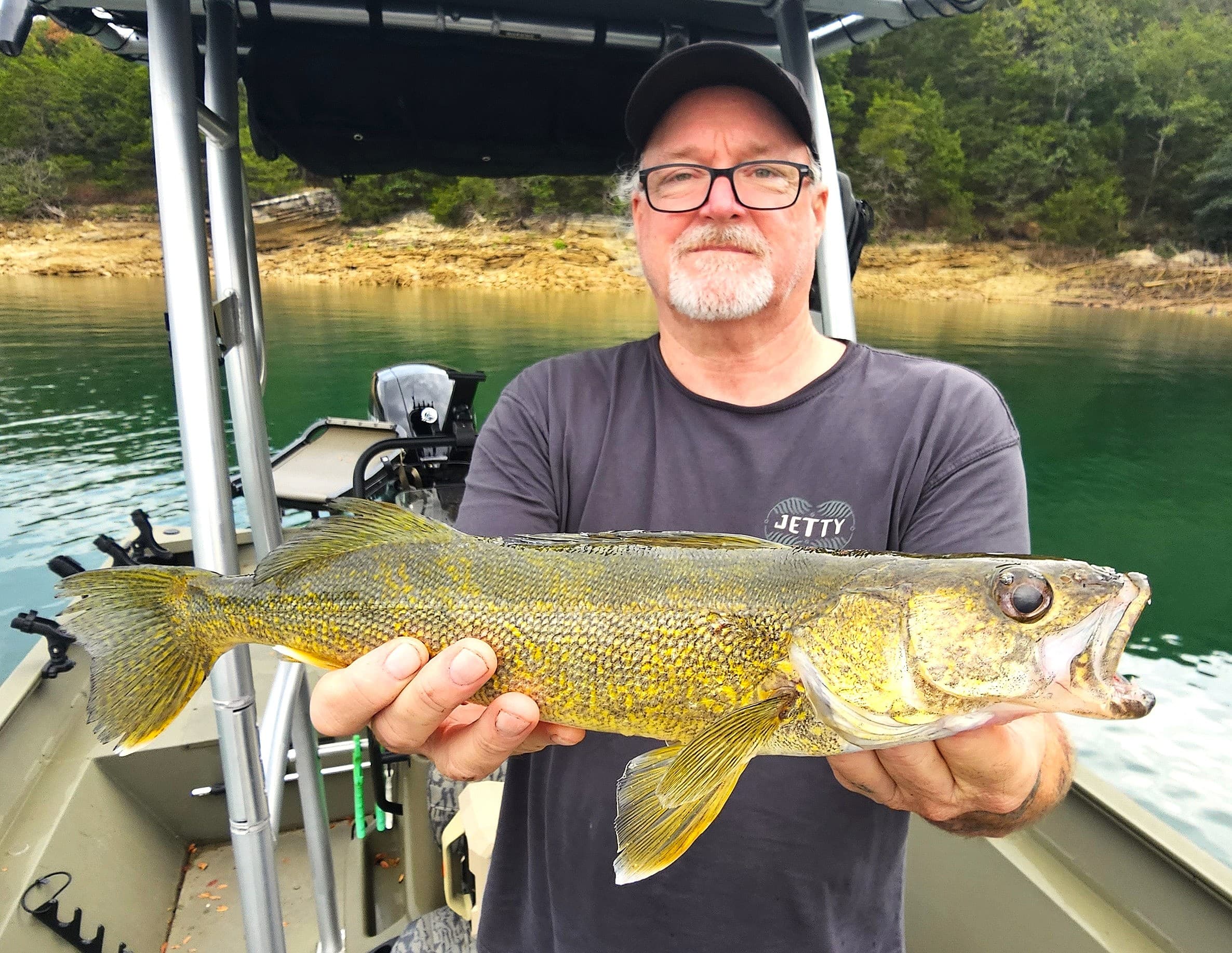
Leslie Allen bundled up and braved the winter elements with guide Mark Crawford on the Spring River recently to catch some smallmouth bass near the falls. Mark says the river overall is as low as he’s seen it, but there are places to meet up with some hungry largemouth, smallies and trout. The river’s current conditions are perfect for dry fly and nymph fishing, he added. Read more of Crawford’s report below.
The Fishing Report will be published every two weeks through February, then will return to once-a-week publishing in March. In between published reports, contact the reporter listed for the lake or stream you plan to fish for the most up-to-date information.
Arkansas River and White River levels are available at: http://water.weather.gov/ahps2/index.php?wfo=lzk
For real-time information on stream flow in Arkansas from the U.S. Geological Survey, visit: http://waterdata.usgs.gov/ar/nwis/rt
For water-quality statistics (including temperature) in many Arkansas streams and lakes, visit: http://waterdata.usgs.gov/ar/nwis/current/?type=quality
Download the Fish Brain app and follow AGFC at: https://join.fishbrain.com/agfc-page
Quick links to regions:
- Central Arkansas
- North Arkansas
- Northwest Arkansas
- Northeast Arkansas
- Southeast Arkansas
- Southwest Arkansas
- South-Central Arkansas
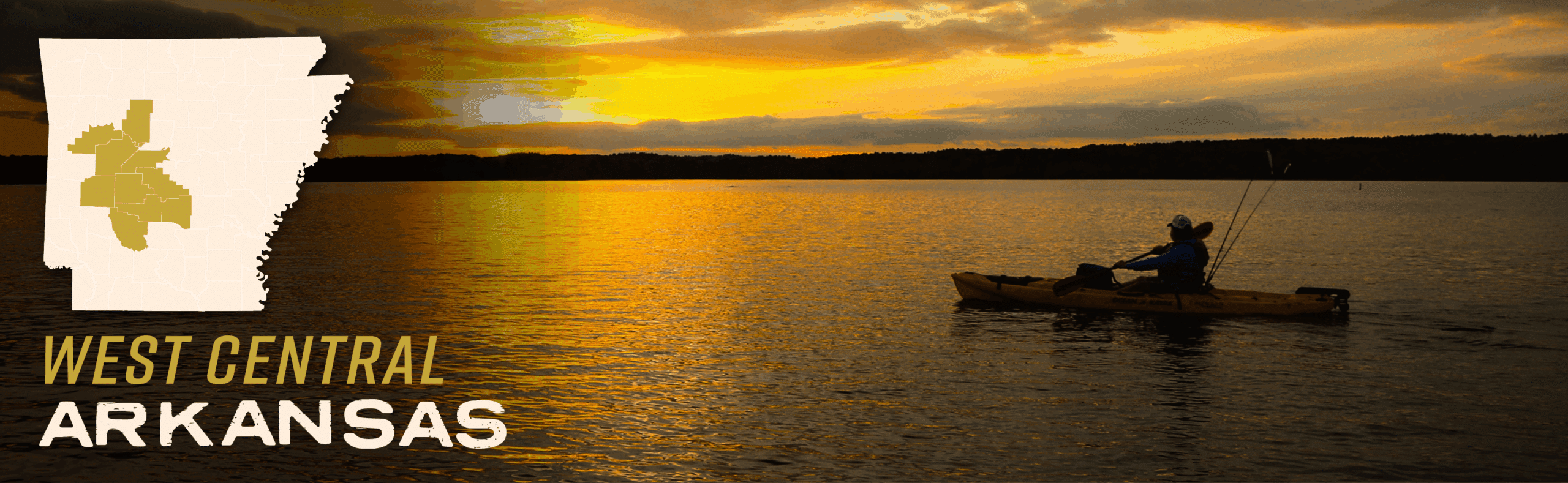
- West-Central Arkansas
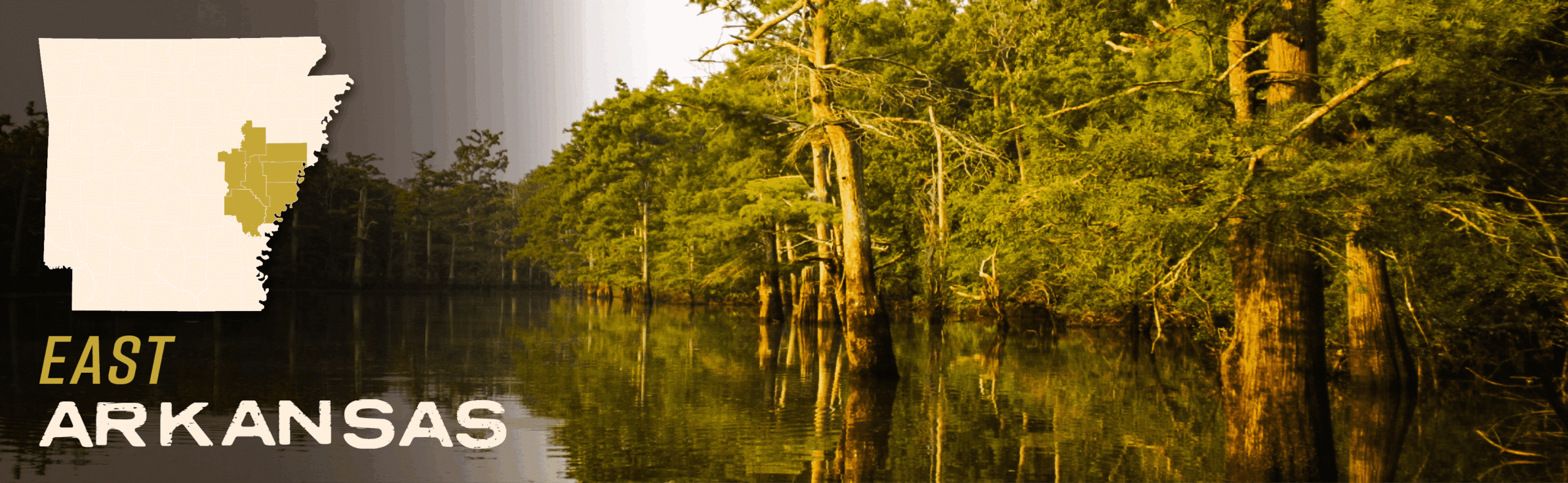
- East Arkansas
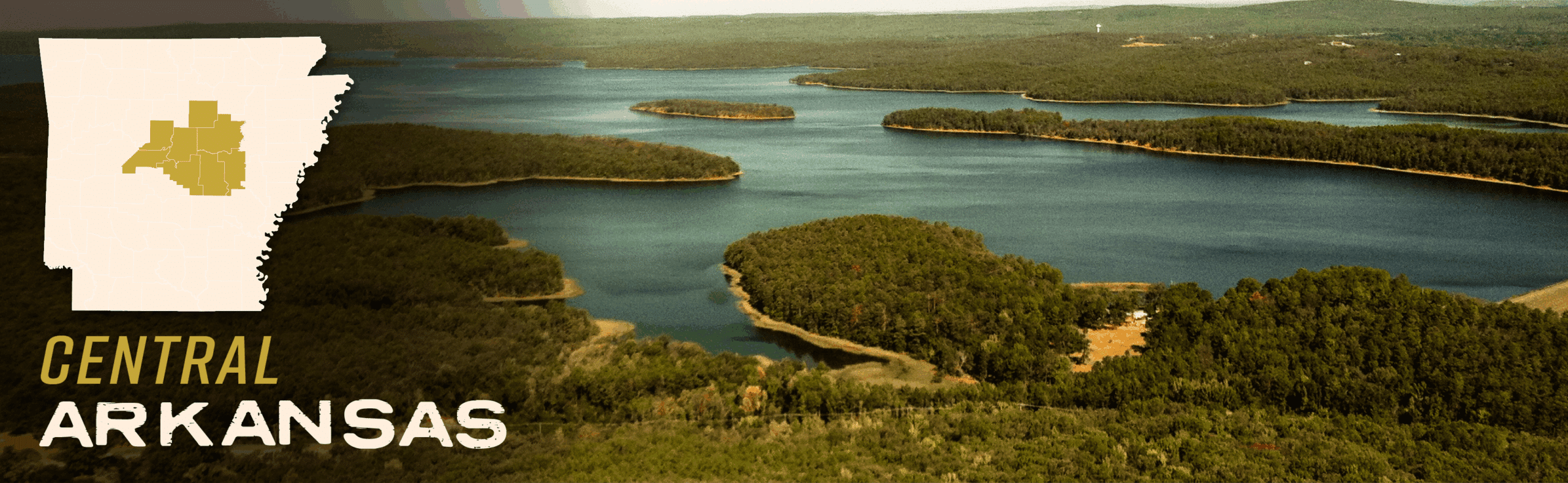
Central Arkansas
Craig D. Campbell Lake Conway Reservoir (under renovation) and Nursery Pond
(updated 2-5-2026) AGFC staff in Mayflower note that while Lake Conway is drawn down for renovation, the Lake Conway Nursery Pond is open for fishing in the immediate area, with bream and trout being reported among catches of late. The 70-acre pond has been stocked by the AGFC with mature bass, crappie, catfish and bream as well as rainbow trout for the cold weather months.
Lake Conway renovation is proceeding on schedule with the demolition of the old dam and plans in place for the new dam and weir. Read more here.
Little Red River
For the Army Corps of Engineers’ real-time outflow report from Greers Ferry Dam, visit the Corps’ Little Rock office website or by calling (501) 362-5150). Also check the Southwestern Power Administration website to see forecast generation schedule.
NOTE: The Arkansas Game and Fish Commission has changed trout limits for the Little Red River below Greers Ferry Dam, effective Feb. 1, due to a significant loss of stocking population at two Arkansas hatcheries in 2025. Anglers may keep two rainbow trout daily, only one longer than 14 inches, in the Greers Ferry tailwater; all other trout caught must be released immediately. This rule is in effect until further notice.
(updated 2-5-2026) Mike Winkler of Little Red River Fly Fishing Trips (501-507-3688) said in his most recent report that the generation schedule had been all over the board lately thanks to the up-and-down weather. On colder days, you’ll usually see the Southwestern Power Administration running more water due to increased power demand. When temperatures warm up, demand drops and so do the releases from Greers Ferry Dam. “We’ve seen anywhere from 2-5 hours of generation, typically two units, with most releases starting around 7 a.m. As always, keep an eye on the USACE Little Rock app before heading out.
He said the bite had been solid. With steady releases, the river was fishing well both wading and from the boat. If you’re wade-fishing in the mornings, start farther downstream and work your way back upstream as the water rises.
The hot flies under an indicator are egg patterns (apricot and orange), midge patterns and soft hackles. Streamer fishing has also been very productive during generation. If you’re in the boat and pounding the banks, some top producers have been Double Deceivers, Flatliners and sculpin patterns.
Greers Ferry Lake
For the Army Corps of Engineers’ real-time lake level and outflow report from Greers Ferry Dam, visit the Corps’ Little Rock office website.
(updated 2-5-2026) Fish ’N Stuff (501-834-5733) in Sherwood said that the fishing for largemouth and spotted bass has been good. They’re being found on standing timber in 15-20 feet depth. Anglers are catching them throwing soft plastic minnow baits on a half-ounce jighead, or using deep-diving suspending jerkbaits. For smallmouth bass (mainly on the south end of Greers Ferry Lake), anglers have been catching them well on a half-ounce or three-quarter-ounce PB&J football jib in about 20-30 feet of water. Use a cinnamon purple Ultra Vibe Speed Crawl with that football jig.
Crappie are being caught mainly in 20-25 feet on brushtops throwing a half-ounce white or silver jighead with a Monkey Milk- or threadfin shad-pattern jig.
Harris Brake Lake
(updated 1-22-2026) Bing Watkins at Harris Brake Lake Resort (501-889-2745) said no one was fishing at midweek — too cold. Before the rain passed through on Wednesday, some crappie catches were seen in the early morning and there was a good bite. Then it all shut off.
The lake is way too low, she says. They need more rain. Water from Harris Brake Lake is used to flood the Harris Brake WMA for waterfowl season, which wraps up Jan. 31.
Follow more from Harris Brake Lake Resort on its Facebook page.
Lake Overcup
No reports.
Lake Maumelle
(updated 2-5-2026) WestRock Landing in Roland (501-658-5598) said water temperature as of Wednesday afternoon was down to about 39-40 degrees. The lake level is 7.7 feet below normal pool. The new ramp is open and ice has thawed, so it is accessible, “but please trim your motor,” they urge. “The back launch ramp is open and accessible. Highly recommend you have 4-wheel drive.”
Largemouth bass reports have been good. There are reports of anglers catching them at 8-10 feet depth last week, as well as finding them in deep water. Use jigs, Alabama rig or crankbaits. Spotted bass are fair. They’re mixed in with the largemouths as well as in 15-20 feet. Try a drop-shot, Carolina rig or a jig.
Crappie are fair. They’re being caught in 20-30 feet depth. Jigs and minnows will work.
No reports for white bass, bream or catfish. White bass should react to Twister Tails and crankbaits, bream might take a jig or worm, and catfish typically can be caught on Lake Maumelle using bream, chicken liver or worms.
update 2-5-2025) Crappie guide Eric Watts of Natural State Fishing (501-548-8990) said that as of Tuesday, Feb. 3, water temps were 39-40º. Water is approximately 7.5 feet below normal pool and slightly stained to clear. “The new ramps are open and usable with caution. I recommend using the westward most ramp.
“Crappie are hanging in the channel, roughly 30-40 feet deep. Jigs and minnows will entice the most active fish to bite.”
Visit www.nsfguide.com or call 501-548-8990 to schedule your guided crappie trip today!
Arkansas River at Morrilton
For the real-time water flow at the Ormond Lock and Dam and Morrilton stage level, visit the Corps’ Little Rock office website.
Little Maumelle River
(update 1-22-2026) Ray Hudson at River Valley Marina (501-517-1250) said the fishing has been going well, but “we’re probably fixing to see.” Crappie are still biting well. They’re in about 9-10 feet depth. Anglers are catching a lot of bass, caught at about the same depth but they’re catching the bass on jig-and-pig and A rigs, “stuff like that,” he said.
The same routine has worked for crappie for several weeks. Go with such crappie jigs as Bobby Garland jigs and tube jigs primarily in shad colors.
The river is clear and normal, “and the shad in here are prolific right now. You can’t imagine the pelicans, seagulls and cormorants that are in here on them. And you know what happens when the shad come in.”
He added that he’s heard nothing on catfishing or bream fishing recently.
Arkansas River (Maumelle Pool)
For the real-time water flow at the Toad Suck Lock and Dam, visit the Corps’ Little Rock office website.
Arkansas River (Little Rock Area Pools)
For the real-time water flow at the Murray Lock and Dam and David D. Terry Lock and Dam, as well as the Little Rock pool stage level, visit the Corps’ Little Rock office website.
(updated 1-22-2026) Fish ’N Stuff (501-834-5733) said that with the weather forecast to reach the area Friday night through Sunday, they urge anglers to sit the fishing out for a week to a week and a half. It will be too cold and too dangerous to be out on the river.
Lately, the river has appeared low with the rock jetties and wood standing well above where anglers usually see them. On Sunday, wind gusts had the river very choppy, but by Monday it was reasonably calm, though it was cold even with the sun out and clear skies.
Peckerwood Lake
(updated 2-5-2026) Donna Mulherin at Herman’s Landing (501-626-6899) said Peckerwood will reopen to fishing on Monday, Feb. 9. The lake has been closed to fishing and serving as a waterfowl rest area since November 1. There may be some hungry mouths to feed. Peckerwood has a good number of nice-sized crappie and catfish in the lake, particularly close the Herman’s end. Bass anglers typically go up toward the northern part of the lake a little later into the year for a good largemouth bite. Bream start becoming active later in the spring.
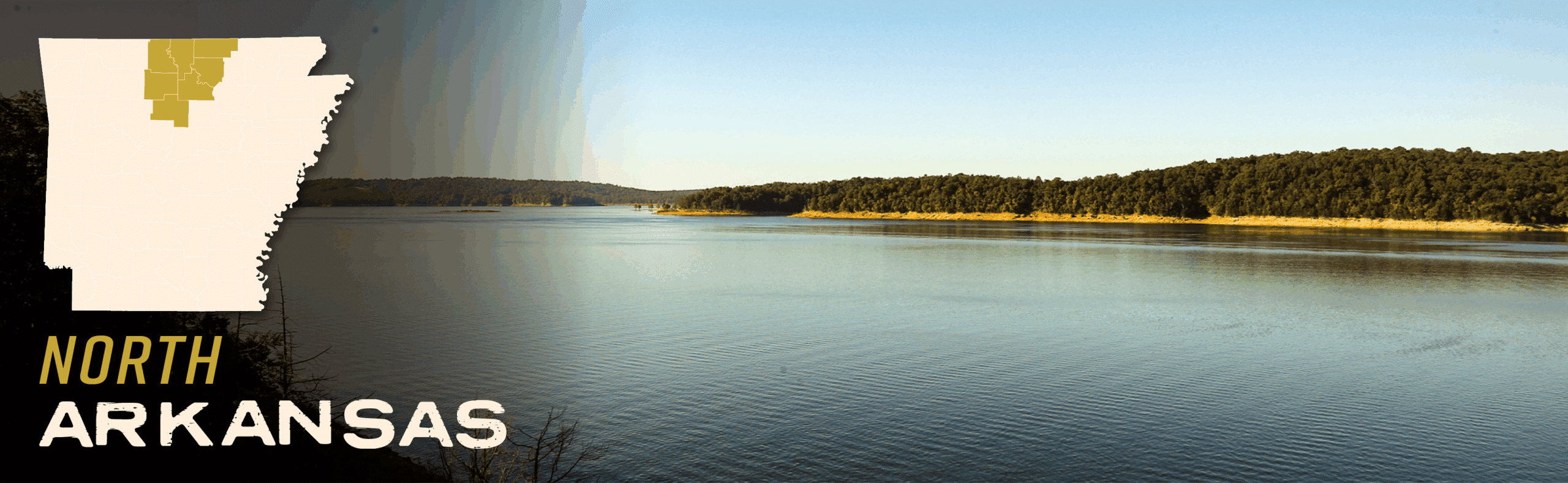
North Arkansas
Emergency Trout Regulations have been put in place! Read more: www.agfc.com/TroutRegsNews
The proclamation calls for catch-and-release of all trout in the 45 miles of tailwater below Bull Shoals Dam to the White River’s confluence with the North Fork River (specifically to the boat ramp at Norfork Access), as well as catch-and-release only on the entirety of the Norfork Dam tailwater. The trout waters below the White River-North Fork River confluence, from the Norfork Access boat ramp to the Highway 58 bridge at Guion, will have a two-trout-only limit with normal length and daily limits (only one trout over 14 inches). Tackle restrictions for the regular Bull Shoals and Rim Shoals catch-and-release areas on the White and the usual Norfork catch-and-release area still apply (artificial tackle only, and barbless hooks).
White River
NOTE: The Arkansas Game and Fish Commission has changed limits for the Bull Shoals Tailwater between the Bull Shoals Dam and the Norfork Access, effective Feb. 1: Now, anglers may keep two rainbow trout daily, no longer than 14 inches; all other trout caught must be released immediately. Below Norfork Access to Arkansas Highway 58 (at Guion), anglers may keep two trout of any species, only one may be longer than 14 inches. Brook trout must be at least 14 inches to keep; brown, cutthroat and tiger trout must be 23 inches long to keep.
Cotter Area
(updated 2-5-2026) Cotter Trout Dock (870-435-6525) said, “There’s nothing average about the weather we’ve been experiencing this new year, and there are no average days on the White River: All are memory-makers!
“Whether you’re busy counting rainbows, watching for a colorful cutthroat
or taking time to hook into a sensational brown trout, there are no ordinary days on the river. Water levels have been a little erratic — starting out low, rising in early afternoon, then dropping a couple of hours later as they adjust for power demands.”
Releases from Bull Shoals Dam have been variable, from minimum flow (700 cfs) to nearly three units (9,000 cfs) regularly over the last week. The lake is almost 7 feet below its normal power pool of 659 feet msl. Expect cold (to very cold) early mornings followed by a decent rise in the temperature. “Too nice to stay home,” they say. “With the spawn officially at an end, we’re anticipating some nice catches with the brown bite alternating between sculpins and minnows. Nightcrawlers proved their worth for bank fishermen, and dragging a scented white worm worked well angling from the john boats in medium or higher water levels. “The rainbows are responding really nicely to ⅛-ounce jigs — white, olive/ginger, or olive/black — during lower water events, but several large rainbows have snapped at sculpins, too. The higher water has allowed some fun streamer action; try white/gray streamers first. “Be especially cautious if you are casting from the bank or if you are able to wade into the main channel — the water level can change very quickly. Don’t be caught unawares. Regardless of water level, remember: Big fish like big bait.”
Calico Rock Area
(updated 2-5-2026) Dave McCulley, owner of Jenkins Fishing Service in Calico Rock, said, “We hope everyone survived the winter storm in good condition. Due to electrical demand, we have seen varied generation from the dams, resulting in varied water depths. Recently the depths have varied between 4 and 7 feet. Fishing has been good for both rainbow trout and brown trout. Drift-fishing with a silver inline spinner with eggs and tipped with shrimp resulted in good days of fishing for rainbow trout with numerous 14-inch-plus rainbows being caught. Brown trout fishing has been hot using Rapala Countdown CD7 in brown trout or silver/black colors. Additionally, Dynamic J-Spec lures in brown trout and ghost rainbow colors worked well.
“Since our last report, we received one stocking from Jim Hinkle Spring River State Fish Hatchery of 1,000 rainbows at the Calico Rock boat ramp, with an additional 1,000 each at the Chessmond Ferry boat ramp and Sylamore Creek boat ramp. It is nice to see we are going to get some nicer weather over the next week, perfect for getting out on the river.”
Bull Shoals Lake
For the Army Corps of Engineers’ real-time outflow report from Bull Shoals Dam, visit the Corps’ Little Rock office website.
(updated 2-5-2026) Fishing guide Del Colvin at Bull Shoals Lake (815-592-4302), delcolvinfishing.com, said Wednesday that the lake level is down to 651 feet msl, about 8 feet below normal pool. Water temperature is in the 45- to 46-degree range. Bass fishing has been fair overall. Looks like winter weather is holding on, but the forecast looks great. Be safe out there.
For powerfishing, a Wiggle Wart and SPRO Rock Crawler are patterns working. Red Craw variants, like the Mo Craw, will work. Fish the stone cold steeper, 45-degree, nasty rock, ledges and transition banks, especially the chunk rock ledges. Try covering water with wind and clouds. That’s ideal. Try a Megabass Jerkbait along bluff ends and points that have deep water nearby. The cold has some shad dying off high in the water. If the conditions are flat and sunny, get off the bank. There are always fish to be caught on a jig, like a half-ounce Jewel.
It’s winter, so looking at them has been the predominant pattern working for me. There are shad in the creeks, but a lot of them are breaking up and moving out deep over deep water. Graph time will pay off this time of year. Find the shad, find the fish. Most of the shad seem to suspend down in 60-80 feet over deeper water. Most of the fish seem to be holding at 50 feet or less, suspended over trees or up roaming relatively shallow.
Try a smaller 2.8 Tater Shad dead-sticked or shake a Rapala Mooch Minnow if they are up active. A Rapala-style ice jig will get down fast if they are moving fast. Day to day they will prefer one over the other Each day is a little different. The shad are definitely on the move and the post front days are always going to be rough. Remember: “Fish the conditions.”
Del regularly posts new YouTube videos. Visit his YouTube site (Bull Shoals Fishing Report) or delcolvinfishing.com for more information and tips on fishing Bull Shoals Lake.
(updated 2-5-2026) Southernwalleye Guide Service (501-365-1606) said walleye winter fishing patterns are still holding for the most part, but change should be coming soon with the spawning season just around the corner. Smaller male walleye are starting to show up, indicating spawning is not far off. Start looking on windblown spawning points early mornings or late evenings or on cloudy days.
If we get warm rain, look on the points close to deep water in the backs of coves with the most runoff. If there is no rain to pull them back into the coves, fish points that the sun warms up the most throughout the day on the main lake and secondary points. Fish shallow early, 2-6 feet and deeper, then after the sun comes up in 8-15 feet of water.
Jigs (1/8 to 3/8 ounces)and minnows or jigs and plastic work well after the sun comes up. Jerkbaits such as the 110 and 110+1 style in black and silver or clown colors are also good at this time.
If trolling, try stick baits like Rattlin’ Rogues in purple/chartreuse or black and gold. Troll in 8-15 feet of water at slow speeds — 0.8 to 1.0 mph seems to work best this early in the season. If you’re into night fishing, 2 hours before light and up to 2-3 hours after dark seem to be the best times. Fishing slow is the key.
(updated 2-5-2026) Crappie 101 Guide Service (870-577-2045) says they’re still finding crappie on timber in places, and also finding them in the creeks on brushpiles mainly in 15-25 feet of water. The bite has been pretty good overall with minnows; jigs have been working some, too. They’ve been throwing a 1/16-ounce jig with a Small Fry bait.
Norfork Lake
For the Army Corps of Engineers’ real-time outflow report from Norfork Dam, visit the Corps’ Little Rock office website.
(updated 1-22-2026) Tom Reynolds of STR Outfitters (also Facebook.com/stroutfitters or 870-421-1541) guides out of Tracy Ferry Marina. Tom hasn’t had any new reports since last summer, but striper fishing should be good now. You can visit his website linked above for more information.
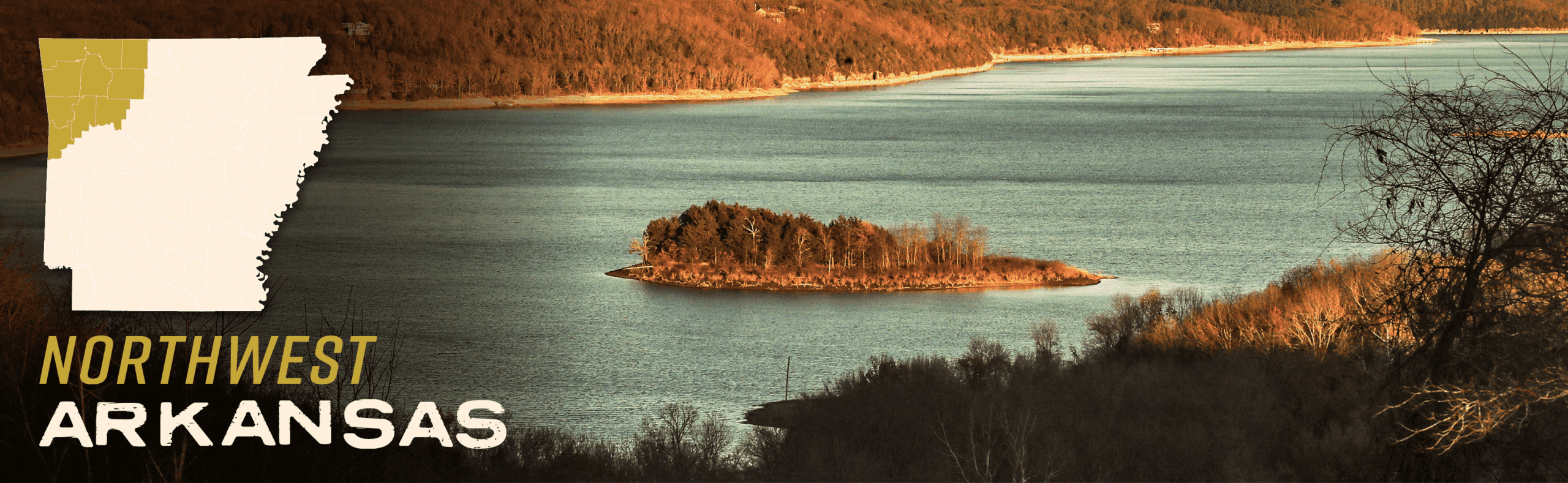
Northwest Arkansas
Beaver Lake
For the Army Corps of Engineers’ real-time outflow report from Beaver Lake Dam, visit the Corps’ Little Rock office website.
(updated 2-5-2026) Jon Conklin with FishOn Guide Service (479-233-3474) said Beaver Lake has gone through some major changes these last two weeks.
The lake has dramatically lowered to 1,113 feet msl, 8 feet below normal pool. The second change is that water temperatures plummeted to 39 degrees in river arms as of Wednesday, and warmer the further north you go.
The river arms were either frozen over completely or partially in shallow areas. Now, for the most part, the ramps and lakes thawed, so getting to and launching should be possible at all ramps.
“I would assume we had a shad kill of some extent. And that usually slows the bite for a time as fish gorge,” he said. “Because of the weather, I do not have much to report on the bite, but I will give a look into the next couple of weeks with warm weather coming.
“We need rain. We need some good water flow to jump-start the spawn. There is little inflow and there has been lots of generation. This is the reason the lake is dropping pretty darn fast.
“Warmer weather can only help, but as I stated, we need some water flow for all of you that chase walleye and whites. So, with the warmer weather and some rain, it will take off. Let’s hope for rain but not too much, as usually happens. We are close, so keep the warmth going and add some rain and hang on!
“Note that with lake being low, be careful — lots of hazards. Good luck!”
Visit Jon’s Facebook page for the latest updates between weekly reports at FishOn Guide Service Goshen AR.
Beaver Tailwater
NOTE: The Arkansas Game and Fish Commission has changed trout limits for the White River below Bull Shoals Dam, effective Feb. 1, due to a significant loss of stocking population at two Arkansas hatcheries in 2025. Anglers may keep two rainbow trout daily, only one longer than 14 inches, in the Bull Shoals tailwater; all other trout caught must be released immediately. This rule is in effect until further notice.
(updated 2-5-2026) Guide Austin Kennedy (479-244-0039) says, “We’re in the late-winter window. Ice and snow are melting off during the day, but cold nights and another cold stretch this week are keeping water temperatures suppressed. That back-and-forth is controlling fish movement more than anything else right now.
“As for the river and tailwater conditions, snowmelt is feeding the system, keeping water cold and dense while current remains efficient — even where total flow numbers aren’t extreme. Fish are not roaming. They’re holding where they can sit comfortably and feed without burning energy.”
Austin says the high-percentage angling areas are inside seams where fast water rolls into softer water, the tailors of deeper holes, current breaks created by rock shelves, bends or man-made structure, and transition zones — not dead slack and not main current.
“Fish are stacked tighter than most anglers realize. If you’re drifting, trolling or vertically fishing without contact, you’re probably just a few feet off the line they’re holding on.”
Austin reports that walleye remain in pre-spawn staging mode, but warming afternoons are starting to create short feeding windows. “These bites are time-dependent, not all-day.”
What’s working for walleye? “Vertical jigging when possible; slow, controlled drifts with frequent bottom contact; natural colors like olive, gold or black, with muted chartreuse accents; and live bait or subtle soft plastics over aggressive profiles.
“Bites are soft. Most fish won’t thump it — they just load the rod or feel heavy. If you’re waiting on a hammer bite, you’re missing fish.”
Austin says both rainbows and brown trout are active but selective in this cold water. “They’re feeding, but sloppy or fast presentations shut bites down quickly. Focus on mid-column presentations rather than dragging bottom. Also: smaller-profile crankbaits, spoons or jigs; lower retrieves with occasional pause.
“Brown trout, especially, are holding just off main current, using structure to ambush rather than chase. Low light and slightly rising water tend to favor them.
“The big picture for fishing now is, this is a precision season, not a search season. The anglers catching fish are slowing down, reading water correctly, and making repeat passes through high-percentage zones instead of covering water aimlessly.
“Cold still matters, but the trend is shifting. As snowmelt stabilizes and daylight increases, fish will slide shallower and feed more consistently.”
For regular updates, check out Austin’s Facebook page (Busch Mountain Fishing Guide Service).
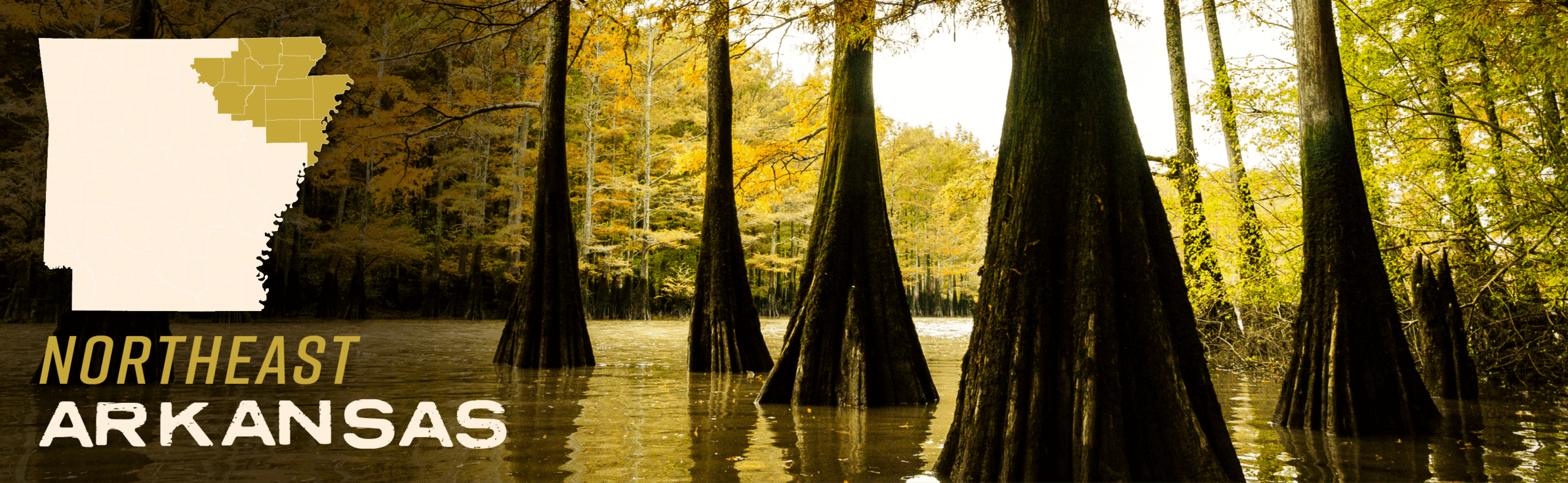
Northeast Arkansas
Lake Charles
(updated 1-22-2026) Shelly Jeffery reported from Lake Charles State Park (870-878-6595) said the water temperature on Friday, Jan. 16, was 49.2 degrees. The clarity of the lake is murky. The level is very low. Water in Lake Charles is used to flood Shirey Bay Rainey Brake WMA during waterfowl season. The drawdown has ended now, she said earlier this week, but “now we need rain!”
The top Parking lot off of Arkansas Highway 25 is the only boat ramp accessible. She has received no recent fishing reports.
Lake Poinsett
(updated 2-5-2026) Jonathan Wagner at Lake Poinsett State Park has not a had a new report for 2026, though 2025 ended with a steady stream of anglers enjoying unseasonably warm temps and successful catches of bass and catfish.
Lake Poinsett State Park has a bait shop at the park’s visitor information center and sells minnows, redworms, nightcrawlers and other various artificial baits and tackle. The hours for the park’s Visitor Information Center through February are: Monday-Friday 8 a.m.-5 p.m. and Saturday-Sunday 1-5 p.m.
Spring River
(updated 2-5-2026) Mark Crawford with springriverfliesandguides.com (870-955-8300) said water levels are running below 200 cfs (350 cfs is average), while water clarity is clear. “This must be a record for low water levels on the Spring River. Need rain badly for the area. Plenty of winter precip melting may increase flows, but doubtful with the dry conditions. So far the ground is soaking it up.
“Stocking has resumed on the Spring at winter accesses. The crazy low and clear conditions honestly has created the perfect conditions for dry fly and nymph fishing. On a bright sunny day, bug hatches of caddis and blue-winged olives mayflies can have the trout rising. A dry dropper rig can be a blast. Good luck not spooking the fish; camo is recommended.
“We’re catching a nice brown trout occasionally on those nasty overcast days, casting to the banks with fast strips back. It’s a lot of work, but totally worth it when it works. A bead-head olive Woolly will always be THE streamer.
“We’re catching largemouth and smallmouth bass at times. Watch the shore for busting baitfish and run a streamer through there! The low water can have the bass pushing the baitfish up near the shore. I still like below falls for the best smallmouth action. Fun stuff when the bite is on.
“Low water makes for easier wading in places, but be safe — the river bottom is still very slick. It is very easy to slip and get wet on the river. It’s been too cold lately to play around. Get to a warm place quick and get dry.
“Just remember: It’s never too cold for trout or a big ol’ walleye.”
Visit Mark’s blog (springriverfliesandguides.com) for updates, videos and conditions on the Spring River.
White River
For the Army Corps of Engineers’ real-time gauge level and flow from the White River stages at Batesville, Newport and Augusta and all other sites within the White River basin in Arkansas, visit the Corps’ Little Rock office website.
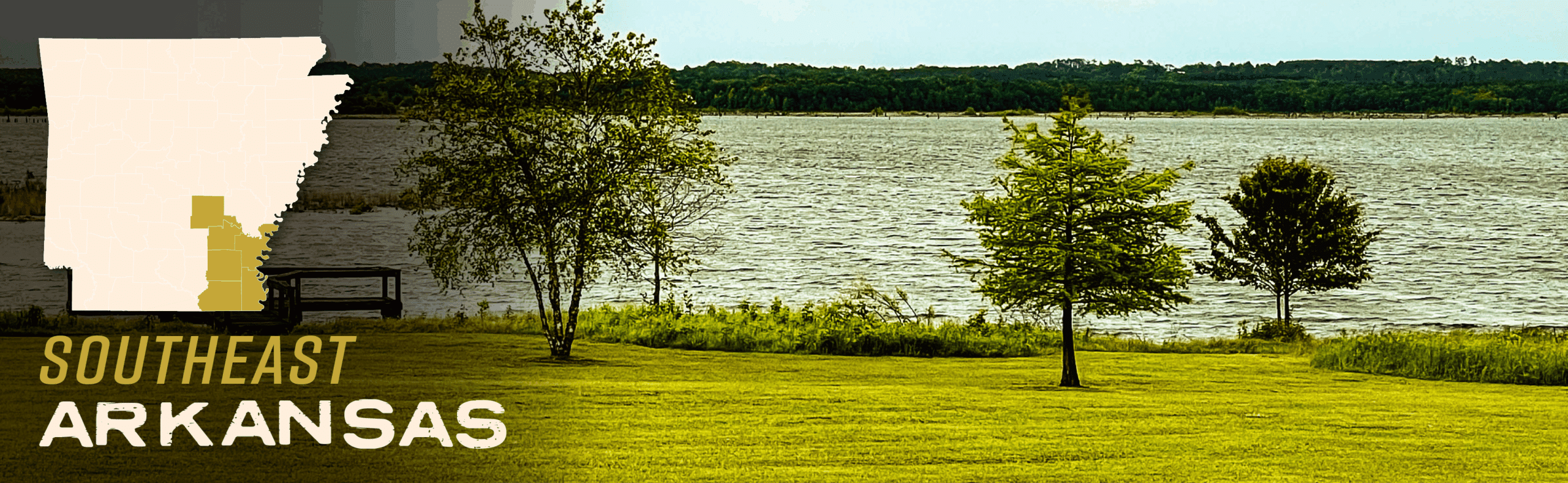
Southeast Arkansas
Arkansas River (Pine Bluff Pool)
For the real-time water flow at the Emmett Sanders Lock and Dam and Maynard Lock and Dam, as well as the Pine Bluff pool stage level, visit the Corps’ Little Rock office website.
(updated 2-5-2028) The University of Arkansas at Pine Bluff Bass Fishing Team has not had a report to begin 2026, but their last report in December showed water temperature in mid-50s and river pool visibility at 6-8 inches. Black bass were biting well on shad-colored bladed jigs, spinnerbaits, lipless crankbaits and shallow-diving crankbaits on wind-blown points of sand flats and rocky banks. Small dark-colored jigs and soft plastics were effective in calmer weather, especially near wood and docks.
When things turn very cold, however, anglers can expect things to get really slow until spring.
Cane Creek Lake
(updated 2-5-2026) Shelley Burr at Cane Creek State Park, (870-628-4714) said there have been few if any anglers on Cane Creek of late.
Recently, the AGFC began treating certain areas of the lake for Cuban bulrush, an invasive aquatic vegetation, according to Ryan Mozisek of the AGFC. Cuban bulrush is a fast-spreading invasive aquatic plant, and it was found in September as being widespread throughout the lake. Initial treatments have begun to treat the infestation in specific areas.
“Management efforts will need to be continued over the next several years to combat the vegetation in the lake so that anglers do not lose any more fishable water to these floating islands,” Mozisek said.
Cane Creek Lake is a 1,700-acre lake in Lincoln County that was built in 1986 and is owned and managed by the AGFC. It is stocked with bass, crappie, bream and catfish. The visitor center offers a pier, and there is good fishing often reported at the campsite. The lake has always had abundant floating and submerged aquatic vegetation. Increased focus recently on invasive aquatic species at the lake led to the discovery of the Cuban bulrush.
AGFC district staff also are working to manage other vegetation, such as American lotus, water lily, water shield and hydrilla, that have reached undesirable levels for anglers and biologists at Cane Creek Lake, Mozisek reported.
Lake Monticello
(updated 2-5-2026) The AGFC approved new fishing regulations regarding the harvest of sport fish on Lake Monticello. Effective Feb. 1, anglers may keep 5 bass, but only one bass may be 16 inches or more in length. Anglers may harvest 12 crappie, but only 7 crappie may be longer than 12 inches. All other fish creel limits follow the state regulations on that species.
Lake Chicot
(updated 2-5-2026) Lake Chicot, part of Lake Chicot State Park, is home to bluegill, channel catfish, largemouth bass, hybrid striped bass, redear sunfish and other bream, in addition to crappie. If you fish Lake Chicot, Connerly Bayou downstream of Connerly Dam, or Ditch Bayou from Lake Chicot downstream to Ditch Bayou Dam, be aware that crappie shorter than 10 inches must be immediately released and that the crappie daily limit is 20.
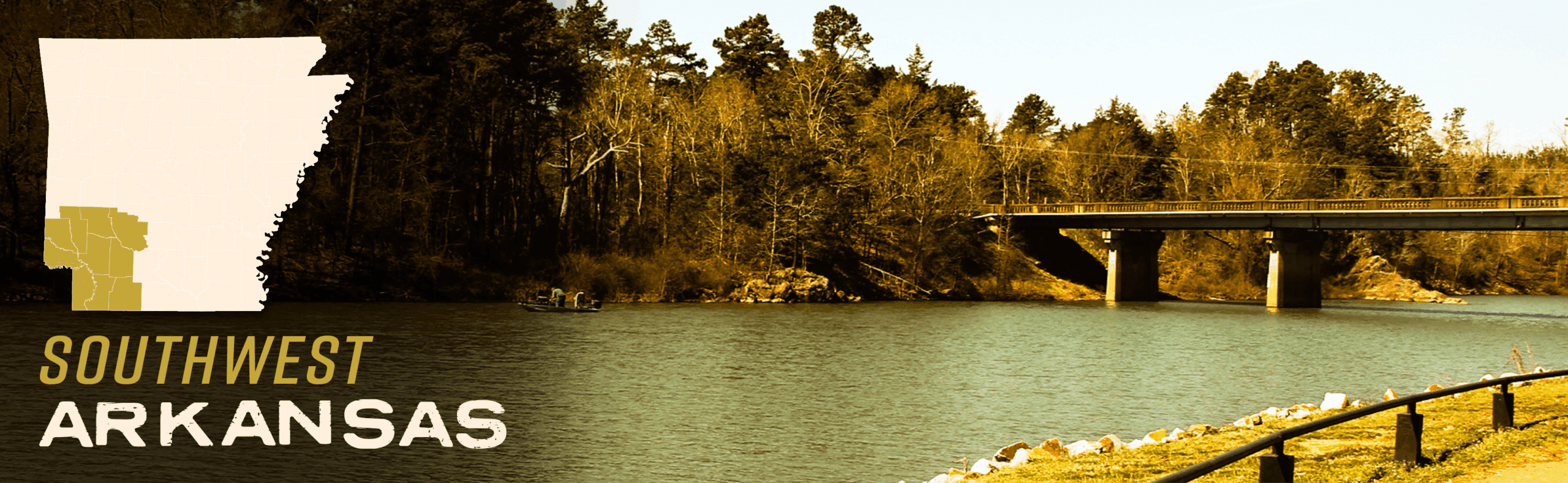
Southwest Arkansas
Millwood Lake
For the Army Corps of Engineers’ real-time lake level and outflow report from Millwood Lake Dam, visit the Corps Little Rock office website.
(updated 2-5-2026) Mike Siefert at Millwood Lake Guide Service said that as of Tuesday this week, ice still remains in many shaded shoreline locations. A couple of weeks back, a 11-pound-plus largemouth bass was caught in relatively shallow water that was donated to the Arkansas Legacy Lunker spawning program. Millwood Lake elevation as of midweek is about 3 inches above normal pool and falling. Millwood Lake Dam is releasing about 4,000 cfs, and tailwater is near 231 feet and dropping. Surface temperature over the past week was ranging 38 degrees early to 48 later in the day along Little River. The boat ramp at Yarborough Landing has thawed out this week, but it was iced over last week and ice could be observed at many areas around the shoreline on Millwood for the last 10-12 days in shallow coves and pockets. Clarity along Little River is heavy stain and low visibility.
Mike had this specifics of the fishing this week:
* Largemouth bass have been holding in deep washouts, ditches and creek channel outer deep bends with recent cold fronts dropping surface temps on Millwood Lake the last few weeks. With the reduced surface and lake pool temps again this week, activity as been subdued and slow. On warmer days, an angler can locate a few bass roaming shallow in backs of creek channels and flats, where the sun will warm the surface temps up several degrees. This time of year, 2-4 degrees will make a big difference in the way the bass will respond on points, in the backs of the creeks and in channel swings dumping creeks into the Little River. This time of year it’s best to be flexible and keep moving with search baits until you find the warmest, clearest water as possible away from muddy current of the river. In the back of the creeks, where you can find the warmest water, is the best bet to begin searching. This time of year, cold, muddy water is the worst possible scenario for hungry bass. Threadfin shad schools have all but disappeared, and we are basically now waiting on the spring shad spawn to increase largemouth activity levels.
Brazalo Lures’ Strutter 2.0 Bladed Jigs and 501 tandem willow blade spinnerbaits were taking good Largemouth and Kentucky Bass in creek channels several weeks ago, and will continue getting reactions in the oxbows on points near stumps, lily pads and creek channel flats and bends, near vegetation and remaining dead, lily pad stems, using curly tail grub trailer,. Best colors have been white, Spot Remover, Millwood Mayhem Bream and Firecraw. Use a split tail Bass Assassin 3-inch FFS Split Tail Shad trailer. Once you slow down your retrieve to compensate for reduced water temps, slow down again.
Bill Lewis ATV Crankbaits and Square Bills in Tennessee Shad, Pro Green Gizzard Shad and Ghost Minnow will draw a reaction on bright sunny, warmer days. With current conditions along Little River, the deeper sections, points and washouts draining into Little River from 10-15 feet are good target areas to search.
* No updates on white bass since a few weeks ago before the ice and freezing sleet-over on Millwood. Fair catches of whites were found on points and deeper drops into Little River from creek channels and secondary points three weeks ago. When things get back to normal, Bomber Fat Free Guppy, Fat Free Fingerlings in Tennessee Shad and Citrus Shad patterns, half-ounce Rat-L-Traps, Chuck’N Spins, Rooster Tails, Little Georges, Rocket Shads, UnderSpins with a 3-inch white grub, and Beetle Spins should work. Migration of the white bass up Little River for the annual spring spawn has yet to begin.
* Crappie have been fair to slow on jigs with the decrease of water temperature in the 10- to 14-foot depths. Crappie were biting well in planted brush along Little River before the wintry weather. Our crappie guides updated this week, and are reporting slow reactions. One day they are better on jigs and tubes, alternating with minnows, but that changes daily. Cordell Smoke Grubs on light wire jig heads, smoke-colored Southern Pro 1.5-inche Hot Tubes, 2-inch Crappie Stinger in red/yellow/pearl, and Pro Series Lit’l Hustler Tubes in Cajun Cricket, Tennessee Shad or Mexican Sunrise were working fair before the ice.
* Catfish improved on trotlines and tight lines with the increase of current in Little River, according to two guys we spoke with up Little River near White Cliffs campground. They had fairly good luck with blues and channel cats using King’s Punch Bait, frozen catalpa worms, molded cheese and cut bait set on trotlines along Little River from 12-16 feet deep in river current.
For more details, visit the Millwood Lake Guide Service webpage.
Lake Greeson Tailwater
For the most updated Narrows Dam generation schedule from SWEPCO, click here.
Lake Greeson
For the most updated lake level at Lake Greeson, click here.
DeGray Lake
For the most updated lake level at DeGray Lake, click here.
(updated 2-5-2026) Fish ’N Stuff (501-834-5733) in Sherwood notes the two donations to the Arkansas Legacy Lunker program(11 and 12 pounders) that were recently caught here and has more good news on the largemouth bass fishing going on here lately. Anglers are mainly catching them on minnow-style baits with half-ounce jigheads. They are throwing these in about 15-20 feet of water.
You can also try a gizzard shad or threadfin shad pattern. Anglers are also having success throwing a three-quarter-ounce Raven Red lipless crankbait. Focus the lipless cranks anywhere you can find any live grass, or any grass at all to speak of.
(updated 1-22-2026) Randy Plyler with Plyler Outdoors Guide Service (870-210-0522) said as 2025 was winding down that with water temps in the low to mid-50s, bass can be caught on Alabama rigs or shaky head minnow by looking at your LiveScope and look for balls of baitfish. Also, bass can be caught on lipless crankbaits and crankbaits running to 12 feet deep along the moss and close to ledges. Some have been caught on jigs in 15 feet.
Crappie can be caught on minnows and jigs in 15-25 feet on brush and standing timber.
“You want to catch a fish of a lifetime folks, this is the starting time of the year to catch one. Just two weeks ago there was a whopping 14.2-pound largemouth bass caught out here using a shaky head minnow by LiveScoping.”
De Queen Lake
For the Army Corps of Engineers’ real-time lake level and outflow report from De Queen Lake, visit the Corps’ Little Rock office website.
Dierks Lake
For the Army Corps of Engineers’ real-time lake level and outflow report from Dierks Lake, visit the Corps’ Little Rock office website.
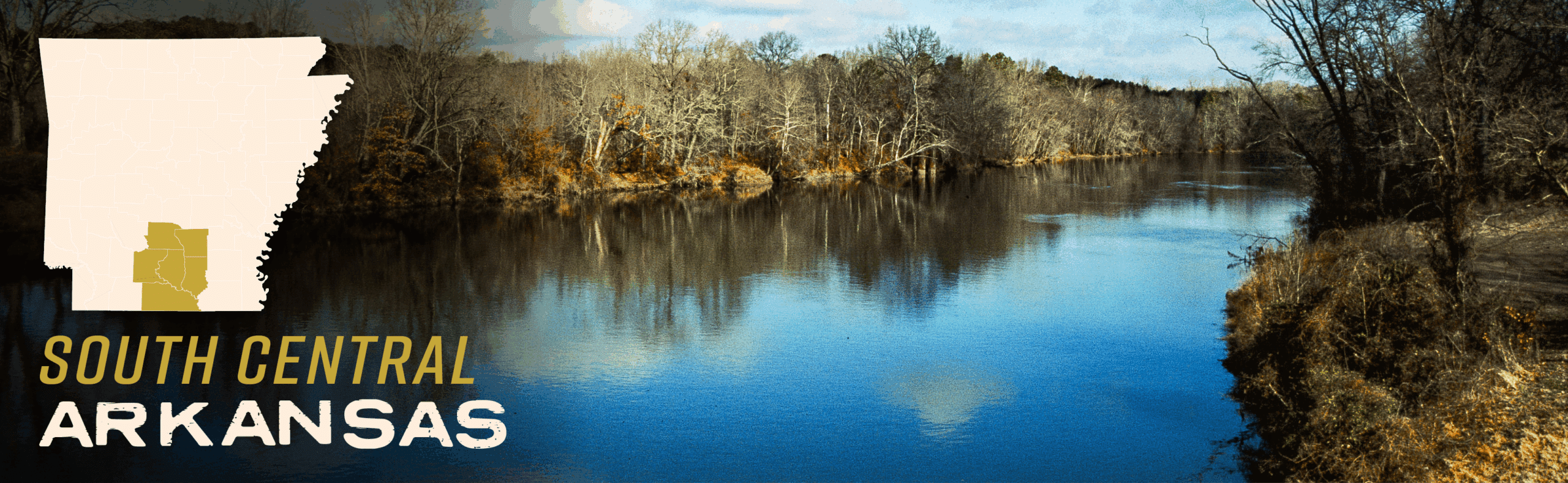
South-Central Arkansas
White Oak Lake Area
No reports.
West-Central Arkansas
Lake Catherine Tailwater (Below Carpenter Dam)
For weekly flow releases from Carpenter Dam, visit www.entergy.com/hydro
(updated 2-5-2026) Shane Goodner, owner of Catch’em All Guide Service, reports that water temperature below the dam has dropped into the upper 40s due to the frigid weather of the last two weeks in the Hot Springs area. “Snow and ice accumulations had made accessing the Carpenter Dam tailrace nearly impossible and are only now thawing out to the point of safe access.”
Lakes Hamilton and Catherine remain in their 5-foot winter drawdown. Catherine was lowered an addition 2 feet for other projects though Jan. 31 but is rising slowly, which will make it again possible to safely launch boats in the tailrace at the winter loading ramp. No water is anywhere near the two loading ramps adjacent to the public access fishing docks. The winter loading ramp will be the only available launch area near the dam.
As reported over the last several weeks, rainbow trout stocking will be drastically reduced all over the state due to the massive flooding at one hatchery and poor water quality at another that destroyed thousands of trout scheduled to be delivered to our lakes and streams. Despite the low water and trout emergency measures, fishermen have caught small numbers of trout in the tailrace casting Rooster Tails in white or brown in a 1/16- or ⅛-ounce weight. The trout are very scattered from the dam to the bridge, but fly-fishermen have taken numbers of trout on Trout Magnets in hot pink or white presented under a strike indicator.
February, March and April are scheduled to have 1,000 rainbow trout stocked below Carpenter Dam and Blakely Dam each, and that will conclude the spring stocking for those areas.
The walleye spawn will begin in the next several weeks with the approximate times depending on water temperature. No reports as yet of any male walleye caught, but will report action as soon as the bite begins.
Anyone attempting to navigate the Carpenter Dam tailrace is urged to use extreme caution in the low water conditions.
Lake Dardanelle
For the Army Corps of Engineers’ outflow and gauge level reports from Dardanelle, visit the Corps’ Little Rock office website.
(updated 1-22-2026) Charles Morrison at Classic Catch Guide Service (479-647-9945) says the river is still low, but clean from top to bottom. Water temperature is around 48 degrees, warming to 51. Creeks are a little bit cooler than the river. Large schools of shad are holding in deep water along the river. Some are starting to migrate up the creeks in the last couple days (earlier this month). But they are staying deep.
Bass fishing has been really good. Spinnerbaits, crankbaits and jigs are working great in shallow water (3-4 feet). Jerkbaits, swimbaits and Rat-L-Traps are working well in 6-12 feet of water.
Striped bass are beginning to run. Swimbaits, Rat-L-Traps and spinnerbaits have been working well.
Crappie were hit-and-miss with the warm temperatures earlier this month. “They have been scattered and on the move, not staying in one place very long. But when you do run across them, Monkey Milk and black red colors have been working well, and some days pink. I have seen them in different depths and on different structures.”
Catfish have been really good. The large catfish are deep with the shad. Skipjack and shad are working well; 2- to 5-pounders are good with large shiners and crawfish around brush in 6-10 feet of water with the drum.
“Good luck. Hope to see you on the water. Battle on.”
Lake Hamilton
No reports.
Lake Nimrod
For the Army Corps of Engineers’ real-time lake level and outflow reports from Nimrod Lake, visit the Corps’ Little Rock office website.
No reports.
Lake Ouachita
For the current lake level at Blakely Dam, click here.
(updated 2-5-2026) Todd Gadberry at Mountain Harbor Resort and Spa (870-867-2191/800-832-2276 out-of-state) reports that black bass are good. Spoons and a jig fished in and around brush will produce results. Break out an Alabama rig, too, for all species. Stripers are fair and are being caught on Bama rigs and live bait near major creek basins in the western and central parts of the lake. Crappie are very good. Try a small minnow-colored jig over brush in the 30- to 50-foot range.
No reports on walleye, stripers, bream or catfish.
Water temperature is ranging 46-52 degrees as of Wednesday. Water clarity is stained. The lake level is steady at 569.97 feet msl. Call the Mountain Harbor fishing guides (Mike Wurm, 501-622-7717, or Chris Darby, 870-867-7822) for more information.
Blue Mountain Lake
For the Army Corps of Engineers’ real-time lake level and outflow reports from Blue Mountain Lake, visit the Corps’ Little Rock office website.
NOTE: Blue Mountain Lake is undergoing a two-phase drawdown proposed by the Army Corps of Engineers to improve aquatic and waterfowl habitat by exposing mudflats for seeding and for critical maintenance on the lake’s intake structure. Phase one began Sept. 2, lowering the lake to its normal winter pool elevation of 384 feet. The second phase will begin May 1, 2026, with the lake further lowered to 374 feet through Nov. 1, 2026. During the drawdown, water activities will be limited, boat ramps may be affected, and areas around the lake will be seeded.
Japanese millet will be seeded on the mudflats during phase one to improve habitat for waterfowl and other aquatic species. Call 479-947-2372 for more information.
East Arkansas
White River/Clarendon Area
For the Army Corps of Engineers’ real-time gauge level and flow from Clarendon, visit the Corps’ Little Rock office website.
No reports.
Note: msl is mean sea level; cfs is cubic feet per second.
Recent News
Arkansas Wildlife Weekly Fishing Report
Sep. 17, 2026

Subscribe to Our Weekly Newsletter E-mails
Don’t miss another issue. Sign up now to receive the AGFC Wildlife Weekly Newsletter in your mailbox every Wednesday afternoon (Waterfowl Reports are published weekly during waterfowl season and periodically outside the season). Fishing Reports arrive on Thursdays. Fill in the following fields and hit submit. Thanks, and welcome!