Waterfowl Report: Better Conditions Greet Hunters
BY Jim Harris
ON 12-12-2025
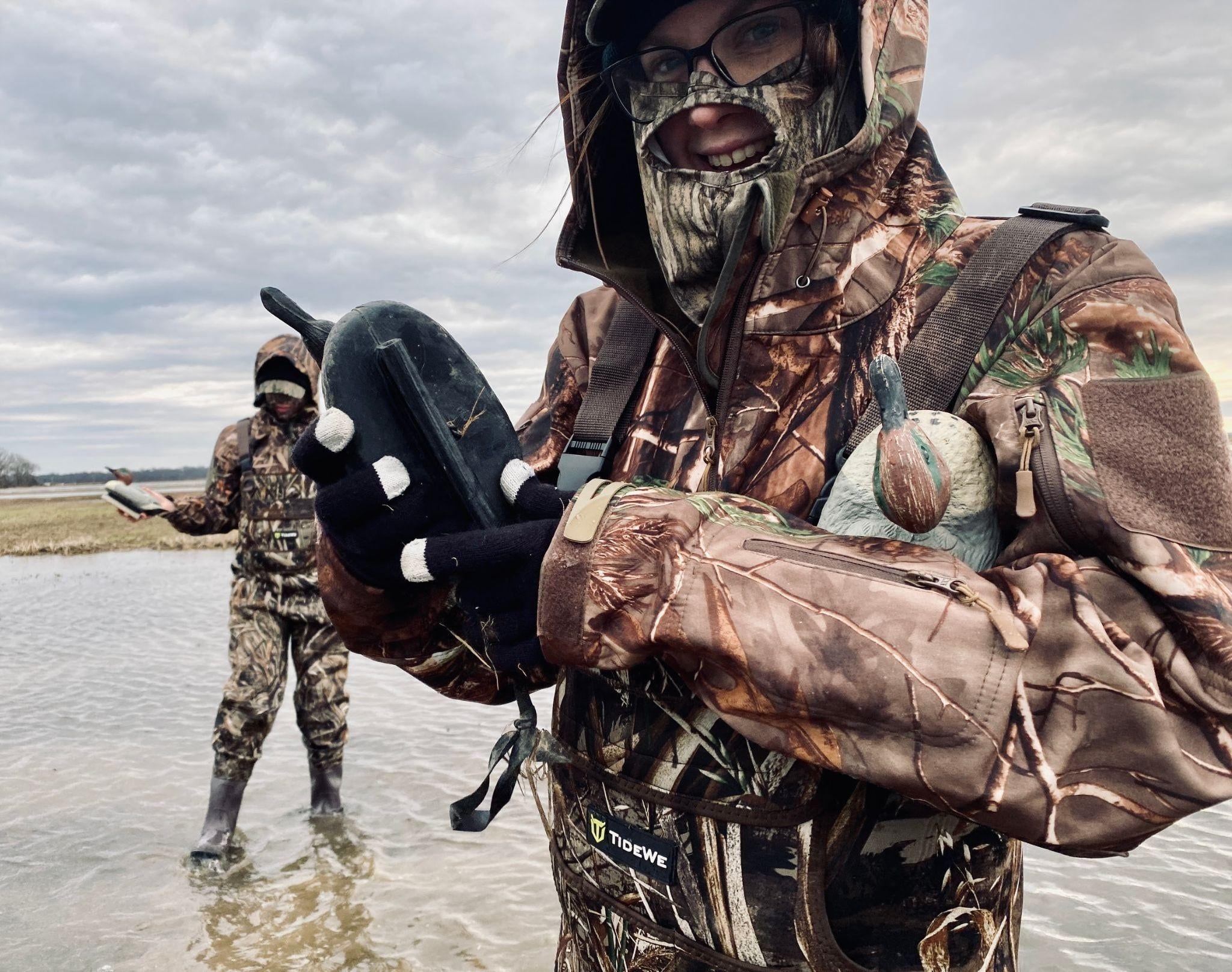
Already, waterfowl hunters in 2025-26 are enjoying much better conditions than hunters experienced in Arkansas at this same time during the previous three seasons. The state was very dry going into the second segment of the 60-day season each of the past three years, and balmy December temperatures were not unusual – mainly, it was the lack of water and the lack of expansive waterfowl habitat that were the biggest factors, especially last year.
That is not going to be the case this season, though, as the season resumed on Wednesday. Ahead are 14 days of interrupted hunting before a three-day break around Christmas, then the season runs nonstop from Dec. 27-Jan. 31. We’ve seen a couple of weeks of temperature dips close to the freezing mark around the state, several fronts bringing rainfall and, even best of all, territory north of Arkansas has had winter precipitation that has pushed ducks and geese southward. As the second segment’s opening day arrived, we finally had a nice sunny day around the region.
This weekend will see 47 Waterfowl Rice Incentive Conservation Enhancement (WRICE) program fields open out of 50 for permit hunting through the AGFC’s permit application process (three fields in Monroe County have not been available due to poor water conditions). A total of 676 applicants tried for those 47 fields (one went unclaimed, by the way). It appears the WRICE fields in White County around Georgetown are the most in demand, but one in Faulkner County also caught our attention for having heavy waterfowler interest in the draw this week. The first-choice application sheet for WRICE fields is available for public view at this site.
Remember: Applications for the private land permit hunts on the WRICE leases and permits for hunting in certain WMAs can be made online at agfc.com under “Get a License,” or by clicking here, between 3 p.m. Thursday and midnight Sunday. Winners are notified on Monday with instructions and directions to their hunting locations.
Also, with the new system we’ve employed for communicating the water levels and habitat conditions for the AGFC’s greentree reservoirs and moist-soil units, we’ve made it a little easier this week to access the information. For both, you can go to the “Waterfowl” page on the agfc.com website, and at the top of the page, just below the mallard drake in flight, are the links to the most up-to-date information on the moist-soil units and the GTRs. Information is updated on those pages only when new information is added from the field biologists; if there are no changes in levels or conditions, it is not updated.
To go directly to the moist-soil habitat page, click here. To access habitat information in the GTRs, click here.
Duck Season Social Draws Almost 400
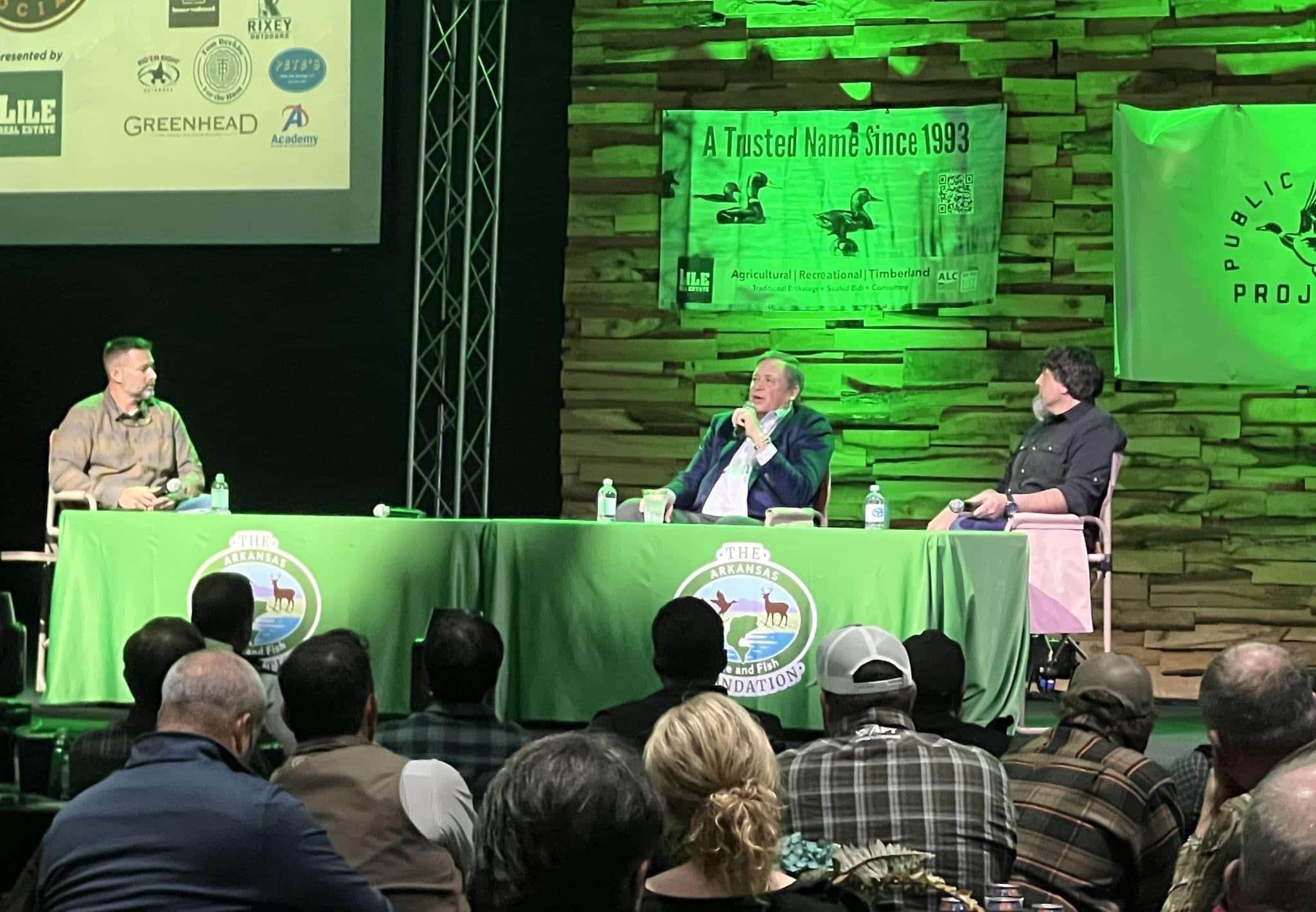
The Arkansas Game and Fish Foundation hosted its sixth annual Duck Season Social on Dec. 4 in North Little Rock, gathering nearly 400 waterfowl enthusiasts for a night of conservation and camaraderie during the duck season split.
The event, presented by Lile Real Estate, featured dinner, drinks, live music, a raffle and a highly anticipated fireside chat with notable conservationist David Snowden Jr. and Doug Osborne, Ph.D., from the University of Arkansas at Monticello. Corey Dunn, senior director of development for Ducks Unlimited Arkansas, moderated the panel.
AGFF President Deke Whitbeck said of the event, “The Duck Season Social is simply a great night to gather during the split of the duck season, swapping stories and celebrating our shared passion for conservation. This event, founded by AGFF board member Brent Birch, is a fantastic success year after year because of the incredible effort he puts into it, and we are profoundly grateful for his dedication. Funds raised here directly empower the AGFC’s work in improving waterfowl habitat and ensuring access for all outdoor enthusiasts.”
The panel discussion highlighted the Dyke-Snowden Endowed Chair of Waterfowl and Wetlands, which Osborne holds as the inaugural director of the Snowden Waterfowl Center of Excellence at UAM. This new $7 million center, secured through $2 million in endowment funding (half legislative appropriation and half private donations led by Snowden and Merritt Dyke), is positioned to make UAM a national leader in advancing waterfowl and wetlands research, education and outreach in the heart of the Mississippi Flyway.
Hail Calls
* The National Oceanic and Atmospheric Administration released its November recap earlier this week, and the findings should surprise no one in this region: It confirmed what most had suspected – that, across the country, this fall (September-November) was unseasonably warm. According to the report, it was the third-warmest meteorological fall in 131 years in the U.S. The warmest areas, though, were actually to our west: A swath of seven states, from Washington and Idaho down into Texas, saw the warmest temperatures. In fact, in those states, it was their warmest fall on record. Arkansas was rated as “much above average” for fall, along with most of the Midwest. Most states east of the Mississippi River were “above average,” with the Carolinas being “near average.”
In case you have forgotten, though, fall of 2024 was considered warmer than this one. 2016 and 2024 are the warmest falls on record since 1895, according to NOAA.
Still, it makes you appreciate these temperatures in the 30s and 40s over the last several days.
* As Missouri’s waterfowl outlook seems to have some bearing on what Arkansas will eventually see in migration as we edge closer to the end of the year and into January, we’re always on the lookout for biologists’ reports from the Show Me State and from Ducks Unlimited reporters. DU’s report issued last week noted that the Missouri Department of Conservation’s most recent waterfowl survey showed the number of ducks in the state roughly doubled to over 700,000 between Nov. 17-Dec. 1. It said that though the figure is slightly below the five-year average for this time of the year, the arrival of new birds had hunters excited for more opportunity. Missouri saw an initial big drop in temperature around the week of Thanksgiving, according to wildlife watchers, and that led to a push of waterfowl into a good portion of the state. Northwest Missouri was seeing most of the activity at that time, however.
According to Reid Viegut of the MDC, as of Dec. 1, the statewide count for waterfowl in Missouri through its surveys of Conservation Area wetlands and national wildlife refuges was 746,829 ducks, 74,831 snow geese, 44,150 white-fronted geese and 1,440 Canada geese. The week’s duck estimate is 4.4 percent less than the five-year average of 781,220 ducks but 6 percent greater than the 20-year average (704,343 ducks). The MDC estimated 542,769 mallards among its total ducks, a 1.4 percent increase over the five-year average estimate. and almost even with the 20-year estimate of mallards.
Click HERE for All Waterfowl Dates and Limits
Recent News
Subscribe to Our Weekly Newsletter E-mails
Don’t miss another issue. Sign up now to receive the AGFC Wildlife Weekly Newsletter in your mailbox every Wednesday afternoon (Waterfowl Reports are published weekly during waterfowl season and periodically outside the season). Fishing Reports arrive on Thursdays. Fill in the following fields and hit submit. Thanks, and welcome!