
Legacy Lunker anglers beware deep-water angling effects on trophy bass
BY Jim Harris
ON 01-27-2026
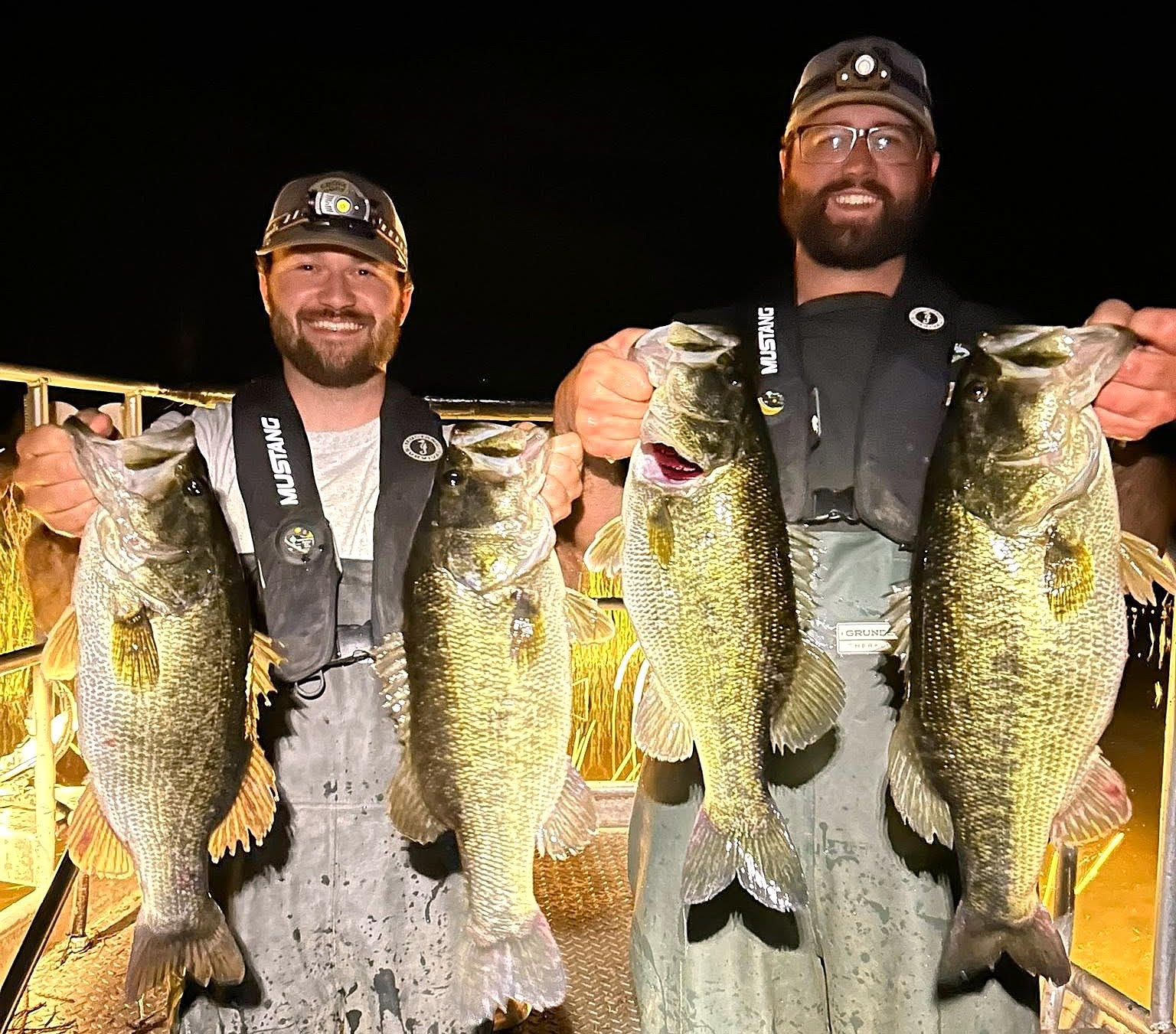
HOT SPRINGS — AGFC fisheries biologists urge anglers chasing big bass, particularly those fishing in and over deep water, on Arkansas’s public lakes and rivers to take extra care of the fish they catch and hope to enter in the AGFC’s new Arkansas Legacy Lunker program. Jeremy Risley, the AGFC’s Black Bass Program coordinator, stresses several ways anglers can help fish survive the stress of being caught from the depths, whether it’s a 10-pounder or larger headed for the Joe Hogan State Fish Hatchery in Lonoke for the Arkansas Legacy Lunker program, or any other fish he or she catches wants to return to its habitat to fight another day.
Fish from deep water can experience a condition called barotrauma when caught, similar to a deep-sea diver getting the “bends” if they surface too quickly. Gas inside the fish’s swim bladder expands quickly when the water pressure surrounding it drops rapidly as they’re reeled up from deep water. The bladder expands, leading to a bloated body, difficulty swimming or the fish floating on its side, struggling to right itself. This can be fatal to the fish without intervention by using venting tools to “fizz” the fish’s air bladder or attaching fin clips with weights to help the fish remain upright in the livewell until it recovers.
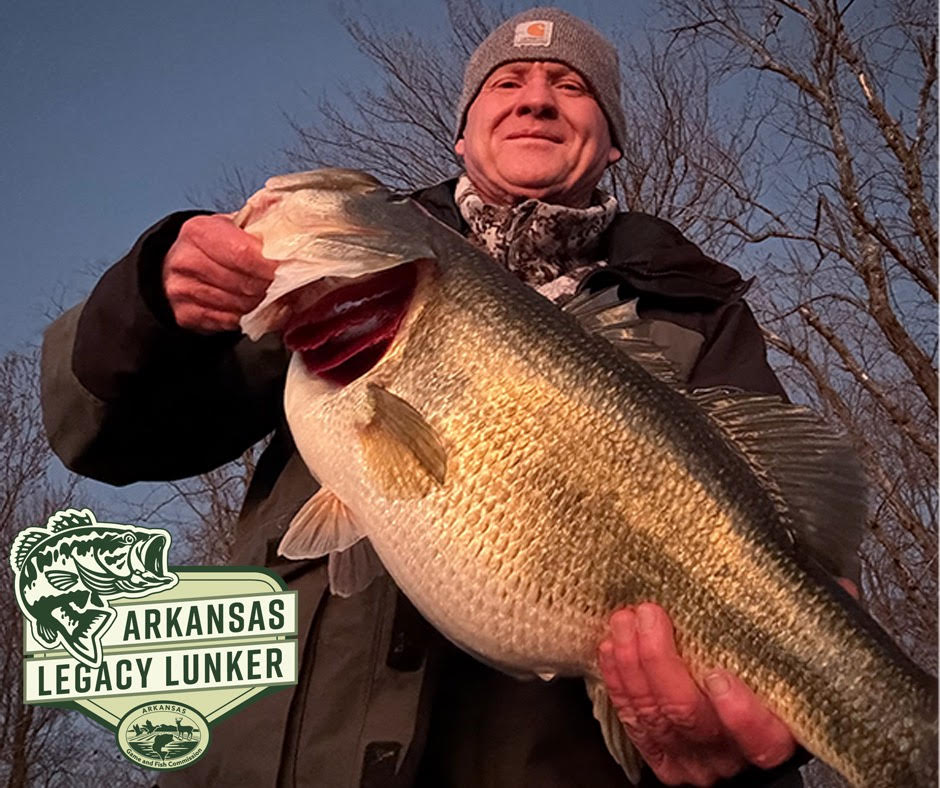
Barotrauma is not exclusive to winter. It’s a year-round issue whenever fish are caught and rapidly reeled up from deep water during summer and fall as well.
Barotrauma can be relieved using a hollow needle to pierce the fish’s swim bladder and release the gas inside, but Risley suggests anglers wanting to report a 10-pound or larger bass to the Legacy Lunker program wait and let AGFC Fisheries Biologists handle the fizzing on these fish.
“Fizzing a 10-pound bass can be scary, and it can cause some harm to the fish through secondary infections and damage to other organs if not done correctly,” Risley said. “We’ll take care of that at pick-up or at the hatchery if it’s deemed necessary. For fish under that 10-pound mark that you want to release to the water, we have a video on our Facebook page to teach you how to fizz.”
Arkansas Legacy Lunker program coordinator Will Lancett says one thing anglers can do to help relieve stress from fish suffering barotrauma while waiting for the Legacy Lunker truck to arrive is to use weighted fin clips that will help it stay upright.
“They’re small clips that have an ounce or so of lead weight that will help the fish without causing too much stress,” Lancett said. “Just be sure that the jaws of the clips are coated in shrink wrap so they don’t bite into the fish’s fins. Place one on each of the pelvic fins below the gill plate and one on the fish’s anal fin, just ahead of the tail. It will let the fish stabilize upright instead of fighting to maintain its balance.”
Here are a few more tips from Risley on the proper handling of trophy bass:
-
Minimize Handling: Use a net, preferably a rubber net, when possible to land the trophy fish. String nets are hard on a fish’s slime coat, and so is the floor of the boat. Use that net, and transfer the fish directly to a livewell. Trying to “boat flip” a 10-pounder is bad for the fish and bad for your rod.
-
Livewell Care: Just because the water is cold doesn’t mean you shouldn’t run your aerator or recirculator. Remember, trophy bass undergo stress just from being held in a small space.
-
Call the AGFC immediately: The sooner you call, the sooner our staff can head out to pick up the fish. For Legacy Lunker, that number is 833-948-BASS (2277).
-
Let the Trophy Be: Minimize disturbing the fish while you wait for staff. Let it chill.
-
Breathe: We know this might be the best day of your life and the biggest bass you have ever seen, let alone caught. Please listen to AGFC staff’s instructions as they make their way to you to maximize the health and survival of fish being transferred to the AGFC for the Arkansas Legacy Lunker program.
-
Picture Time: It’s best to just get the fish in the livewell and wait for the Legacy Lunker truck to arrive before getting pictures. If you must take a few because the sun is going down, here are a few tips:
-
Wet your hands before handling the fish.
-
Firmly place one hand on the lower jaw and the other just before the tail, holding the fish horizontally.
-
Quickly take a couple of photos, then place the trophy fish back in the livewell. If you cannot hold your breath during this process, you have kept the fish out of the water for too long.
-
-
Respect: Although many veteran anglers have caught numerous fish throughout their lives, trophy bass are a different story. They are not fragile, but they have lived a long time to reach trophy size in Arkansas and deserve respect.
Jason Miller, an assistant chief in the Fisheries Division, says another consideration for anglers would be to carry a commercially available water conditioner or livewell treatment on board “as a way to reduce stress and protect the fish’s slime coat.”
Miller adds, “Don’t assume a fish caught in 8 feet of water isn’t experiencing some level of trauma. The average angler who’s targeting big fish in winter needs to know what to look for and how to fizz one if they are planning to release it. If this is a donation fish to Arkansas Legacy Lunker, hang tight, and we will handle it.”
####
PHOTOS:
CAPTION 1: Even if trophy bass isn’t a candidate for the Arkansas Legacy Lunker program, but a monster such as these sampled by AGFC biologists recently from Lake Monticello (set to open for harvest of bass Feb. 1), anglers must handle their catch with respect.
CAPTION 2: If you catch a Legacy Lunker candidate, like this one from Millwood Lake by Jeff Pate of Texarkana, let the AGFC’s Legacy Lunker team arrive on the site to help you maintain your catch, such as if the fish needs fizzing.
Recent News
Subscribe to Our Weekly Newsletter E-mails
Don’t miss another issue. Sign up now to receive the AGFC Wildlife Weekly Newsletter in your mailbox every Wednesday afternoon (Waterfowl Reports are published weekly during waterfowl season and periodically outside the season). Fishing Reports arrive on Thursdays. Fill in the following fields and hit submit. Thanks, and welcome!