
Keep Your Trout Healthy for the Next Angler on the Line
ON 06-09-2026
As temperatures rise, trout in Arkansas’s famous tailwater fisheries face a bit more stress than usual. Anglers looking to catch their share in the cool water should add a little more precaution to their catch-and-release regimen.
Christy Graham, Arkansas Game and Fish Commission Trout Management Program supervisor based in Mountain Home, says summer is always a time to caution anglers who wish to practice catch-and-release, but this year is especially critical because Arkansas’s trout fisheries are still seeing decreased stocking levels from losses in trout production that occurred last year.
“The great news is that [Jim Hinkle Spring River State Fish Hatchery] is back to 100 percent production, so that will help us make up some shortage from the Norfork National Fish Hatchery,” Graham said. “They have worked really hard to bring in fish to replace what they lost the last two falls, and they’ve been able to stock the White River, Norfork tailwater and Beaver tailwater at about 50 percent of their normal rates using fish that were cut from other stocking locations to balance the load. But we’re still limited compared to a few years ago.”
Graham says the conservative regulations adopted as emergency actions late last year and confirmed during this spring’s regulation-setting process likely will remain in place.
“We will see reduced stocking levels for the rest of 2026 and into 2027,” Graham said. “We will reevaluate the length and daily limits for the fisheries affected by the reduced stocking rates when hatchery production deems it appropriate.”
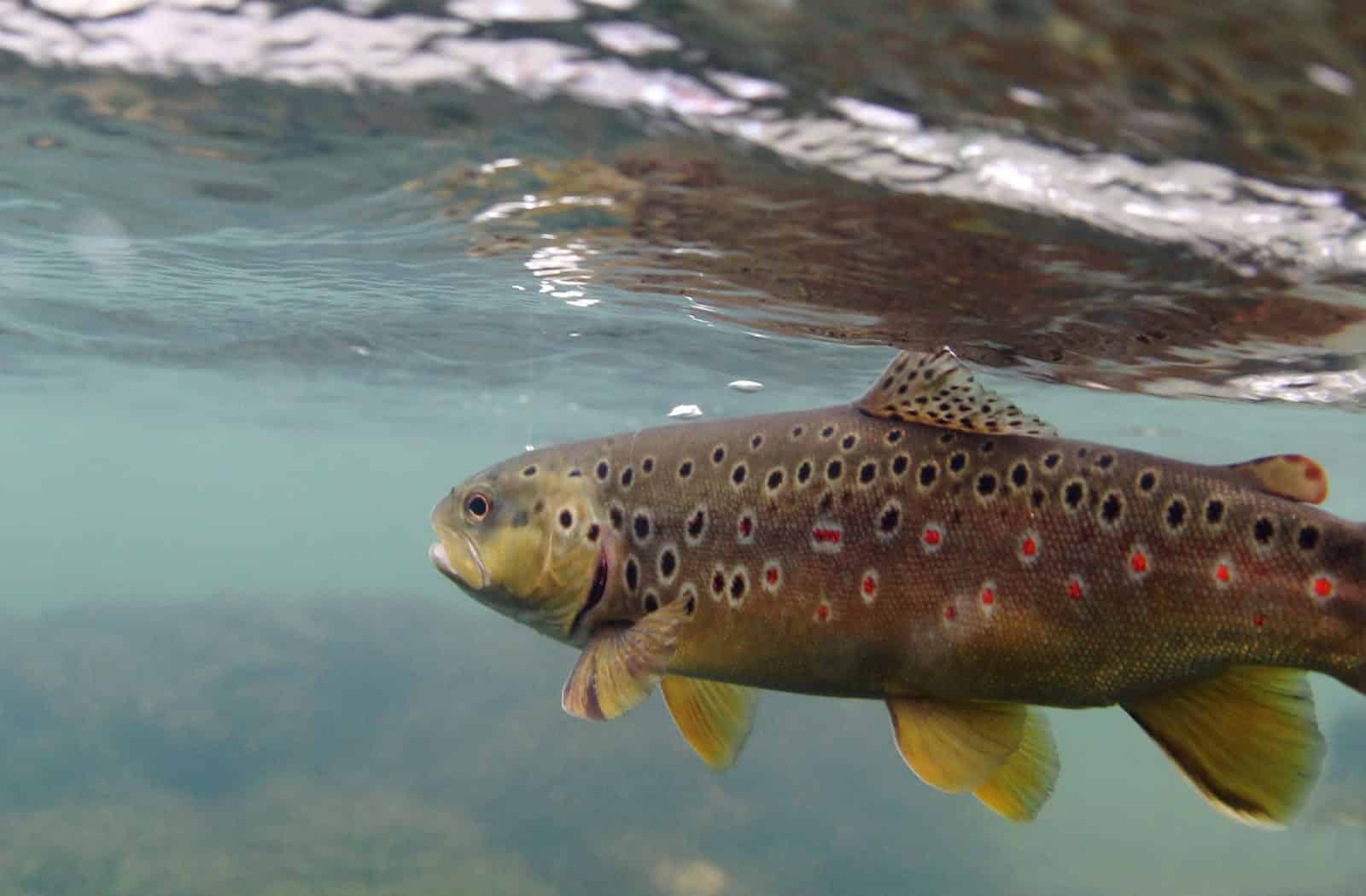
According to the American Fisheries Society’s “Trout and Char of the World,” once water warms too much (78 to 86 degrees, depending upon species), trout can perish from the hostile environment. But many variables can lower this threshold.
“Fish size, the length of time the fish has endured the hot water, and any sudden rise that can shock the system all come into play, and that’s not even counting the added stress that comes from a long fight on an angler’s line,” Graham said.
According to Graham, anglers should carry a pocket thermometer and check the water periodically while fishing. When the surface water temperature reaches 68 degrees, fish are already experiencing stress, and prolonged fights can substantially increase mortality.
“If you come across that 68-degree threshold, you may want to move upstream to cooler water,” Graham said. “The fishing is likely to be better where the trout are more comfortable and in a feeding mood anyway.”
Even at water temperatures ranging from 65 to 67 degrees, anglers may consider fishing only in the morning and using heavier gear to get fish in quickly, rather than adding undue stress from long fights.
“At that point, if you’re still wanting to fish the same waters, you should consider keeping what you catch until you reach your limit and call it a day,” Graham said. “We set limits with the expectation of some harvest, and survival rates from fish that came from 68-degree and warmer water are pretty low.”
Here are a few more tips for summer catch-and-release angling success:
-
Watch your line when using live bait: Although live bait is still allowed in most of the tailwater trout fisheries, keep a close eye on your line and avoid letting the trout swallow the bait before setting the hook. Mortality increases dramatically when a fish is hooked deeply.
-
Cut the line for deeply hooked fish: If a fish swallows a hook, cut the line as close to the fish’s mouth as possible. Trying to remove a swallowed hook is a sure way to cause fatal internal injuries, whereas a fish has a fighting chance of surviving if the hook is left in place.
-
Use barbless hooks: Switch to barbless hooks with a single hooking point. Barbed hooks and treble hooks cause additional damage to the soft tissues of a fish’s mouth. Barbless hooks will hold a fish perfectly well as long as you keep steady pressure on the line during the fight.
-
Land fish quickly: Do not fight trout to the point of exhaustion. Consider increasing the size or stiffness of your rod to get some additional leverage and bring the fish to the bank or boat a little quicker than usual.
-
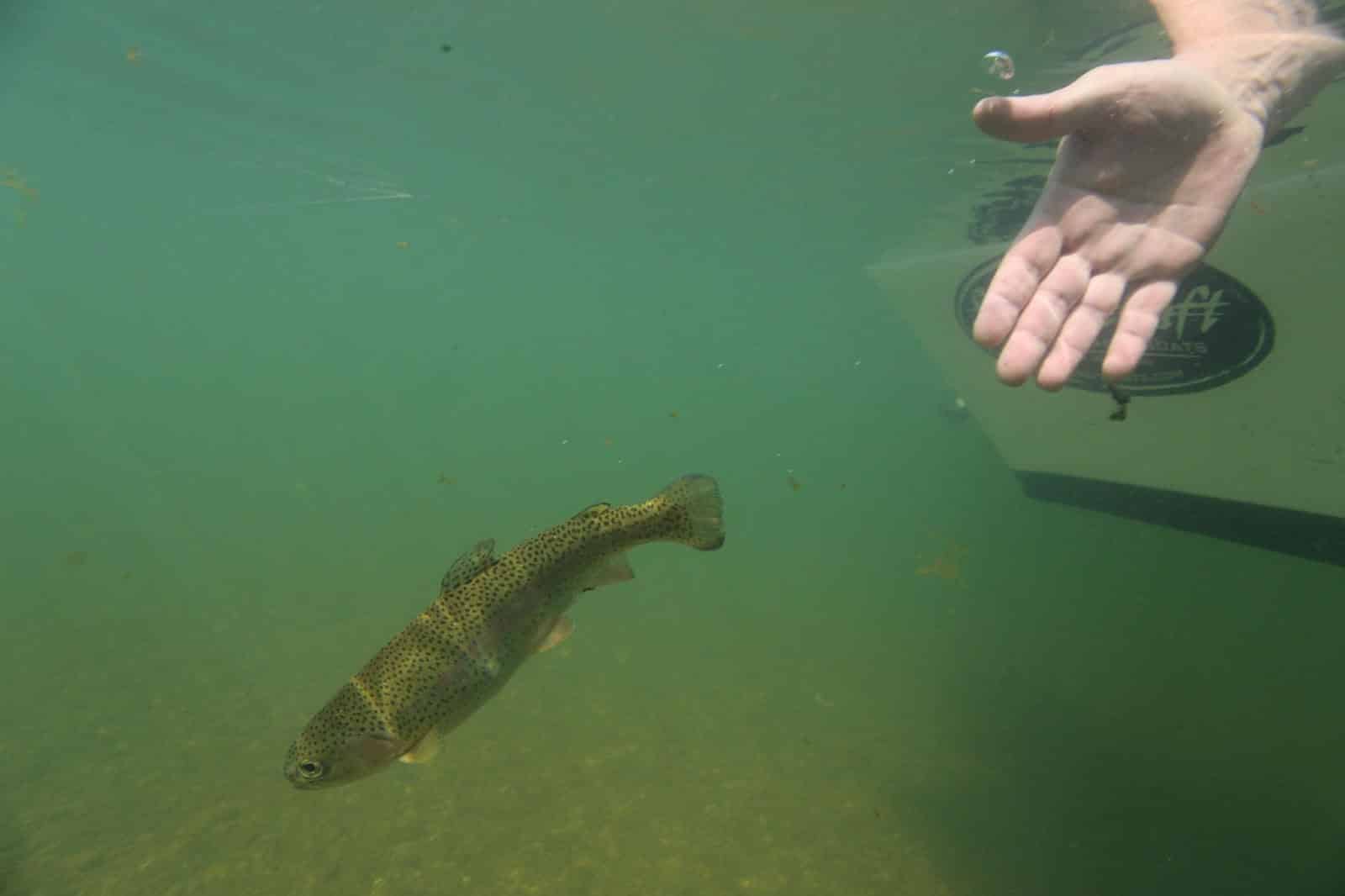
Wet your hands: Try to handle the fish as little as possible, and always wet your hands before making contact. A fish’s slime coat protects it from disease, and dry hands or bare skin can rub that protective layer off.
-
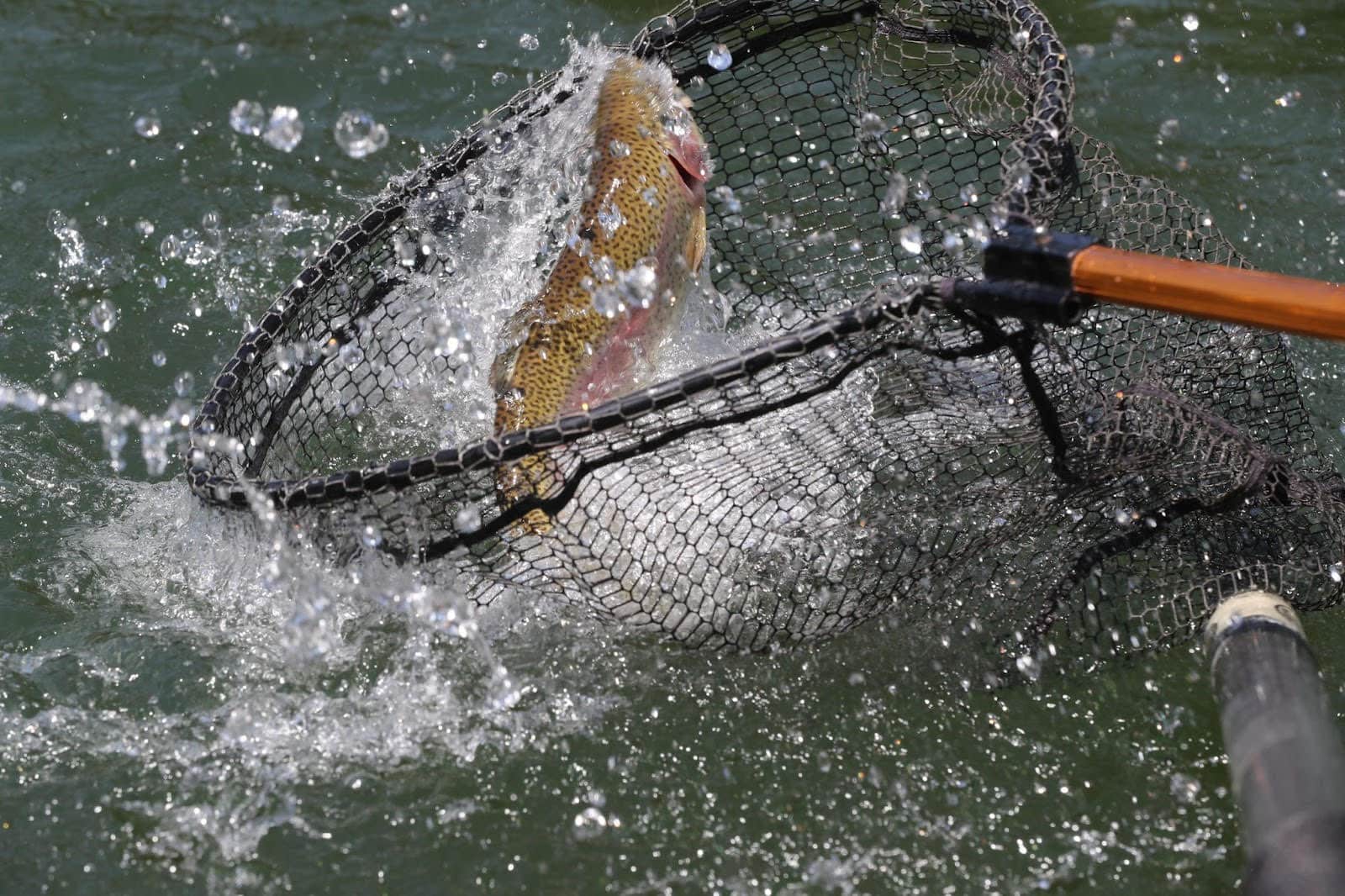
Switch to a rubber net: Use a rubber net instead of a traditional knotted string net. Rubber is significantly less abrasive on the fish’s scales and slime coat.
-
Keep photos quick: If you need to take a picture, consider keeping the fish in the net, positioned just out of (or even in) the water, and return it quickly. Every second a trout spends out of the water drastically contributes to post-release mortality.
####
CUTLINES:
FIGHTING RAINBOW
Rubber mesh nets help land fish quickly and protect the fish’s slime coat better than knotted string nets. AGFC photo by Mike Wintroath.
SWIMMING BROWN
Although stocking shortages mostly affect rainbow trout, brown trout are also susceptible to high mortality during water temperatures exceeding 68 degrees. AGFC photo by Mike Wintroath.
RAINBOW RELEASED
When possible, anglers should conduct all landing and unhooking of fish they plan to release close to or in the water to reduce stress. AGFC photo by Mike Wintroath.
Recent News
Bat Week Offers Fresh Look at Misunderstood Mammals
Oct. 23, 2026
Arkansas Wildlife Weekly Fishing Report
Oct. 22, 2026
Subscribe to Our Weekly Newsletter E-mails
Don’t miss another issue. Sign up now to receive the AGFC Wildlife Weekly Newsletter in your mailbox every Wednesday afternoon (Waterfowl Reports are published weekly during waterfowl season and periodically outside the season). Fishing Reports arrive on Thursdays. Fill in the following fields and hit submit. Thanks, and welcome!