Education, access and angling excitement top AGFC’s 2025 highlight reel
ON 01-05-2026
LITTLE ROCK — From record-breaking seasons in the woods to a massive overhaul of how we stock our waters, 2025 was a year of major wins for the Arkansas Game and Fish Commission. Whether it was regaining a foothold in Arkansas classrooms, opening thousands of new acres to public hunting, or launching a high-tech “fish factory” in Lonoke, the agency spent the last 12 months doubling down on its mission to provide better access and better resources for everyone who enjoys The Natural State.
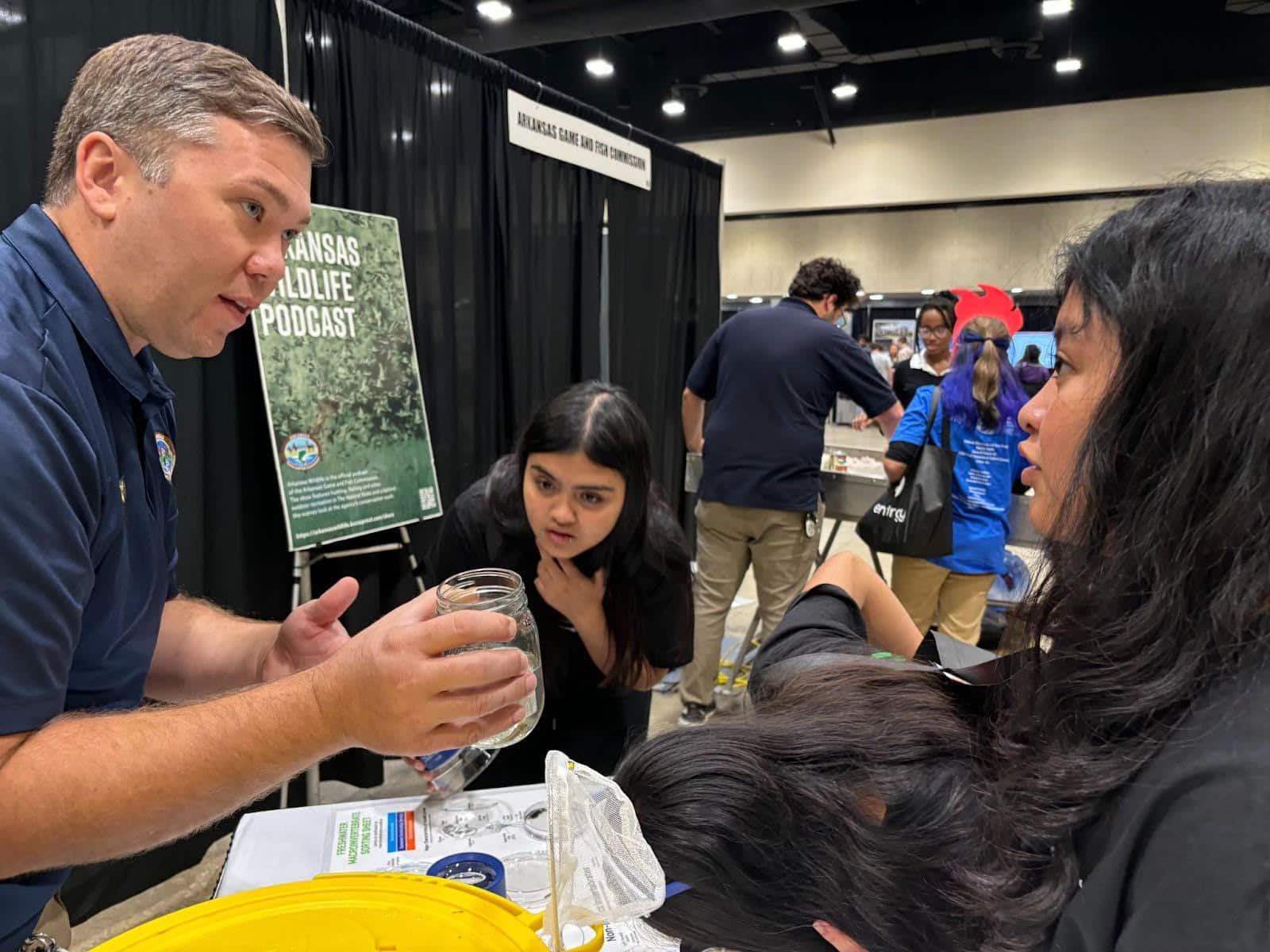
Back to School
2025 was a breakthrough year for the AGFC Education Division, which worked throughout the spring to regain a foothold in classrooms across the state. In June, the AGFC stood alongside the Arkansas Department of Education at Gov. Sarah Huckabee Sanders’ announcement of the Arkansas Outdoor Education Initiative. Conservation and outdoor recreation experts at the AGFC will now work arm-in-arm with education administrators to instill valuable outdoors knowledge into the daily lives of students.
“A lot of previous programs helped us promote conservation to teachers, but this initiative is a real turning point for conservation education in Arkansas,” Mary Beth Hatch, AGFC chief of education, said. “Instead of pitching things from the outside that have to be added as ‘one more thing’ for teachers to figure out how to incorporate, we’re developing lessons with teachers that fit all current Arkansas standards and flow seamlessly into their day without adding something else to their plate.”
Thirteen Arkansas schools served as a testament to the willingness of teachers to expand outdoor education in their classrooms, as the AGFC also completed the first year of its own pilot program, the School of Conservation Leadership Designation. Sponsored by a $25,000 grant from the Entergy Charitable Foundation, the program rewards Arkansas schools that fully immerse students in outdoor recreation and conservation education programs and activities. To achieve the designation, schools must demonstrate their work in a variety of outdoor programs offered by the AGFC. Participation in the Youth Shooting Sports Program, Archery in the Schools Program, Fishing in The Natural State and Schoolyard Habitat programs were all components of the designation, as were conservation-oriented field trips and participation in fishing derbies and other community-based events.
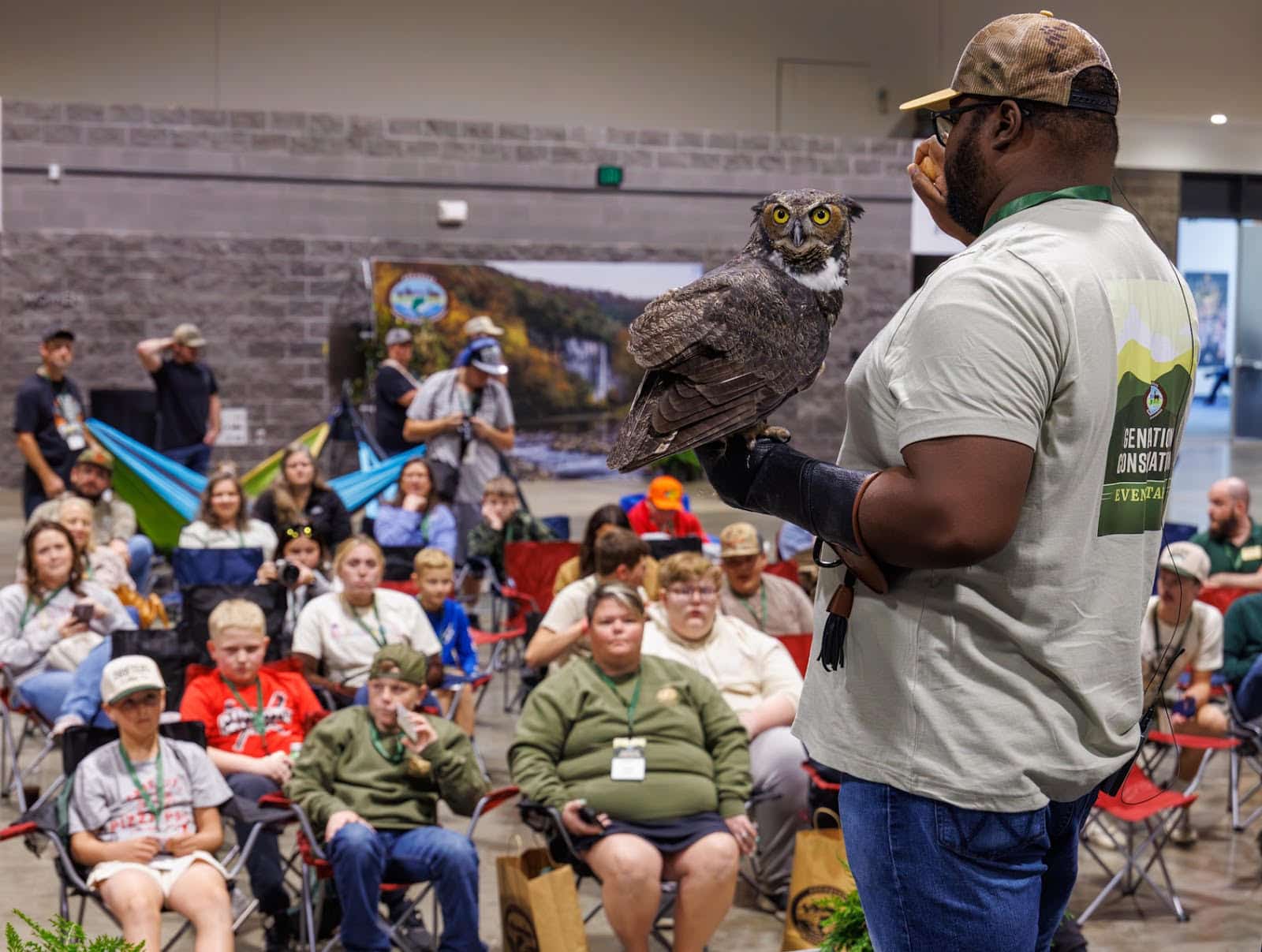
The icing on the education cake, however, was the inaugural Generation Conservation Summit, held Nov. 5-6 in Hot Springs. For two days, the agency transformed Bank OZK Arena/Hot Springs Convention Center into an outdoor education festival, filled with competitions and outside-of-the-classroom learning activities for more than a thousand students ranging from elementary school age to high school seniors. Everything from quiz bowls on outdoor lore and Arkansas history to head-to-head cooking competitions were featured at the event. Casting contests, air rifle and archery competitions and rock climbing were included, and students enjoyed trout fishing and a variety of outdoors-themed activities between competitions.
“This was truly a landmark event for the Arkansas Game and Fish Commission, one that will create a lasting, maybe even lifelong, inspiration within young conservationists throughout the state who participated,” AGFC Director Doug Schoenrock said. “I can’t wait to see what the future holds for all of these exciting programs launched this year.”
Expo Helps Statewide Habitat
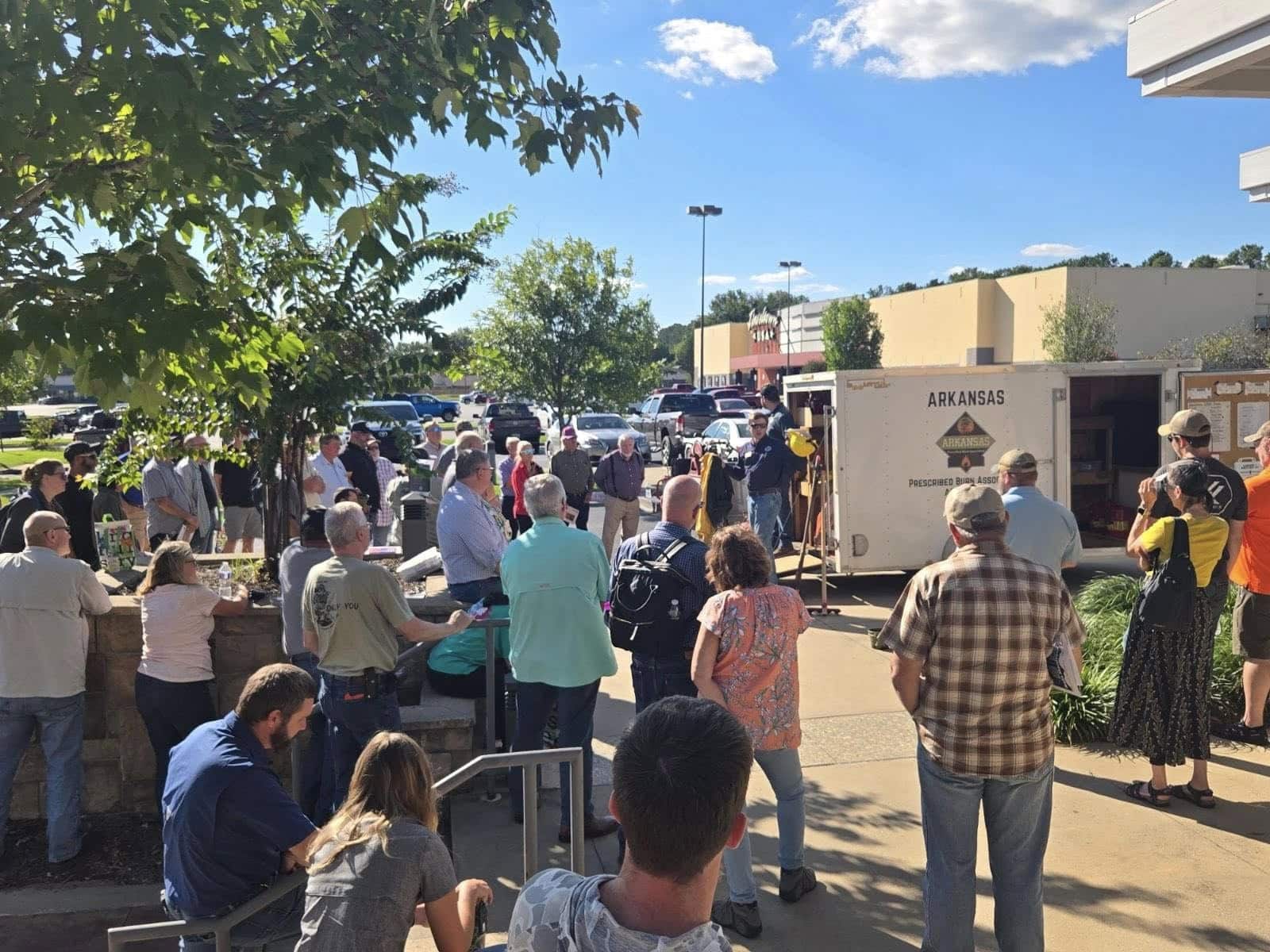
AGFC education staff weren’t the only folks dropping knowledge last year. The Private Lands Habitat Division launched its own inaugural event to spread conservation information in September. The AGFC Private Lands Expo hosted more than 100 landowners at the Benton Event Center in a continued effort to bridge the gap between conservation agencies and the many landowners who are essential to providing statewide habitat for wildlife and fish in Arkansas.
In addition to vendors presenting the latest equipment to efficiently convert and maintain your land in a native state, land managers and habitat management professionals gave presentations on food plot management, property design and even navigating permitting processes required to work near and in streams.
The highlight of the expo was a series of special presentations at lunch when AGFC private lands habitat biologists were able to announce the 2025 Natural State Landowner Conservation Awards.
“We’ve held awards banquets in the past to showcase some of the landowners who have worked with the AGFC and shown innovative approaches to habitat management on their property, but this year’s event increased that ceremony to a learning experience for any landowner who wanted to follow in their footsteps,” Garrick Dugger, AGFC Private Lands Habitat Division chief, said. “It was a great way to celebrate accomplishments while planting the seeds for future successes.”
Public Access Progress
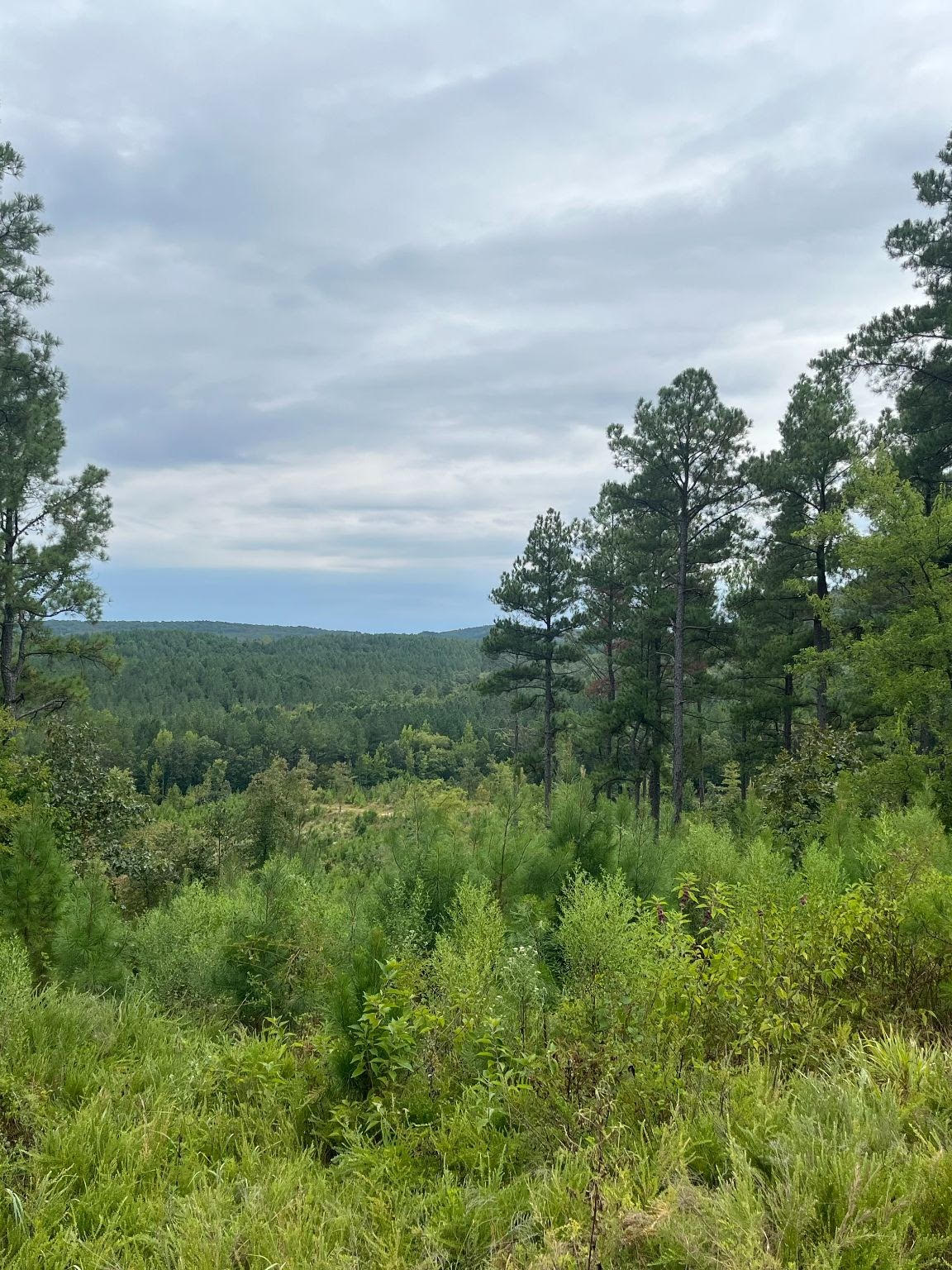
With 90 percent of Arkansas being in private ownership, public land is at a premium, and the AGFC constantly works to increase acres of public access for hunting, fishing and watching wildlife. More than 4,000 acres of publicly accessible land opened in 2025. Most of these acres were the result of a new partnership between the AGFC and Arkansas Department of Agriculture, creating the new Hot Springs State Forest Wildlife Management Area. This 3,307-acre chunk of public land protects the delicate recharge area that allows rainwater to seep back into the ground and feed the famous hot-water springs at Hot Springs National Park. After conversations and increased partnership meetings, the ADA and AGFC were able to frame out a new management plan that enables the public to use a portion of this property for hiking, mountain biking and hunting. The AGFC also will help reestablish native shortleaf pine forests historically found in the region. Only 1,732 acres of the area are open during the WMA’s first year, but the AGFC is hopeful that more acreage will be available to hunters as access and boundary line issues are worked out between the two state agencies and neighboring landowners.
More than half a state away, Wargo Landing was the second large property opened to public access this year. In addition to a much-needed access to the Arkansas River in southeast Arkansas, the AGFC’s lease includes a 730-acre island that was included in Trusten Holder WMA, one of the most well-known areas for deer hunters chasing big bucks. The access had once been used by the public, but through various land sales, it had become off-limits. Now, when the Arkansas River allows, boaters will once again be able to access this portion of the river easily. Add in the fairly unhunted bottomland hardwoods on the island, and you have the makings for a fantastic hidden gem for bowhunters to make use of this January and February.

Turkey and Alligator Harvests Hit High Marks
Turkey season set a high bar, with hunters reporting 11,332 birds — a nine-year high for The Natural State. The 22 percent increase over the previous year is attributed to a string of successful hatches and favorable spring weather. Biologists noted that the steady climb in population is the result of long-term conservation strategies, including the “no jakes” rule, which has allowed more juvenile birds to reach maturity.
The momentum continued into fall as Arkansas’s alligator season posted its top harvest ever. Over two weekends, hunters tallied 205 alligators, narrowly surpassing the 2023 record. Public land success was particularly notable, with a 68 percent success rate. On Millwood Lake, the introduction of a new quota system helped maximize harvest goals, while Private Land Management Zone 3 in the southeast remained the state’s most productive region.
Fish Factory Upgrade Saves Water, Starts New Trophy Program
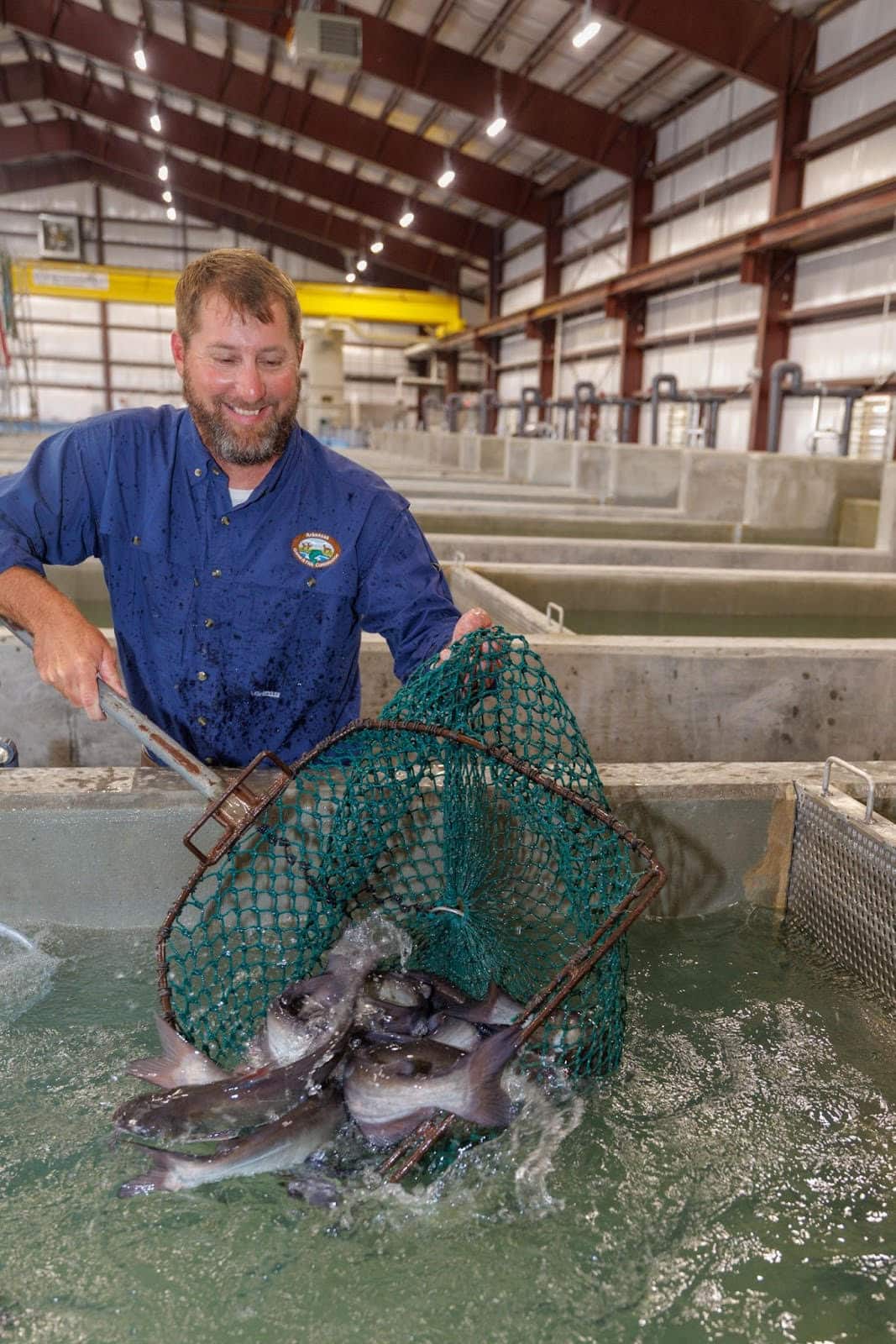
While hunters celebrated record seasons, the year’s most significant investment in the future of angling took place at the Joe Hogan State Fish Hatchery in Lonoke. A $16 million renovation, the largest in the facility’s nearly 100-year history, has transformed the hatchery into a high-tech “fish factory” that is a model of modern water conservation in the industry.
A new tailwater recovery system enables the hatchery to recycle 70 percent of the water used in its ponds. This will decrease the demand from the underground aquifer in the area by roughly 517 million gallons (enough to supply a city the size of Mountain Home) per year.
In addition to a state-of-the-art water reclamation system, the upgrade features 10 specialized concrete raceways that will be instrumental in the agency’s long-awaited Arkansas Legacy Lunker Program. Starting Jan. 1, 2026, anglers who catch a largemouth bass weighing 10 pounds or more can donate the fish to the hatchery for spawning. Hatchery staff will be able to adjust lighting and temperature in the raceways to trigger spawning in these female fish. Their genetics will be paired with those from elite male Florida-strain bass to create fingerlings with trophy-class potential rarely seen in the wild. Once the process is complete, the original trophy fish is returned to its home waters, ensuring that Arkansas’s premier bass lakes remain stocked with world-class potential for years to come.
“This is the most exciting thing I’ve been a part of in my career as a fisheries biologist,” Tommy Laird, chief of the AGFC Fisheries Division, said. “We’re going to be able to provide a better angling experience and use fewer resources to accomplish it.”
Recent News
Subscribe to Our Weekly Newsletter E-mails
Don’t miss another issue. Sign up now to receive the AGFC Wildlife Weekly Newsletter in your mailbox every Wednesday afternoon (Waterfowl Reports are published weekly during waterfowl season and periodically outside the season). Fishing Reports arrive on Thursdays. Fill in the following fields and hit submit. Thanks, and welcome!