Arkansas Wildlife Weekly Fishing Report
BY Jim Harris
ON 04-23-2026
April 23, 2026
Managing Editor Arkansas Wildlife Magazine
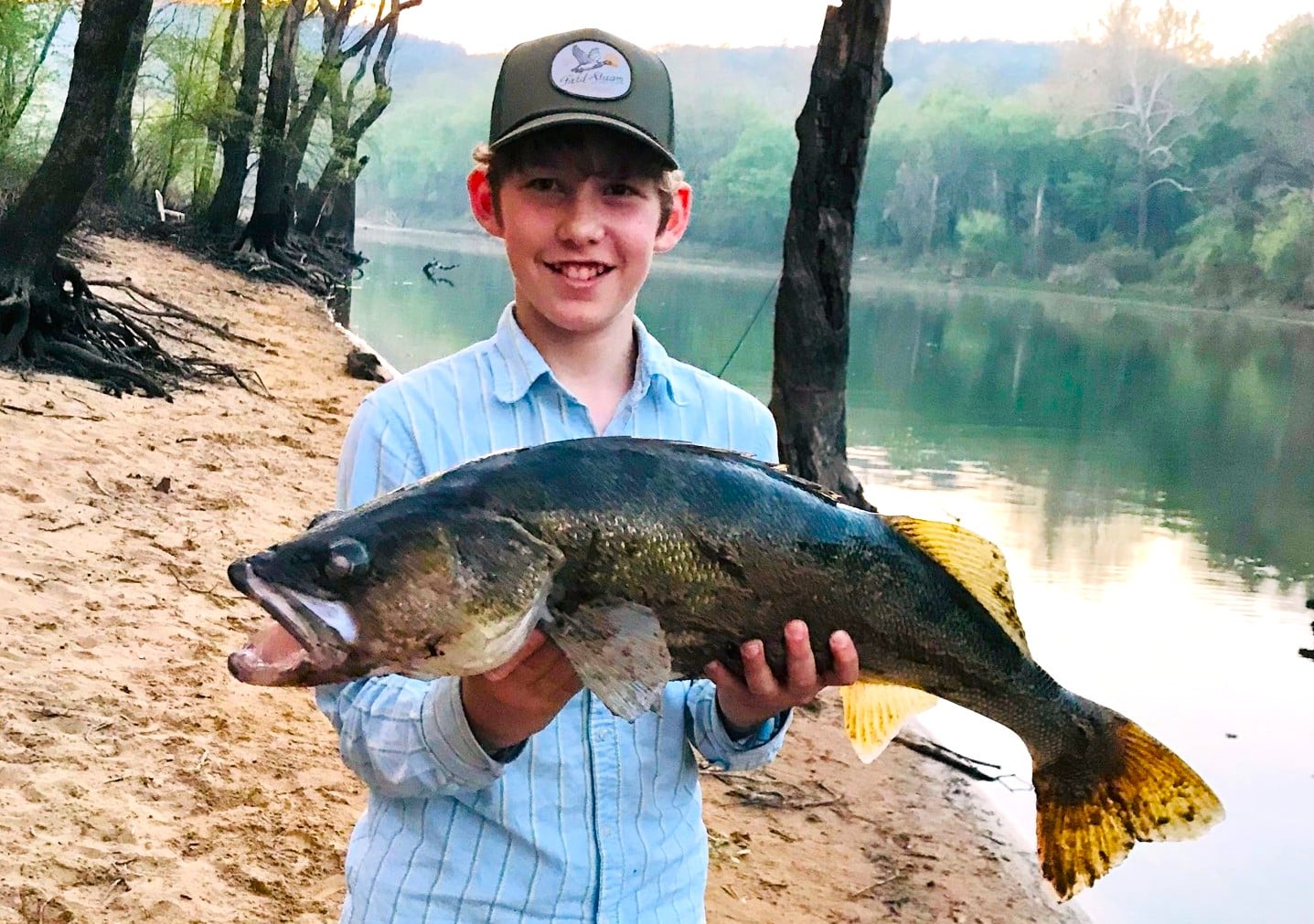
Lucas Di Giulio, an angler from the Beaver Lake area, caught this massive 33.25-inch, 16.3-pound walleye recently. It was caught below Busch Mountain Fishing Guide Lodge on the Beaver Lake tailwater. One of the guides there helped Lucas get the fish to shore. The fish was released safely after the photo opportunity.
Reports are updated weekly, although some reports may be published for two weeks if updates are not received promptly or if reporters say conditions haven’t changed. Contact the reporter listed for the lake or stream you plan to fish for current news.
Arkansas River and White River levels are available at: https://www.weather.gov/lzk/wxcntl4.htm
For real-time information on stream flow in Arkansas from the U.S. Geological Survey, visit: http://waterdata.usgs.gov/ar/nwis/rt
For water-quality statistics (including temperature) in many Arkansas streams and lakes, visit: https://waterdata.usgs.gov/state/Arkansas/
Download the Fish Brain app and follow AGFC at: https://join.fishbrain.com/agfc-page
Quick links to regions:
- Central Arkansas
- North Arkansas
- Northwest Arkansas
- Northeast Arkansas
- Southeast Arkansas
- Southwest Arkansas
- South-Central Arkansas
- West-Central Arkansas
- East Arkansas
Central Arkansas
Craig D. Campbell Lake Conway Reservoir (under renovation) and Nursery Pond
(updated 4-23-2026) AGFC staff in Mayflower note that while Lake Conway is drawn down for renovation, the Lake Conway Nursery Pond is open for fishing in the immediate area, with bream and trout being reported among catches of late. The 70-acre pond has been stocked by the AGFC with mature bass, crappie, catfish and bream as well as rainbow trout for the cold-weather months.
Lake Conway renovation is proceeding on schedule. Read more here, or pick up the May issue of Arkansas Wildlife magazine next month (or read online) for an in-depth look at the new weir and dam construction.
Little Red River
For the Army Corps of Engineers’ real-time outflow report from Greers Ferry Dam, visit the Corps’ Little Rock office website or by calling (501) 362-5150). Also check the Southwestern Power Administration website to see forecast generation schedule.
NOTE: The Arkansas Game and Fish Commission has changed trout limits for the Little Red River below Greers Ferry Dam. Anglers may keep two rainbow trout daily, only one longer than 14 inches, in the Greers Ferry tailwater; all other trout caught must be released immediately. This rule is in effect until further notice.
(updated 4-16-2026) Mike Winkler of Little Red River Fly Fishing Trips (501-507-3688) said, “We had a forecast this past week calling for a few chances of rain, but unfortunately we didn’t get the rainfall we really need. I’ve been hearing Arkansas is around 25 inches short of getting out of this drought, so hopefully we start seeing some of that soon.
“Right now, Greers Ferry Lake is sitting about 6 feet below power pool, currently at 456 feet msl with power pool at 462.00. That’s definitely low for this time of year, and it’s had a direct impact on what’s going on below the dam.
“Because of the drought, we’re not seeing those typical springtime generation patterns. The schedule has been pretty hit or miss — honestly, more miss than hit. Over the past few weeks, there have been times where the Southwestern Power Administration has only run water one day out of the entire week. That’s mainly due to lower power demand and the mild weather we’ve been having.
“Now that the temperature is starting to creep up into the low to mid-80s, we’re beginning to see a slight increase in water releases. Looking ahead, the forecast is calling for more warm days in that same range, but still not much in the way of rain. With that said, I do think we’ll start seeing SWPA run a bit more water, which would be great news for the Little Red River. It’s been a while since we’ve had any kind of consistent generation schedule.
“As always, be sure to check the Army Corps of Engineers’ Little Rock app before heading out so you know if water is scheduled to run or if they’ve already generated. Fishing is almost always better when there’s some flow, so if you see water coming, try to time it and fish that falling water.
“The low flows we’ve had this spring have actually made for some excellent wade fishing up and down the river. Normally this time of year, wadable water is limited, so it’s been nice to be able to get out and cover more ground on foot — definitely a good time to break out the waders.
“With the low water, Lobo Landing has been getting a lot of pressure from boats because it holds some of the deeper water. If they do start releasing water, I’d recommend putting in further downstream. Those stretches have been fishing well, especially after a few days without generation.
“As for bugs, the caddis are starting to come off, especially on those warm, sunny afternoons. Now’s a great time to throw your favorite caddis patterns. Hot flies lately have been caddis patterns, Pheasant Tail Soft Hackles, midges, San Juan Worms and egg patterns.
“Focus on any water with a little bit of flow. Target shoals and the plunge pools below them, and don’t overlook the deeper runs around the moss beds — those areas have been holding fish.
“Good luck out there, and hopefully we’ll see some rain soon!”
Greers Ferry Lake
For the Army Corps of Engineers’ real-time lake level and outflow report from Greers Ferry Dam, visit the Corps’ Little Rock office website.
(updated 4-23-2026) Fish ’N Stuff (501-834-5733) in Sherwood said largemouth bass are being caught anywhere from a foot deep to 10 feet of water, that entire water column. Early in the morning, they suggest, start with a topwater bait like a white Zoom Horny Toad. You can also throw a bone Whopper Plopper. In the middle of the day, anglers are having best success throwing either a half-ounce shad-pattern spinnerbait, a white Chatterbait (also in half-ounce) or a half-ounce peanut butter and jelly football jig with a cinnamon purple trailer.
Smallmouth bass are being caught mainly on the south end. They have heard reports out of Cove Creek that anglers “are catching them pretty good.”
Try a Carolina rig with 6-inch cotton candy-colored lizards. Also try an Alabama rig with a 3.3 shad pattern Keitech and slow-roll that just above the bottom.
Harris Brake Lake
(updated 4-23-2026) Bing Watkins at Harris Brake Lake Resort (501-889-2745) said crappie are still slow. The water level is still low and the surface is still covered in green pollen. Black bass are slow as well.
But bream and catfish are picking up. Anglers are catching bream on crickets and redworms where they can reach shallow water, or in the coves. Water is good around the big island to cast for bream, she said. One regular bass angler has shifted his target to bream to compensate for the slow bass action, she reports.
One of the catfish caught this week was about 4 pounds, she reports. Try dough bait.
For more updates, follow Harris Brake Lake Resort on its Facebook page.
Lake Maumelle
(updated 4-23-2026) Fish ’N Stuff (501-834-5733) said the water is still pretty low 6-8 feet low depending on location), so they’re catching black bass mainly off the main lake points out pretty deep in about 8-12 feet of water.
Peanut butter and jelly half-ounce jigs are a good way to go, using a cinnamon purple craw trailer. Also, anglers are catching them with a 3/16-ounce shaky head with a green pumpkin trick worm or finesse worm trailer.
Crappie are being caught mainly on the west end in the creek channel in about 10-15 feet of water. Try throwing a 1/16-ounce jighead with 2-inch Bobby Garland Baby Shad (which is threadfin color).
(updated 4-16-2026) WestRock Landing in Roland (501-658-5598) said water temperature is steady, ranging around 65-68 degrees this week. The lake level has fallen incrementally to 7.51 feet below normal pool.
New ramps are open, but WestRock urges boaters to trim their motor.
The black bass bite is fair. Largemouth are being caught in 2-8 feet. The spawn should be underway. Try fishing with square bills, spinnerbaits, Senkos and Texas-rigged worms. Spotted bass (aka Kentucky bass) had a good bite over the weekend, with anglers reporting several catches, but it slowed a bit during this week. You’ll find spots mixed in with the largemouth in that 2-8 feet range, as well as at 12 feet. Spinnerbaits work well for spots, too, as will jigs.
Crappie remain fair this week. It’s been a tough bite, but anglers are catching small ones when they find them anywhere from 10-20 feet. Minnows and jigs are your best bets.
White bass in the lake have not been reported the past couple of weeks. But they’re out there and might take to Twister Tails, jigs, spoons and shad-imitating lures. Also, there were no reports this week of bream, although several folks were out fishing for them with live bait. Jigs and worms are best.
And catfish catches aren’t being reported either. But you can give them a go with bream, liver or worms.
Arkansas River at Morrilton
For the real-time water flow at the Ormond Lock and Dam and Morrilton stage level, visit the Corps’ Little Rock office website.
Little Maumelle River
(update 4-16-2026) Ray Hudson at River Valley Marina (501-517-1250) said just about everything is going in terms of fishing right now. The water is normal and clear. He didn’t know the specific temp but figured with the way the fishing was going, it was just right.
Crappie are being caught in 2-3 feet of water. Minnows and mainly jigs are the way to go. Try red/chartreuse and Monkey Milk for jig color.
Black bass are definitely up around the bank and about the spawn, he said. They’re being caught on chartreuse crankbaits and chartreuse spinnerbaits.
Bream haven’t really started to bed yet, Ray said, but there have been a few bream caught. Crickets and worms are working. A few people are catching catfish. They’re being caught on hot dogs and liver. Some are also catching a few on shiners. Fish deep.
One angler “had a pretty nice mess of white bass” that were caught running up the river. He was using shad-looking crankbaits, Ray said.
Arkansas River (Maumelle Pool)
For the real-time water flow at the Toad Suck Lock and Dam, visit the Corps’ Little Rock office website.
Arkansas River (Little Rock Area Pools)
For the real-time water flow at the Murray Lock and Dam and David D. Terry Lock and Dam, as well as the Little Rock pool stage level, visit the Corps’ Little Rock office website.
(updated 4-23-2026) Fish ’N Stuff (501-834-5733) said largemouth bass are “pretty shallow” in about 5-8 feet of water, or a midrange depth. Reports are they are catching them on mid-diving crankbaits in either a solid black color or a shad pattern. Anglers are also catching them on the bank right now, throwing a buzzbait, a frog or a Whopper Plopper-style bait.
Bluegill are getting active. Anglers are starting to catch them in the backwaters in about a foot of water. Try crickets or redworms.
Peckerwood Lake
(updated 4-23-2026) Donna Mulherin at Herman’s Landing (501-626-6899) the lake is back to level full, and while bream, bass and catfish are doing OK to well for the anglers, the crappie have not responded like in years past. “I don’t know what other people are reporting but the crappie is slow here. Some folks said they are picking up a few, but they’re not catching them trolling and really are not catching them up in the brush unless its males.”
The bream are doing “OK” on crickets and redworms. Use minnows or hot dogs for what has been good bite. Angler report a good bass catch going on, but you’ll have to guess right on the bait — they’re not sharing that info at the Landing.
North Arkansas
Emergency Trout Regulations have been put in place! Read more: www.agfc.com/TroutRegsNews
The proclamation calls for catch-and-release of all trout in the 45 miles of tailwater below Bull Shoals Dam to the White River’s confluence with the North Fork River (specifically to the boat ramp at Norfork Access), as well as catch-and-release only on the entirety of the Norfork Dam tailwater. The trout waters below the White River-North Fork River confluence, from the Norfork Access boat ramp to the Highway 58 bridge at Guion, will have a two-trout-only limit with normal length and daily limits (only one trout over 14 inches). Tackle restrictions for the regular Bull Shoals and Rim Shoals catch-and-release areas on the White and the usual Norfork catch-and-release area still apply (artificial tackle only, and barbless hooks).
White River
NOTE: Anglers in the Bull Shoals tailwater from the dam to Norfork boat access may keep two rainbow trout daily, no longer than 14 inches; all other trout caught must be released immediately. Below Norfork Access to Arkansas Highway 58 (at Guion), anglers may keep two trout of any species, only one may be longer than 14 inches. Brook trout must be at least 14 inches to keep; brown, cutthroat and tiger trout must be 23 inches long to keep.
Cotter Area
(updated 4-23-2026) Cotter Trout Dock (870-435-6525) said releases from Bull Shoals Dam into the tailwater have been low over the past week, offering more access for angling from the shore and gravel bars. Bull Shoals Lake is 4 feet below power pool level, at 655.11 feet msl. The average generation has been minimum flow (700 cfs) with an occasional burst of higher discharges for several hours in the late afternoon.
The rainbow-hued spinners and spoons continue to attract a good share of trout, and the overcast days call for shiny silver blades and spoons. The silver Cleo have played a part in successful landings and returns. When the sun peeks out, change tactics — look for chartreuse- or lemon-lime-colored baits, either in an egg pattern or in the body and/or skirt of a Rooster Tail or spinner. Add gold blades and you’ll tempt some good-looking rainbows. It’ll be easy to keep your bait near the streambed because the White River water level near Cotter has remained fairly low during the past month.
No surprises for the brown bite: They’re nibbling on sculpins and shad, and continue to remain near the bottom and center of the stream, or hiding in deeper holes behind rock and brush structure.
“The weathermen promise warmer temperatures beginning Saturday, so pack some sunscreen when you’re headed to the river. A rain poncho might come in handy, too. Visit The Natural State for some terrific catches and lots of Ozark hospitality.
Calico Rock Area
(updated 4-23-2026) Dave McCulley, owner of Jenkins Fishing Service in Calico Rock, said, “Fishing continues to be good. The last few days we have seen evening water generation from the dams. The Norfork Dam water reaches us overnight and the Bulls Shoals Dam water reaches us late the next morning. The lower water conditions (3-ish feet), before the Bull Shoals Dam water reaches us, has been great fishing using artificial lures such as quarter-ounce spoons, Rapala Countdown, Dynamic HD or J-Spec lures. When the water arrives late in the morning, rising to around 4 feet, the bite slows down for a while but picks back up early in the afternoon.
“The guides have been fishing downriver in the mornings and, after lunch, moving upriver where the water is already dropping. During the higher water times, we see success with drift-fishing with inline spinners, eggs (try different colors until you find what the trout prefer that day) and shrimp.
“The weather forecast starting on Friday shows some rain each day for the next week. With the drought conditions, any rain we get will be good, and if the forecast doesn’t change, the rain will be spread out enough — we shouldn’t see flooding. I do expect we may see dingy or even muddy water conditions from the Buffalo River and the creeks feeding into the river above Calico Rock.”
Bull Shoals Lake
For the Army Corps of Engineers’ real-time outflow report from Bull Shoals Dam, visit the Corps’ Little Rock office website.
(updated 4-23-2026) Fishing guide Del Colvin at Bull Shoals Lake (815-592-4302), delcolvinfishing.com, said Wednesday that the lake level remains at 655 feet msl; water temperature is up a little to around 65 degrees. “The lake is low for spawning season. April means everybody is going to catch a few. Moss is annoying. Now there are fish in all stages of the spawn.”
Powerfishermen are still catching on the right day: wind/clouds/rain/stain with spinnerbaits and Chatterbaits. You’re going to have to keep an eye out for shad — they’re moving. Topwater has started; try smaller Zara Spook-style baits or poppers. A small Tater Swimbait is working. I’ve been using the Jewel Shad Spoon or traditional fluke, or try your favorite minnow to shake around the shad.
“If the conditions are flat water and post-front flat bluebird and sunny, it will get tough. I have been able to see bottom in 26 feet in places. Get off the bank and bomb cast with lighter fluorocarbon line. Try a finesse Jewel Pee-Wee Jig in green pumpkin orange or a Bass Whacker is working, as well as a green pumpkin shaky head and a Ned rig.
Time to start checking points and pockets in 5-25 feet.
“The tube guys’ wobble headers, hula grubbers, Senkos and Carolina riggers are in play. The fronts seemed to slow things down a bit. Remember: ‘Fish the conditions!’”
Del regularly posts new YouTube videos. Visit his YouTube site (Bull Shoals Fishing Report) or delcolvinfishing.com for more information and tips on fishing Bull Shoals Lake.
(updated 4-23-2026) Southernwalleye Guide Service (501-365-1606) said the fishing this past week has been slow in the morning and a little better in the evening when the dam is moving water. Post-spawn fishing patterns seem to be taking place as water surface temps have come up a little more. Fish are moving with the shad and seem only to be holding on points close to them.
Look for fish on long points close to the channel swings. Main lake and secondary points have been producing a few fish during the day.
Fish shallow in the early mornings and on cloudy days in 10-15 feet of water and deeper in 20-35 feet water if there is little or no cloud cover.
Hair jigs (1/8 to 3/8 ounce) and minnows or jigs and paddletails or ringworms, and Ned rigs work well after the sun comes up. Jerkbaits such as the 110+2 style in black and silver or clown color and Table Rock Shad are also good at this time.
If trolling, try shad-style and small banana-style baits like No. 7 Flicker Shads or No. 9 Flicker Minnow in natural colors. Trolling in 15-35 feet of water at speeds of 1.5 to 1.7 mph seems to work best.
The open-water trolling bite has been slow. Deep-diving crankbaits like Bandits, Rapala Tail Dancers size 11 and Reef Runners trolled over the flooded forest along the old river channel will get some nice fish. If you’re into night fishing, now is the time to start going. Two hours before light and up to two or three hours after dark seem to be the best times. Fishing slowly is the key .
(updated 4-23-2026) Crappie 101 Guide Service (870-577-2045) says Crappie seem all jumbled up quality-wise. The spawn seemingly started well, and the cool front a couple weeks ago pulled them out and they just haven’t ever moved back in well. Hopefully this next moon will bring a new wave.
“We’re catching crappie on shallower brush and even found a few on deeper brush. A 1/16- to ⅛-ounce jig with a Small Fry bait has been working, like the Tater Baits Crown Royale 101 or the Key Lime color up in the algae bloom up the lake.
Norfork Lake
For the Army Corps of Engineers’ real-time outflow report from Norfork Dam, visit the Corps’ Little Rock office website.
(updated 4-23-2026) Tom Reynolds of STR Outfitters (also Facebook.com/stroutfitters or 870-421-1541) guides out of Tracy Ferry Marina. He offered this pointers for spring fishing on Norfork:
“Starting in late February we typically will see the winds switch to the south and a gradual warm up of air and water temperatures. The stripers will begin to move from the deep water following the shad. There will be multiple opportunities to catch stripers at that time. Both live bait and artificial baits will be very effective. The night bite will begin once the winds blow from the south. You will want to fish the northern and northeastern banks of the bays and main lake and main arm points. Some excellent spots are the points near Norfork Dam, Koso Bay and Point, the Hudson area, Frog Pond, Diamond Bay, Cranfield Island and the points north of the Cranfield area heading toward Red Bank Access.
“The best time to night fish is a half-hour before dark until about 10 p.m. The best bait historically is a 5-inch or 6-inch Rogues. The color of the Rogue varies, with black/gold, clown and blue/black combinations seeming to work the best, but experiment with the colors until you find the one that works best that night. Bone color has been hot the last few years. Make long casts parallel to the bank and reel very, very slowly. A lot of the bites will be right next to the boat, so always have a big net ready. Stripers, hybrids and walleye are all active during this time. Watch the water temperature. As it moves up toward 60 degrees, the bite will get stronger.
“During this time of year, live bait, shad and shiners are also very effective. The stripers will be roaming the shoreline looking for food. I use shad, but everything I do can be done using shiners. Most days I will run a large spread of lines. I begin with two inside planer boards, one near the shore and other out 20 to 30 yards. These board lines will have large gizzard shad in the 4- to 8-inch range. Out of the back of the boat I will have two lines with floats, shad on the hooks, with no weight at various depths from 10 to 30 feet from the floats. These lines will be set back from the boat between 30 to 60 yards. I then set out two free lines with a split shot weight on one line and nothing on the other. Both will have large shad on them and will be set 40-60 feet from the back of the boat. The last outside line will have one planer board with a large shad out 40 yards from the back of the boat. I will put out a wake bait: It is a large shad about 1 foot under the water right behind the engine. The wake bait is very effective for stripers roaming shallow water.
“As the water warms, the stripers will continue to move into the larger creeks to spawn. The magic water temperature number is 60 degrees. Your tactic to catch stripers should be to keep moving with the fish and continue to experiment with your techniques.”
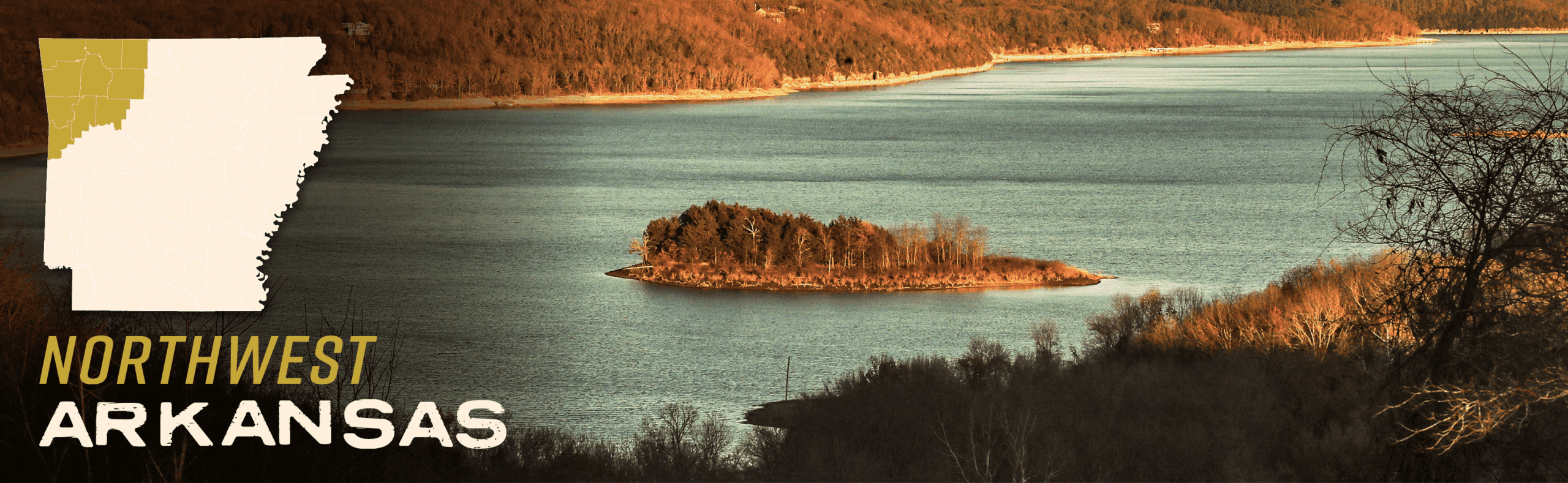
Northwest Arkansas
Beaver Lake
For the Army Corps of Engineers’ real-time outflow report from Beaver Lake Dam, visit the Corps’ Little Rock office website.
(updated 4-23-2026) Jon Conklin with FishOn Guide Service (479-233-3474) said Beaver Lake has slowly come up to 1,118.17 feet msl, which is around 3 feet below normal level. Water temperature continues to come up slowly and is in the low 60s in most spots.
Water clarity is clear from the Arkansas Highway 12 bridge down to the dam. It is more stained especially from Point 12 to Hickory.
Stripers are showing up and can be caught from Hickory all the way to Camp War Eagle. “As usual, trust your electronics. No bait, no fish, MOVE — it’s as simple as that.
“Crappie are up shallow. Look for structure and laydowns in 8 feet and shallower.
“Black bass are bedding in the backs of major and minor arms. White bass are around Point 12. They are not up in the White River arms. There are a few, but not the numbers we are used to.
“Walleye have spawned and are moving back north, and this was another disappointment. Real numbers did not show as waters were low and that held them back.
“This is a great time to fish. The weather is not too bad and the fish will cooperate. Be safe and good luck.”
Visit Jon’s Facebook page for the latest updates between weekly reports at FishOn Guide Service Goshen AR.
Beaver Tailwater
NOTE: The Arkansas Game and Fish Commission has changed trout limits for the White River below Bull Shoals Dam, effective Feb. 1, due to a significant loss of stocking population at two Arkansas hatcheries in 2025. Anglers may keep two rainbow trout daily, only one longer than 14 inches, in the Bull Shoals tailwater; all other trout caught must be released immediately. This rule is in effect until further notice.
(updated 4-23-2026) Guide Austin Kennedy (479-244-0039) says fishing conditions on the Beaver tailwater continue to shift as we move deeper into the post-spawn phase for walleye.
Water temperature in the tailwater has climbed into the low 60s, which is unusually warm for this time of year. A big reason for that is both Army Corps of Engineers generators are down, which has stopped the normal cold-water generation from Beaver Dam.
Without that cooler water being pulled through, tailwater temperatures have stayed elevated, and that is beginning to put added stress on the trout population.
For walleye, the post-spawn transition is fully underway. “We are consistently seeing post-spawn females sliding away from the shallow spawning areas and setting up on nearby breaks, chunk rock transitions and deeper staging zones as they recover and begin feeding again. Males are still hanging around shallow structure, but they are becoming more aggressive and spreading out as feeding activity picks up.
“This is the time of year when staying mobile matters most. Fish are no longer locked into tight spawning groups, and anglers who cover water will have the best success. Focus on chunk rock banks, sand transitions, secondary drops and subtle depth changes. Early mornings, evenings and other low-light windows are producing the strongest bites as these fish settle into predictable post-spawn feeding patterns.
“White bass are also starting to make a stronger push upriver with the warming water. More fish are showing up each week, and that bite should continue to improve as temperature stays stable. This gives anglers a great second option while targeting walleye throughout the system.
“Trout fishing is still producing, but the warm water conditions are definitely changing the pattern. With the higher-than-normal water temperature and no generation, trout are seeking the coolest water available and are holding better farther upstream, especially above the U.S. Highway 62 bridge. Light terminal tackle with Pautzke Fire Eggs, Fire Bait and natural presentations fished near the bottom continue to produce well. Do-Dah hair jigs in ⅛-ounce and quarter-ounce, especially in windy conditions, are also producing both trout and walleye.
“Recent rainfall has helped improve overall water levels, but we are still below normal pool. Low water conditions continue to make boat control and precise positioning critical, especially when targeting transition areas where fish are staging.
“Overall, the fishery is in a strong seasonal transition. Post-spawn walleye are feeding up, white bass are moving in, and trout remain catchable if anglers adjust to the warmer conditions. Once generation resumes and cooler water returns, trout fishing should improve even more.”
For regular updates during the week, check out Austin’s Facebook page (Busch Mountain Fishing Guide Service).
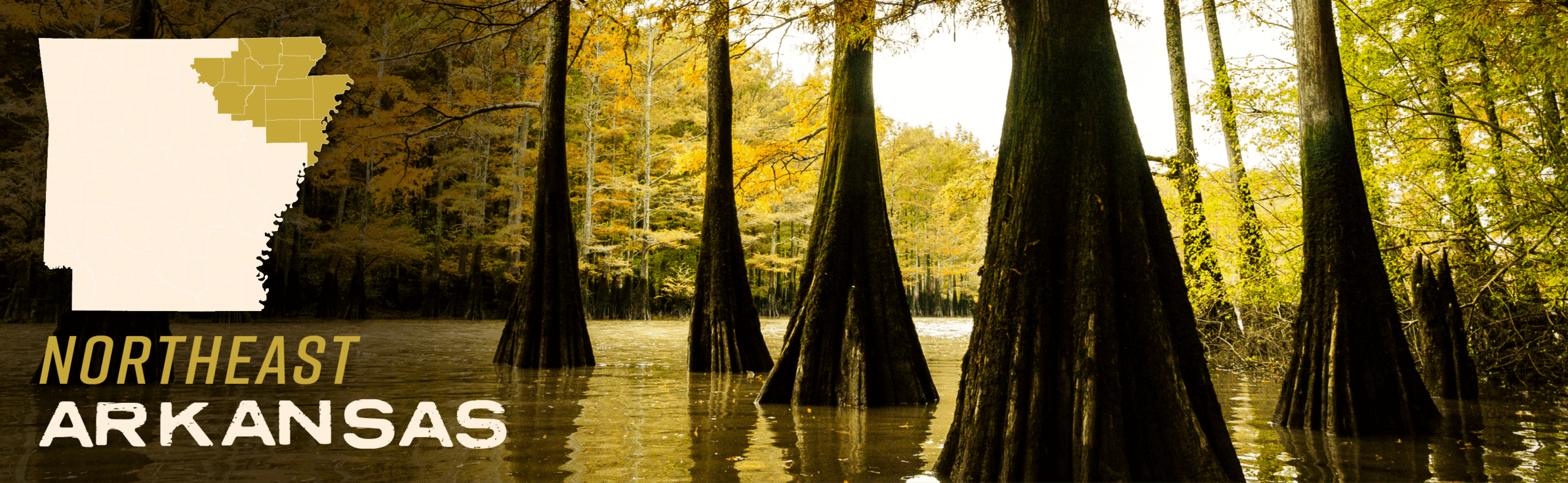
Northeast Arkansas
Lake Charles
(updated 4-23-2026) Shelly Jeffery at Lake Charles State Park (870-878-6595) said crappie continue to bite well, while catfish are fair. Other species were not reported this past week. Anglers are using minnows and worms for crappie. Cut bait seems to be working best for cats.
The water remains low. The water temperature took a drop this past weekend to 62 degrees. Clarity is the usual murky.
Lake Poinsett
(updated 4-23-2026) Jonathan Wagner, superintendent at Lake Poinsett State Park, said most recently that Lake Poinsett needed rainfall and was at a fairly low water level. Still, anglers reported catching crappie in around 8 feet of water about an hour before sunset off of brushpiles found near the shorelines in the southern part of the lake.
Bream fishing was making its presence known as well earlier this month, and many anglers have been spotted along the banks. Lake Poinsett State Park’s visitor center is open 8 a.m.-5 p.m. every day and has a variety of live and artificial baits including minnows, crickets and worms.
Spring River
(updated 4-9-2026) Mark Crawford with springriverfliesandguides.com (870-955-8300) said water levels are at 290 cfs (350 is average for the Spring River) and water clarity has been clear. “A bit of much-needed rainfall has fallen lately, but mostly we have had strong winds — making for a tough day on the water; just put the wind to your back for effortless casting.
“But seriously, the area is still in need of rain. Easy wading conditions, but not as easy to float a drift-boat currently. Rafts, canoes and kayaks are the ticket for floating the river, and with all the campgrounds open, getting ready for the summer canoe hatch, these are available for rental. A great time for wade fishing at the campgrounds. Jim Hinkle Spring River State Fish Hatchery has been stocking very nice-sized trout at all locations on a more regular schedule.
“Low and clear has its benefits, with dry flies and small nymphs working great in the clear conditions. On several days, midges, caddis emergers and dries have been the ticket with light tippet. Hoppers with droppers are always fun with nymphs, Y2Ks, or squiggly worms for droppers. Tie the dropper with lighter tippet to save hoppers.
“The nice fish have been caught on olive Woolies and pine squirrel sculpins this week. Work all the pockets and every seam, that big fish is there. For spin-fishers, a Trout Magnet set up in hot pink, white and Purple Haze can work well. A small split shot above the Trout Magnet is important to get down fast.
“Smallmouth bass are there down deep or working the strong seams below riffles. Sculpin, leech and baitfish patterns work. Work them slow — the slower the better. The Spring River river bottom is a great place for a smallmouth bass to live and even better place to lose a fly. Clousers, Bug Woollies and sculpin patterns work great; just bring plenty. When working a stretch of water, a slow retrieve will entice smallmouth bass, and a fast retrieval will be the ticket for a big brown trout. Never know on the Spring what may be lurking in the waters.
“It’s not until the end of May that the canoe hatch begins on the river. All of the campgrounds are open, allowing for increased accesses to the river. The AGFC has a map on its website listing all stocking areas on the Spring River, under ‘Resources.’
“The river is very low, allowing for much easier wading with low water levels. Be careful out there, the solid limestone river bottom is very slick. Wading staffs are always handy. Rain is surely on the way. Keep an eye on the blog on our website (linked above) for changes in river conditions.”
White River
For the Army Corps of Engineers’ real-time gauge level and flow from the White River stages at Batesville, Newport and Augusta and all other sites within the White River basin in Arkansas, visit the Corps’ Little Rock office website.
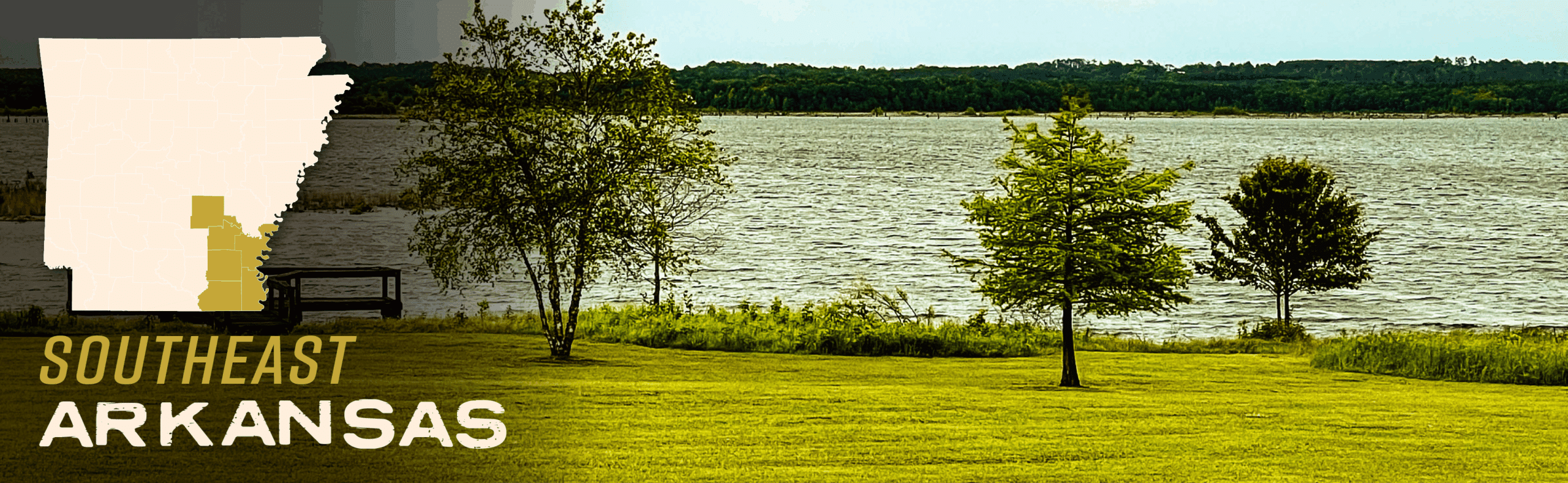
Southeast Arkansas
Arkansas River (Pine Bluff Pool)
For the real-time water flow at the Emmett Sanders Lock and Dam and Maynard Lock and Dam, as well as the Pine Bluff pool stage level, visit the Corps’ Little Rock office website.
Cane Creek Lake
(updated 4-16-2026) Shelley Burr at Cane Creek State Park, (870-628-4714) reporters that anglers had been catching bream, crappie and catfish over the past month, but she said Thursday that it has slowed down this week on crappie and bream.
Late in 2025, the AGFC began treating certain areas of the lake for Cuban bulrush, an invasive aquatic vegetation, according to Ryan Mozisek of the AGFC. Cuban bulrush is a fast-spreading invasive aquatic plant, and it was found in September as being widespread throughout the lake. Initial treatments have begun to treat the infestation in specific areas.
“Management efforts will need to be continued over the next several years to combat the vegetation in the lake so that anglers do not lose any more fishable water to these floating islands,” Mozisek said.
Cane Creek Lake is a 1,700-acre lake in Lincoln County that was built in 1986 and is owned and managed by the AGFC. It is stocked with bass, crappie, bream and catfish. The visitor center offers a pier, and there is good fishing often reported at the campsite. The lake has always had abundant floating and submerged aquatic vegetation. Increased focus recently on invasive aquatic species at the lake led to the discovery of the Cuban bulrush.
AGFC district staff also are working to manage other vegetation, such as American lotus, water lily, water shield and hydrilla, that have reached undesirable levels for anglers and biologists at Cane Creek Lake, Mozisek reported.
Lake Monticello
(updated 4-23-2026) Southeast Arkansas AGFC biologists on March 30 completed the lake’s annual nighttime electrofishing sample. While no lunkers were caught (the lake did produce one entry into the Arkansas Legacy Lunker program in February), the biologists say the lake is trending in the right direction with ample forage stocked after its renovation. A healthy number of smaller fish were sampled. Catch rates exceeded both the regional average and the 2025 numbers.
The survey produced bass in the 6-pound range, but AGFC Biologist Ryan Mozisek and crew continue to track and value reports from local anglers who have documented catches of 8 pounds and larger, including the 10-plus pounder donated to Legacy Lunker, throughout the spring.
The lake’s forage base is booming. Biologists observed a high abundance of threadfin shad, redear sunfish and bluegill. More forage is more fuel for growth for the sport fish like bass and crappie.
The AGFC approved new fishing regulations for 2026 regarding the harvest of sport fish on Lake Monticello. Anglers may keep 5 bass, but only one bass may be 16 inches or more in length. Anglers may harvest 12 crappie, but only 7 crappie may be longer than 12 inches. All other fish creel limits follow the state regulations on that species.
Lake Chicot
(updated 4-23-2026) Lake Chicot, part of Lake Chicot State Park, is home to bluegill, channel catfish, largemouth bass, hybrid striped bass, redear sunfish and other bream, in addition to crappie. If you fish Lake Chicot, Connerly Bayou downstream of Connerly Dam, or Ditch Bayou from Lake Chicot downstream to Ditch Bayou Dam, be aware that crappie shorter than 10 inches must be immediately released and that the crappie daily limit is 20.
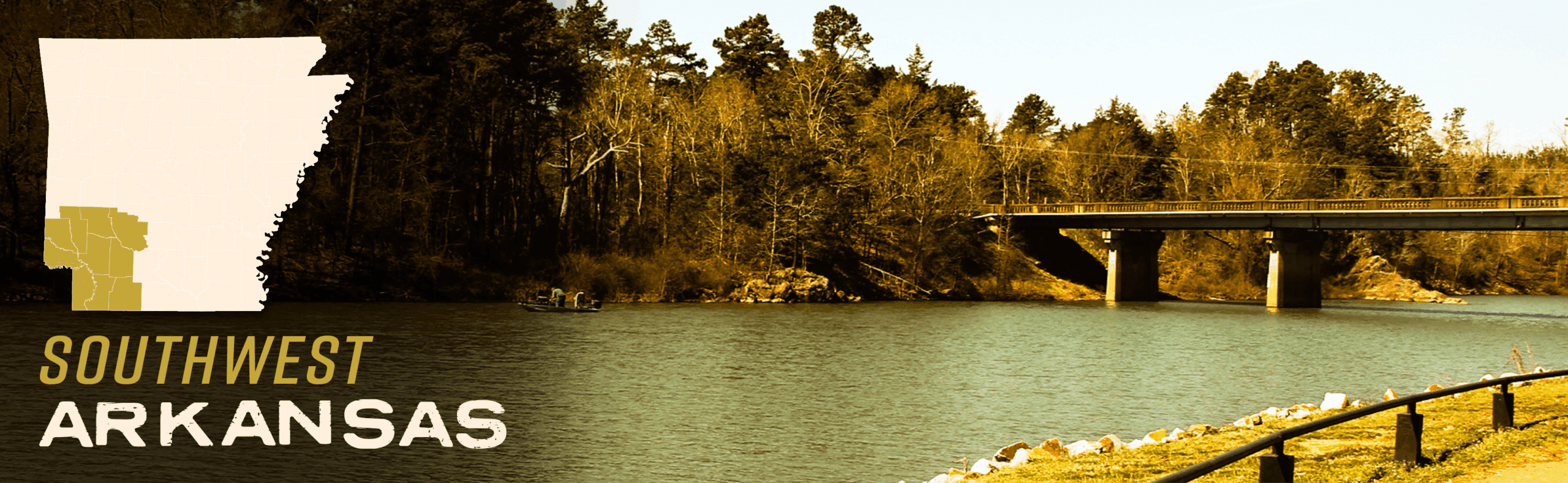
Southwest Arkansas
Millwood Lake
For the Army Corps of Engineers’ real-time lake level and outflow report from Millwood Lake Dam, visit the Corps Little Rock office website.
(updated 4-23-2026) Mike Siefert at Millwood Lake Guide Service said Wednesday that Millwood’s elevation is stable at about 5 inches above normal pool, where it was last week. Millwood Lake Dam is releasing about 3,100 CFS and tailwater is near 229 feet and falling. Surface temperature is ranging 70 degrees early to 78 degrees later in the day along Little River. Clarity along the river is heavy stain and low visibility (5-8 inches depending on location). Clarity and visibility in the oxbows continues improving daily, with visibility ranging 15-30 inches in many locations. Clarity in Horseshoe and McGuire continues to be good this week and is about 10-30 inches visibility. Mud Lake had higher sediment content this week, with reduced visibility ranging 5-10 inches.
Siefert broke down the individual species and the bite for this week:
* Largemouth bass, for the most part, are post-spawn over the last week or so, and their activity levels are hit and miss, better on cloudy days. Many of the bass we are seeing have moved off the flats and into deeper sections of creek channels. With the increased surface and lake pool temps again this week, and on cloudy days, we are getting fair reactions on a variety of topwater baits like the Brazalo WeeWhacker, Bushwhacker and skirted buzzbaits. With most of the black bass now post-spawn and pulling out to the next drop zone and structure out from the shallow flats of the oxbows, soft plastics are beginning to draw reactions in the 6- to 10-foot zones. Seven-inch Power Worms in June bug and blue fleck, or 10-inch size in black, black grape or blue fleck are working. Bass continue searching deeper drops for forage and baitfish in creek channels and structure, and moving in and out of new lily pad bloom stands and are easy to spook in clear water flats.
Brazalo Lures’ Strutter 2.0 Bladed Jigs and 501 tandem willow blade spinnerbaits continue working well and get good reactions from black bass (including spotted bass) in creek channels, and will continue getting reactions in the oxbows on points near stumps, lily pads and deeper creek channel outer bends, near vegetation and fresh lily pad blooms. Some days a curly tail grub trailer works better than straight tail, with best colors over the past couple of weeks being white, Spot Remover and Millwood Mayhem Bream colors and using a split tail Bass Assassin 3-inch FFS Split Tail Shad trailer on their Strutter 2.0 Bladed Jigs. A slow, stop & go retrieve will draw random reactions if you are in fairly clear to moderate stained water, moving deeper from 4-9 feet of depth.
In the oxbows, and along dropping structure into 9-10 feet depth, heavy three-quarter ounce Rat-L-Traps and ⅝-ounce Hammer Traps in Millwood Magic, Oyster and Guacamole will draw random reactions in the 8- to 12-foot deeper drops on a slow, jigging retrieve. When moving into the shallow lily pad stands, ⅜-ounce chrome/blue Spinner Rat-L-Traps (i.e., the Tail Spinners) will get a reaction in lily pad stems as the bass roam in and out of new blooming lily pads flats, from 6-8 feet depth, and will finesse well through the lily pad stems and vegetation without getting hung up as bad. One-knocker Mag Traps in Millwood Magic, chrome/Splatterback and Stumpknocker colors have also been getting a few reactions in 6-8 feet depth near vertical drops.
* White bass are still on the move as well all along Little River, and are also post-spawn in schools near creek dumps into the river, and we are finding nice healthy 2- to 3-pound whites from the McGuire Lake entrance downriver to White Cliffs campground. Many of these migrating schools have big white bass from 2-3 pounds, and remain moving up and down Little River again this week on primary and secondary points near deeper vertical drops into Little River from creek channels dumps. Bomber Fat Free Guppy, Fat Free Fingerlings in Tennessee Shad and Citrus Shad patterns, H&H Spinnerbaits, half-ounce Rat-L-Traps, Chuck’N Spins, Rooster Tails, Little Georges, Rocket Shads, UnderSpins with a 3-inch white grub and Beetle Spins all continue working for the White Bass recently.
* Crappie have greatly improved over the past two to three weeks with increasing water temperatures in the 5- to 12-foot depths on jigs. Many Crappie are also now post-spawn, but continue biting well this week from 2-2.5 pounds each on Cotton Cordell Smoke Grubs with a chartreuse tail, as well as jigs and minnows. They also improved in planted brush from 10-12 feet of depth near Cottonshed campground, Okay Landing and Saline inflow in the main lake over the past week, but we are still seeing them in the cypress trees from 4-6 feet depth. Bonehead Tackle Stump Bugs in Slick Diablo, Blue Ice or Chartreuse Diablo are working on a 1/16-ounce Northland Tackle Tungsten Crappie King Jig and a 2-inch Bonehead Brush Glider on the same jig, with the colors Black Cherry Firetail, Bonfire Glow, Chartreuse Diablo or Cotton Candy all working in planted brush on forward-facing sonar.
* No report this week on catfish or bream.
For more details, visit the Millwood Lake Guide Service webpage.
DeGray Lake
For the most updated lake level at DeGray Lake, click here.
(updated 4-23-2026) Capt. Darryl Morris of Family Fishing Trips (501-844-5418) said he has been fishing this past week at both DeGray and Ouachita, and most of the crappie are entering a post-spawn stage, stacking up on the brushpiles “and hungry. We are doing great on both jigs and minnows fished 8-12 feet deep on brushpiles in 15-25 feet of water.”
(updated 4-16-2026) Randy Plyler with Plyler Outdoors Guide Service (870-210-0522) reports that DeGray “has been pretty hot. Just had a big bass tournament down here this past weekend where several decent-size bass were weighed in, including two over 8 pounds, a 7-pounder, a couple of 6-pounders and several that were 5 pounds.”
Black bass can be caught on finesse worms, swim baits and wacky worms, as well as Texas-rigged Brush Hog or lizard.
Some crappie are on beds and can be caught on jigs.
De Queen Lake
For the Army Corps of Engineers’ real-time lake level and outflow report from De Queen Lake, visit the Corps’ Little Rock office website.
Dierks Lake
For the Army Corps of Engineers’ real-time lake level and outflow report from Dierks Lake, visit the Corps’ Little Rock office website.
(updated 4-16-2026) AGFC Fisheries staff note that if bass production in tournaments is any indication of how good the bass fishing is, Dierks Lake should definitely be among an angler’s target destinations. Based on results from the 2025 Arkansas Tournament Information Program Report, this lake in Howard and Sevier counties in southwest Arkansas was the state’s top tournament fishing destination last year. Biologists use data on the numbers of anglers, fish caught, average weights of fish and numbers of fish weighing 5 pounds or greater to develop key indicators of fishing quality. Those indicators are compiled into rankings for each body of water to help keep tabs on trends in tournament angling and offer anglers a peek into where they may want to schedule their next event.
While mainstays like Lake Dardanelle, Millwood Lake and Lake Ouachita continued to appear in the top rankings of the ATIPR, Dierks snuck into the report for the first time and did so in impressive fashion. During five tournaments at the lake in 2025, the average winning weight was 20.77 pounds. Anglers also brought 22 fish to the scales in excess of 5 pounds, despite the low number of overall tournaments and tournament anglers.
“At 13,600 acres, Dierks is one of our smaller reservoirs, especially of those created by the [Army Corps of Engineers],” Eric Naas, Black Bass Biologist for the AGFC, said. “It’s tucked away in southwest Arkansas, so it’s sort of a hidden gem, but local anglers really enjoy fishing there. This is just the first time we had enough tournament results to include it in the rankings.”
Lake Greeson Tailwater
For the most updated Narrows Dam generation schedule from SWEPCO, click here.
Lake Greeson
For the most updated lake level at Lake Greeson, click here.
South-Central Arkansas
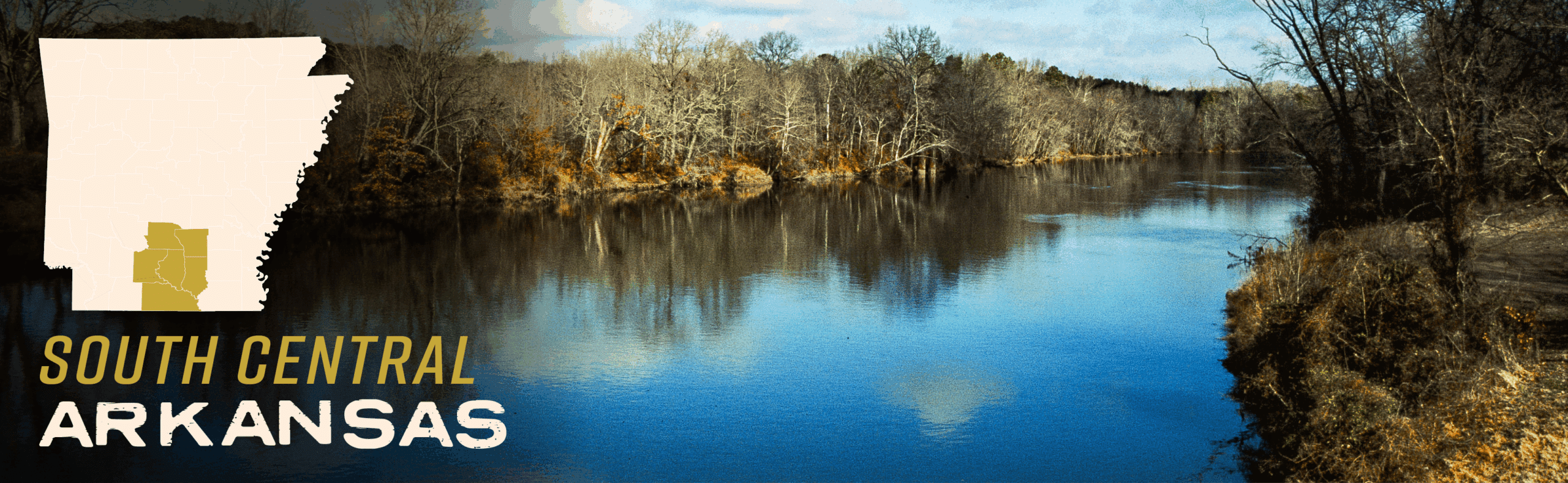
White Oak Lake Area
(updated 4-23-2026) Three largemouth bass were caught earlier this year, each topping 10 pounds, and that qualified them for the Arkansas Legacy Lunker program. All three were transferred to the Joe Hogan State Fish Hatchery in Lonoke.
Since being renovated and reopened in 2013, Lower White Oak has been turning out a number of double-digit and near-double-digit bass, and the Legacy Lunker program is putting a new spotlight on that success.
West-Central Arkansas
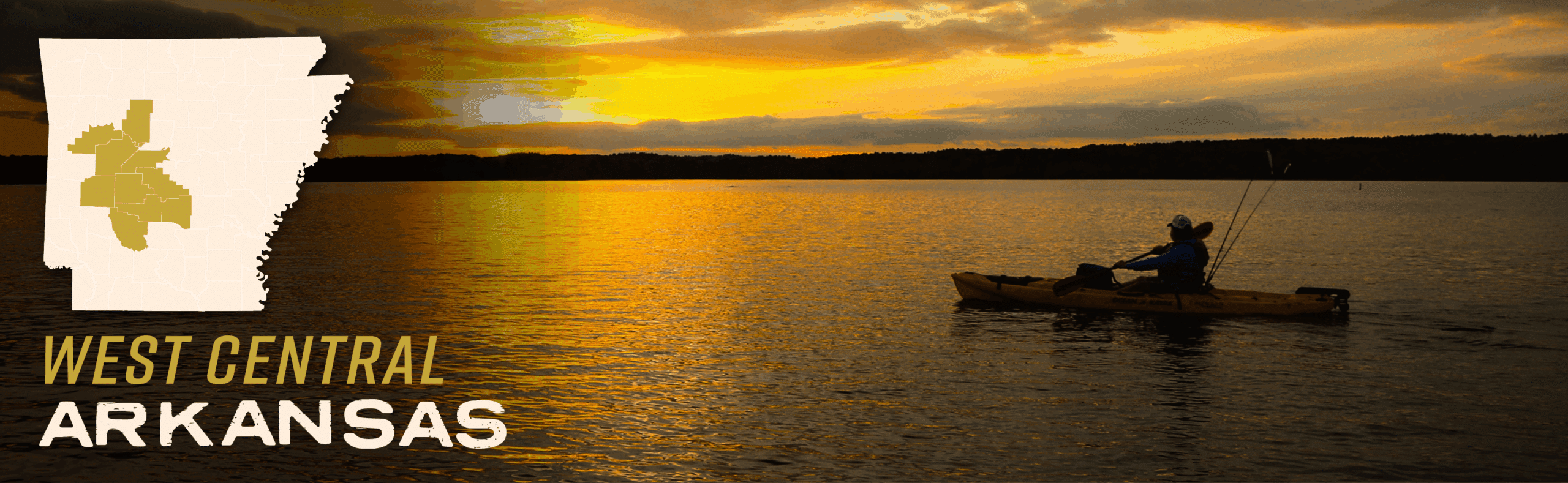
Lake Catherine Tailwater (Below Carpenter Dam)
For weekly flow releases from Carpenter Dam, visit www.entergy.com/hydro
(updated 4-23-2026) Shane Goodner, owner of Catch’em All Guide Service, reports that water temperature below the dam is 53 degrees with clear conditions in the tailrace. The lake is in very good shape water-wise, as far as lake level and clarity, considering statewide drought conditions. Rainbow trout are being caught in Lake Catherine in decent numbers from the shoreline and boat. Overall size this year is the attraction, with fish from 15 to 18 inches taken on live presentations such as waxworms or mealworms along with live minnows presented under a bobber. Artificial presentations have been largely ignored, as trout are actively searching for food in current and slackwater conditions.
Trout have migrated from downstream to the bridge, all the way to the dam, to escape warming water and to locate adequate food sources. Redworms or nightcrawlers fished just off the bottom with a marshmallow floater have been a productive method of taking rainbows this past week. Feeding cycles vary greatly, but late afternoon and evening periods have produced the most numbers of trout.
The crappie spawn has started later on Lake Catherine than normal, with some crappie caught in the tailrace on jigs and minnows. Action should increase greatly in the next week to 10 days. Spawning times are normally later around hydroelectric dams as opposed to the cycles occurring in an area not controlled by hydro-power.
Walleye are still present in the Carpenter Dam tailrace, although the spawn is complete. These fish remain in the area to rest and feed in preparation for the migration downstream. Trolling small crankbaits that imitate shad or crawfish against the current will draw strikes from these fish, which look to feed primarily during periods of generation.
Freshwater drum are present and spawning near the dam for their yearly run. These fish are strong and active and very capable of jerking rods off the bank or boat from unwary fishermen taking in the scenery. Drum over 40 pounds have been caught in the tailrace feeding on shad and crawfish, so anglers need to be aware when leaving tackle unattended.
As always, be prepared when on the water by abiding by lake rules and regulations and pick up after yourself, as trash cans are very limited. Littering has become a problem in the park area and violators will be ticketed by officers patrolling the scene.
Lake Dardanelle
For the Army Corps of Engineers’ outflow and gauge level reports from Dardanelle, visit the Corps’ Little Rock office website.
Lake Hamilton
(updated 4-16-2026) Philip Kastner of Trader Bill’s Outdoors in Little Rock and Hot Springs said recently on “The Wild Side” on KABZ, 103.7 The Buzz, that spring has sprung and the main channel on Lake Hamilton is 65 degrees and “it’s just unbelievable this time of year where you’ve got that main channel for those temperatures, which means the creeks are warmer, or colder in the morning obviously, it just depends on when you are fishing. The water color is ridiculously clear, very clear because of the lack of rain. We’re talking about ridiculous amounts of lack of rain for this time of year. The pollen needs to be talked about. If you’re trying to float a worm in the back of pockets, it’s hard to do with red oak noodles. They’re still on the trees right now. You can float a worm wherever you want and be good. But next week, it’s going to be a lot more difficult.
“So, float a worm right now. A Senko in the back of pockets is still the way to catch fish.”
Lake Nimrod
For the Army Corps of Engineers’ real-time lake level and outflow reports from Nimrod Lake, visit the Corps’ Little Rock office website.
No reports.
Lake Ouachita
For the current lake level at Blakely Dam, click here.
(updated 4-23-2026) Todd Gadberry at Mountain Harbor Resort and Spa (870-867-2191/800-832-2276 out-of-state) reports that black bass are good. Try a topwater on main lake points near creek mouths, or a floating worm/Zoom Dinger up shallow.
Walleye are good. Try green soft plastics or Rapala Shad Raps fished in the 10- to 14-foot range.
Stripers are very good and are being caught on C-10 Redfins and on live bait near major creek basins in the western part of the lake.
Bream are very good on crickets and worms.
Crappie are good. Try a small minnow-colored jig over brush in the 10- to 20-foot range.
For catfish, trotlines and jugs are producing some quality catches in the 15- to 30-foot range.
Water temperature continues its move upward, ranging 66-70 degrees. Water clarity is clear. The lake level Wednesday was 573.30 feet msl. Call the Mountain Harbor fishing guides (Mike Wurm, 501-622-7717, or Chris Darby, 870-867-7822) for more information.
(updated 4-23-2026) Capt. Darryl Morris of Family Fishing Trips (501-844-5418) said he has been fishing this past week at both DeGray and Ouachita, and most of the crappie are entering a post-spawn stage, stacking up on the brushpiles “and hungry. We are doing great on both jigs and minnows fished 8-12 feet deep on brushpiles in 15-25 feet of water.”
Blue Mountain Lake
For the Army Corps of Engineers’ real-time lake level and outflow reports from Blue Mountain Lake, visit the Corps’ Little Rock office website.
NOTE: Blue Mountain Lake is undergoing a two-phase drawdown proposed by the Army Corps of Engineers to improve aquatic and waterfowl habitat by exposing mudflats for seeding and for critical maintenance on the lake’s intake structure. The first phase was undertaken over the fall and winter. The second phase will begin May 1, 2026, with the lake lowered to 374 feet through Nov. 1, 2026. During the drawdown, water activities will be limited, boat ramps may be affected, and areas around the lake will be seeded.
Japanese millet will be seeded on the mudflats during phase one to improve habitat for waterfowl and other aquatic species. Call 479-947-2372 for more information.
East Arkansas
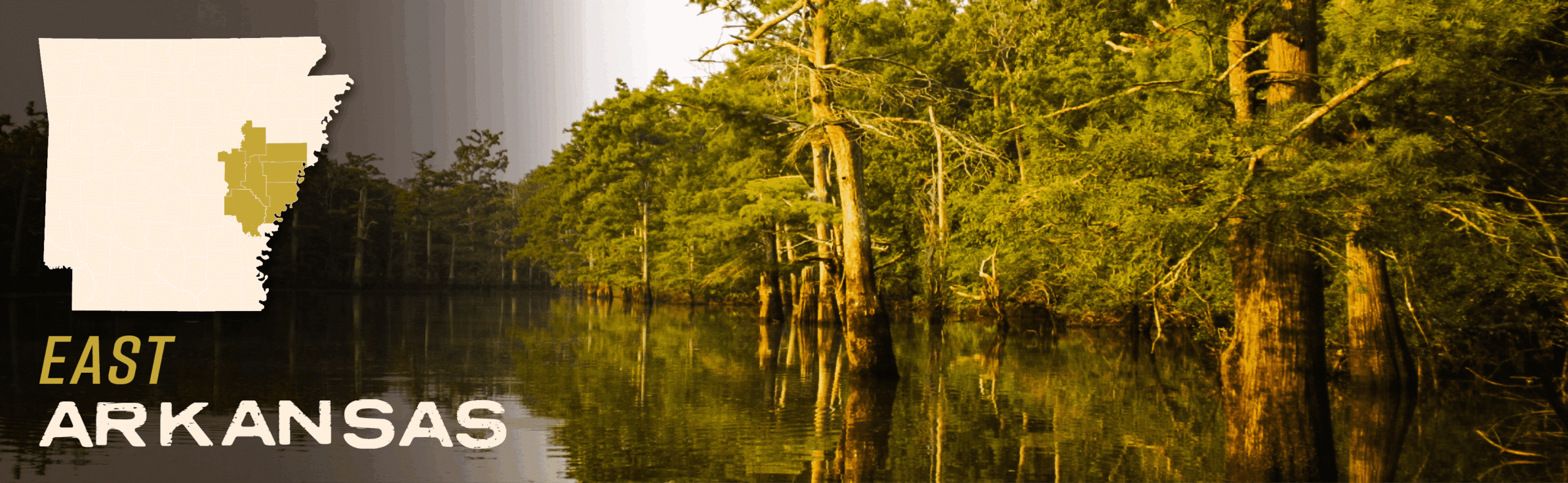
White River/Clarendon Area
For the Army Corps of Engineers’ real-time gauge level and flow from Clarendon, visit the Corps’ Little Rock office website.
Cook’s Lake
(updated 4-23-2026) Wil Hafner at the AGFC’s Cook’s Lake Nature Center (501-404-2321) said Cook’s Lake will be back on its regular schedule for Friday and Saturday, available for visitors from 8 a.m.-4:30 p.m. There hasn’t been much activity, so you might find the fish hungry and willing to bite. “Fishing should be getting good, we just haven’t had anyone try it out recently,” he said.
Wil’s suggestions for fishing Cook’s Lake now: “I would focus on black bass or crappie in and around hollow stumps. For the bass, I would flip a soft plastic like a Beaver, a tube or a lizard in black and blue or black and red flake. For the crappie, I would use minnows or a black/chartreuse or purple/chartreuse plastic with a pink head.”
Cook’s Lake is a 2.5-mile-long oxbow off of the White River, nestled in the heart of the Dale Bumpers White River National Wildlife Refuge near Casscoe in Arkansas County, with black bass, crappie, bream and catfish. This fertile oxbow receives very little fishing pressure due to it being used only for education purposes and youth and mobility-impaired fishing. Cook’s Lake is open to fishing for youths under 16 or mobility-impaired anglers who must possess the AGFC mobility-impaired access permit, and up to two guests (who may also fish), during the specified fishing season. Fish from the 140-foot mobility-impaired accessible dock or launch a boat. Fishing will be allowed only on Fridays and Saturdays through August, 8 a.m.-4 p.m., water level pending. Before launching, please check in at the Nature Center classroom and report back before leaving. For information or unscheduled closures, please call the center at 501-404-2321.
Note: msl is mean sea level; cfs is cubic feet per second.
Recent News
Arkansas Wildlife Weekly Fishing Report
Jul. 23, 2026

Greenwood Native Hampton Receives Monty Carmikle Award
Jul. 22, 2026
Subscribe to Our Weekly Newsletter E-mails
Don’t miss another issue. Sign up now to receive the AGFC Wildlife Weekly Newsletter in your mailbox every Wednesday afternoon (Waterfowl Reports are published weekly during waterfowl season and periodically outside the season). Fishing Reports arrive on Thursdays. Fill in the following fields and hit submit. Thanks, and welcome!