
Arkansas hatcheries help walleye angling action
BY Jim Harris
ON 03-19-2026
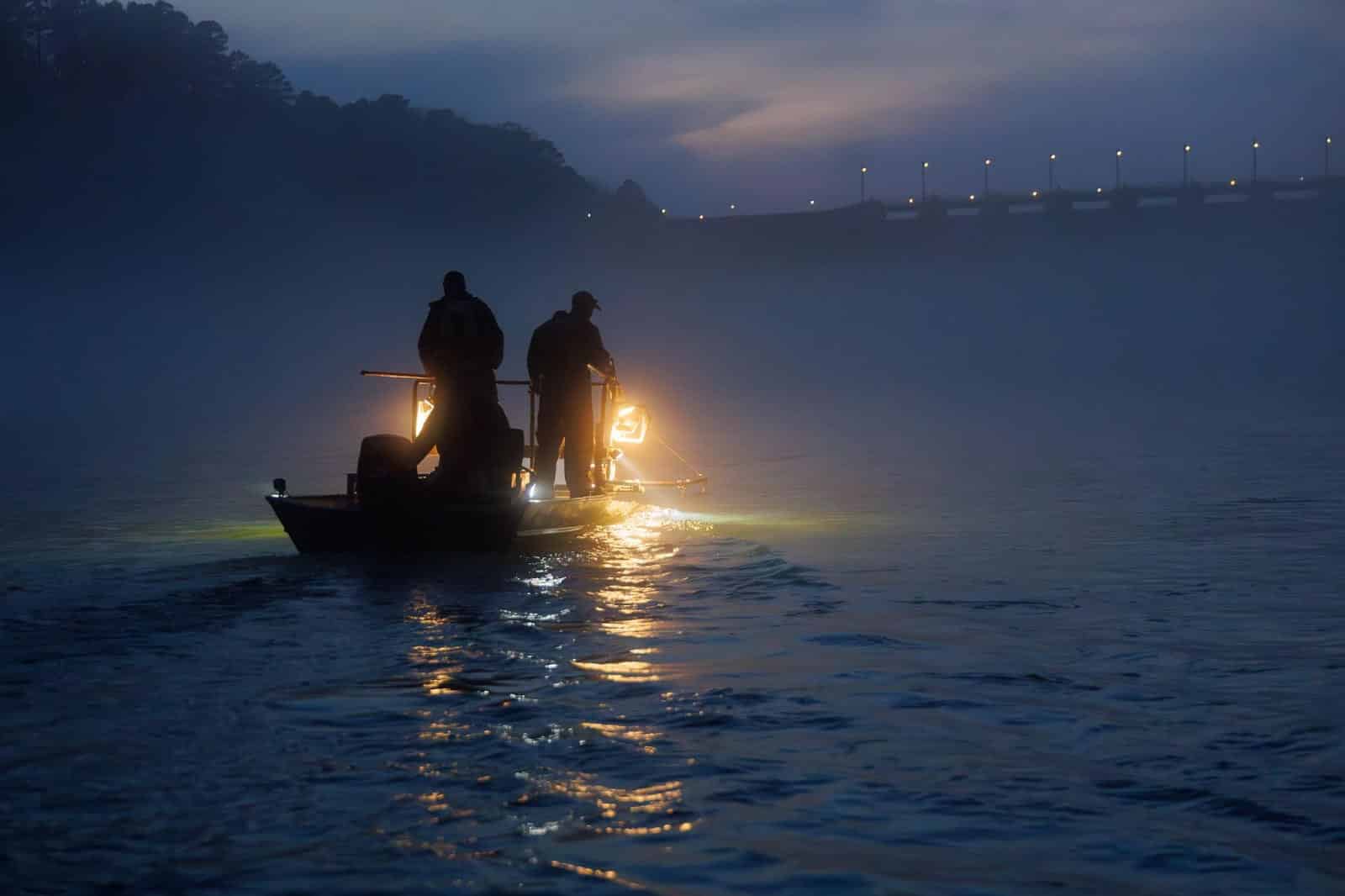
HOT SPRINGS — Early last week Jeff Newman and five other men were out on Lake Catherine late to gather up some walleye. The end goal wasn’t a fish fry, but to collect and fertilize eggs to spawn hundreds of thousands of these native Arkansas fish for anglers in the southern half of the state.
Newman is the hatchery manager at the Arkansas Game and Fish Commission’s Andrew H. Hulsey State Fish Hatchery on Lake Hamilton, and the five other men were biologists on his staff, including walleye project manager Nick Sanders. When the second week of March rolls around, these and other dedicated AGFC staff are up throughout the night, collecting male and female walleye from the tailwater of Carpenter Dam, between lakes Hamilton and Catherine. This is the best window to catch these elusive fish as they move as far upstream as they can to attempt spawning on the rocks just below the dams.
Through electrofishing, the fish are given a brief, stunning jolt of voltage for netting, then brought to the shoreline for spawning at a boat access. Or, if the females are deemed “eligible” for spawning but are not yet “running” with eggs, they are taken to the nearby hatchery to complete their spawn. Captured females whose eggs, also tested at the access, won’t be ready to spawn for more than a day are returned to the water, perhaps to be caught another night.
This year’s task was to grow out 360,000 walleye to fry stage. Over two nights, the staff spawned 17 females, including three on Monday night at the boat access.
“We spawned two more at the hatchery right when they got back, about 12:30 a.m. and 1 a.m., and then I spawned the other five we got Monday on my shift from 3 a.m. to 2 p.m. (Tuesday). I never went home,” Newman said. A third night of electrofishing was considered, but “we got everything we needed” the first two nights.
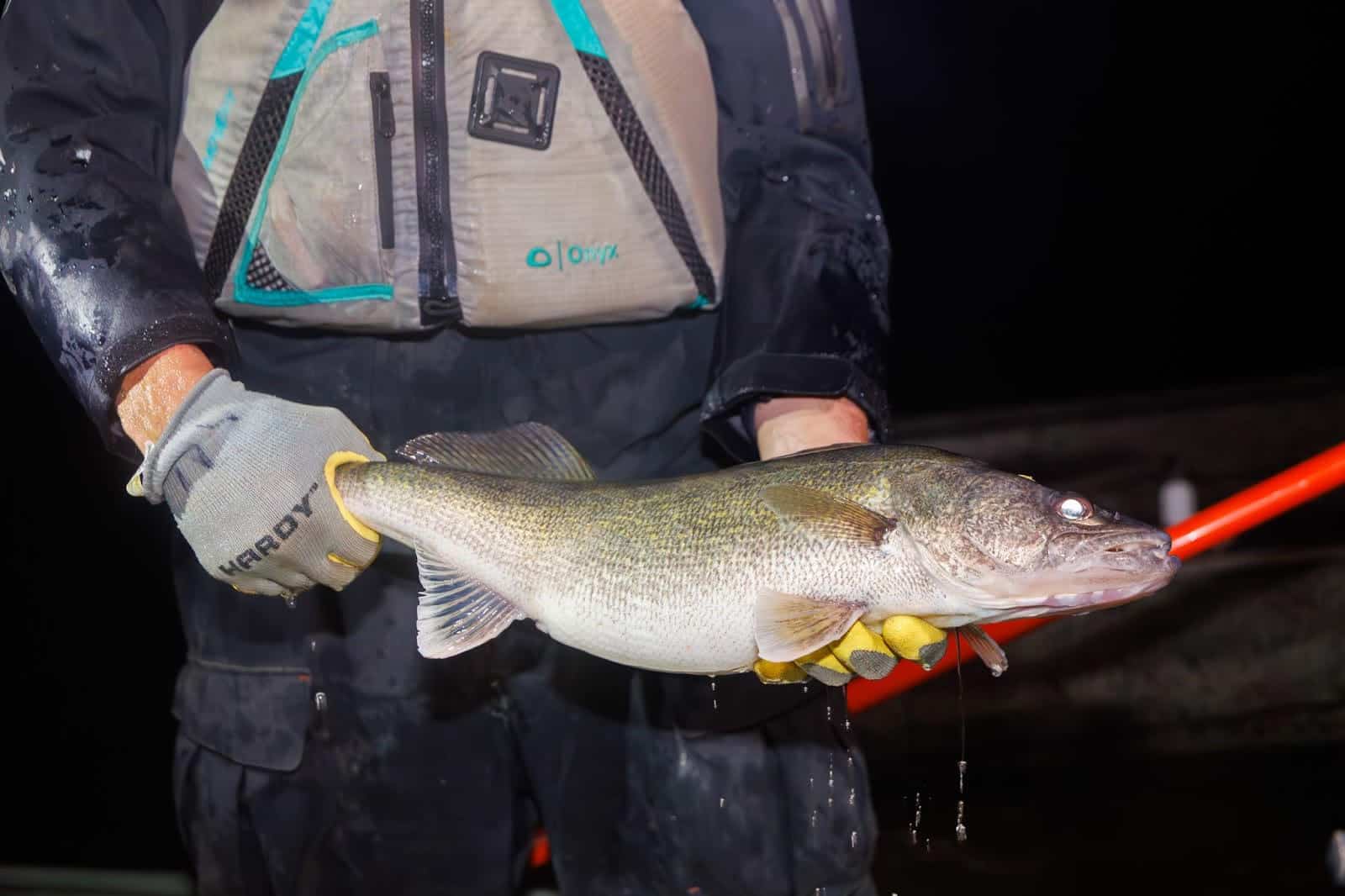
If all goes as expected, the eggs will develop for up to nine days in McDonald Jars, designed to move the eggs around as if in natural surroundings. The eggs will sink to the bottom before the fry break through their egg casing around Day Nine and begin swimming up out of the jar, and into an aquarium.
From there, they grow quickly over about four days before they are ready for a hatchery production ponds.
“Their mouths have not developed when they hatch,” Newman said. “Their mouth is developing and the swim bladder is inflating. On that fourth day, they’re ready to start feeding on zooplankton, their first food source.”
And, in 40-60 days, they’ll grow out to a harvest size of 2 inches, ready for stocking in three area locations: Lake Catherine State Park and the main lake, the Ouachita River below Lake Catherine, and the Saline River.
The AGFC also spawns walleye from the Kings River for the state’s northern lakes and rivers.
Statistics rate walleye below black bass and crappie as favored among anglers, but Newman says, “It’s one of the best eating fish, in my opinion.” And, in the words of retired AGFC district supervisor Brett Hobbs, “Anglers don’t target walleye, but they don’t throw them back.”
The southern walleye project is scheduled during early March because that coincides with Entergy raising Catherine’s and Hamilton’s lake levels from the annual winter drawdown, which this year was 5 feet. There was a question if nature would comply with the whole project, though, as heavy rains from the weekend had also elevated water levels, and a heavy flow was moving through the tailwater.
“We used to go after the lake was full, but we have to go a little earlier to catch that window when they can manipulate the flow,” Newman said. “On the first night, the flow was just a little more dangerous, running at 7,500 cfs. It’s difficult with that flow with two men in the front of our electrofishing boat. They were able to back it off to 3,000 cfs on Tuesday, which is usually what we electrofish in.
“Everything went great,” as far as obtaining females for the spawn, Newman said. Most were found in the expected 3- to 6-pound range, though the biggest female caught Monday night wasn’t ready and was returned to the water. Males were “tough,” though, Newman said. “We just didn’t see the numbers we usually see, and their milt production wasn’t really great. Probably two-thirds of the males gave really good production.”
The Carpenter Dam tailwater and its rocky shoals are where walleye naturally spawn, which is why biologists target the location. Unlike its neighbor, Hamilton, Catherine has few feeder creeks, so the tailwater is the walleye’s destination. In the wild, the released eggs will stick to the rocks. When the females are spawned on the shoreline by the biologists, they mix the eggs with Fuller’s Earth to keep them from sticking or clumping. If one egg were to go bad among a clump, it could ruin the hatch, Newman said.
Ideally, Newman said, the biologists want to capture three males for each average-sized female for the spawn. The biologists also know they won’t get 100 percent production from the eggs. With all of the other fish species being grown at the Hulsey Hatchery, plans are in place early for how many walleye will be grown in the production ponds.
“We based the amount of acreage and fry we need from historical data,” Newman said. “We have survival rates of 25 to 40 percent. So, if you have 100,000 fry hatch, you can get 25,000 to 40,000 fingerlings. The larger you get the walleye, the more cannibalistic they become in the pond. They can decrease their population very quickly.”
Each AGFC district puts in “an order” of requested walleye for each season. The Hulsey Hatchery was tasked with 85,000 walleye for its three destinations in 2026. In other years, though, they’ve had requests from lakes such as Ouachita for up to 800,000 fry. One year’s project, Newman said, produced 2 million fry.
Walleye projects over recent years were scheduled every other year, “but I want to say this is the third consecutive year that we’ve done it every year. The reason we’re doing that is, the biologists have been tasked with staggering their walleye requests. They pick different water bodies to get walleye. That’s so we won’t have those really large projects, which tie up a lot of acreage on the hatchery.”
Newman’s team also takes fin clips of the males and females caught for genetic study.
Others on his electrofishing team besides Sanders were Ryan Little, assistant hatchery manager, and technicians Lee Terlecki, Phil Mariage and Austin Davidson. Coincidentally, Sanders had to leave the fishing Monday night to be with his wife, who gave birth to a healthy girl the next afternoon.
####
CUTLINES:
(top) A three-man crew operates the electrofishing boat on the Carpenter Dam tailwater to gather male and female walleye for an annual spawning project. AGFC photo.
(second photo) A healthy female walleye is ready to release her eggs on shore, allowing AGFC biologists to spawn walleye and grow them out into fingerlings. AGFC photo.
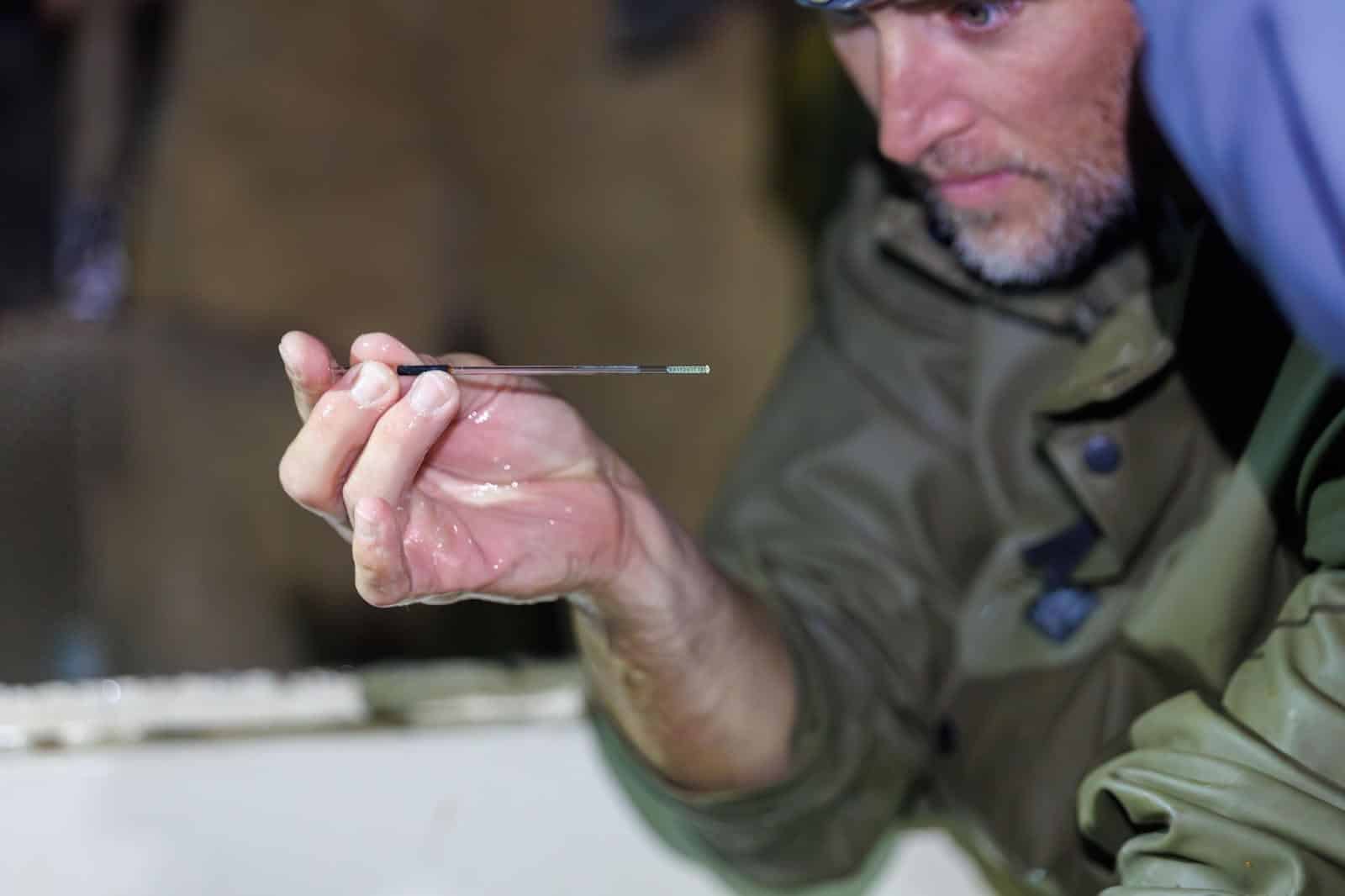
(third photo) An AGFC biologist on the Lake Catherine shoreline checks the eggs of a walleye to see if they are ready to be fertilized. AGFC photo.
Recent News

AGFC Commissioner Meeting Notice
Mar. 17, 2026
Subscribe to Our Weekly Newsletter E-mails
Don’t miss another issue. Sign up now to receive the AGFC Wildlife Weekly Newsletter in your mailbox every Wednesday afternoon (Waterfowl Reports are published weekly during waterfowl season and periodically outside the season). Fishing Reports arrive on Thursdays. Fill in the following fields and hit submit. Thanks, and welcome!