AGFC celebrates World Fish Migration Day with fish passage improvements in southwest Arkansas
ON 05-22-2026
World Fish Migration Day, a global event held every two years on May 23, is often associated with coastal communities that depend on annual movements of commercially and recreationally attractive fish species, such as salmon in the Northwest and tarpon along the Gulf Coast. Landlocked Arkansas has just as much cause to celebrate because free movement of fish is the key to the rich species diversity shared by many of The Natural State’s free-flowing ephemeral streams.
Two of the largest threats to that free movement are siltation from eroded streambanks and barriers like dams, poorly designed bridges and low-water crossings.
The Arkansas Game and Fish Commission’s Stream Habitat Program works tirelessly to combat both of these issues, restoring stream banks to reduce erosion and removing those man-made barriers that block fish passage throughout The Natural State.
The Little River Watershed includes the Cossatot, Rolling Fork, Saline and Little rivers and Robinson Creek. This watershed is not only a Nonpoint Source Priority Watershed for the Arkansas Department of Agriculture, but a large portion of the watershed is a Tier 1 Conservation Opportunity Area with many federally listed species and species of greatest conservation need.
In 2022, the AGFC began work with the ADA Natural Resources Division on a grant to restore stream connectivity to the watershed by removing four failing low-water crossings that blocked the passage of many aquatic organisms. By summer 2023, three of those barriers had been removed on the western Saline River, thanks to a valuable partnership between the AGFC, ADA and Weyerhaeuser. This progress reconnected more than 25 miles of stream, leaving one obstruction to tackle in the project.
“After inventorying and prioritizing remaining fish passage barriers in the watershed, our sights were set on removing a vented, low-water crossing on the Rolling Fork River to complete the original 319 grant,” Tim Burnley, AGFC Stream Habitat Program Coordinator, said.
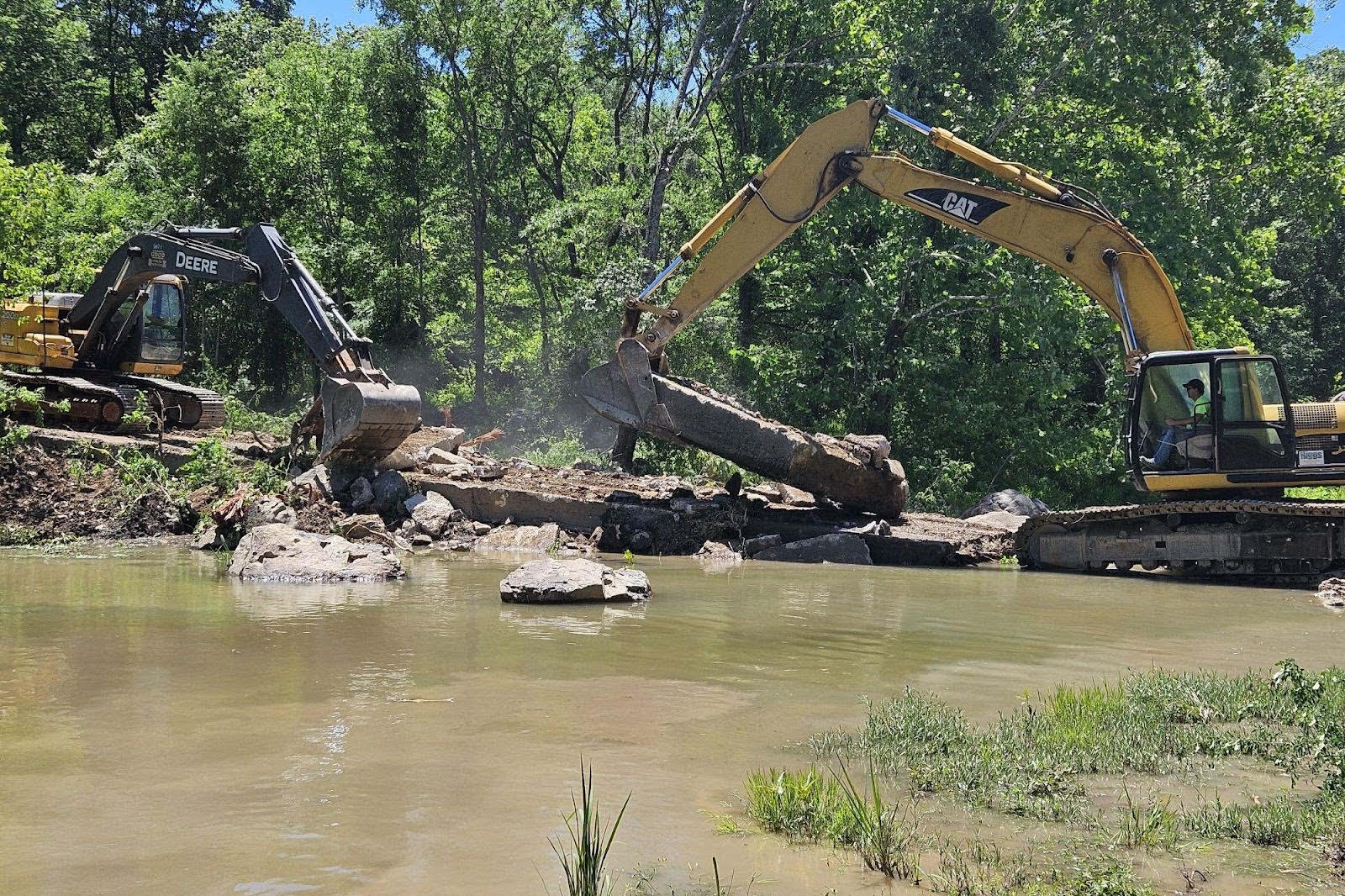
This month, that barrier was removed and is being replaced with a span bridge crossing, completing their original grant for the project.
“While reconnecting the rivers, the program also added streambank stabilization structures to ensure that the habitat remains in great condition,” Burnley said.
Although the original grant is complete, the AGFC isn’t done with opening up fish passage in the Little River Watershed.
“While completing the initial grant project, we identified five additional low-water crossings, these on Robinson Creek, which was historically home to the federally listed leopard darter,” Burnley said. “We secured an additional $2.2 million National Fish Passage Program grant from the U.S. Fish and Wildlife Service to remove and replace those crossings, the first of which was also replaced by May.”
Burnley says the Stream Habitat Program plans to remove or replace all planned fish passage barriers by the end of 2027. When these fish passages are completed, Robinson Creek will return to a free-flowing stream from the Oklahoma border to De Queen Lake.
“Weyerhaeuser also is committed to removing the last barrier in Oklahoma,” Burnley said. “They are also working to remove other barriers on Cross Creek, a tributary to Robinson Creek. Once connectivity is fully restored, we plan to reintroduce leopard darters to their historical habitat.”
Conservation cannot be accomplished without teamwork, and the Stream Habitat Program has been fortunate to have great partners in accomplishing the work thus far. Weyerhaeuser, Polk County, ADA-NRD, the Southeastern Aquatic Resources Partnership, USFWS and many divisions across the AGFC have been instrumental in making this project possible.
####
CUTLINES:
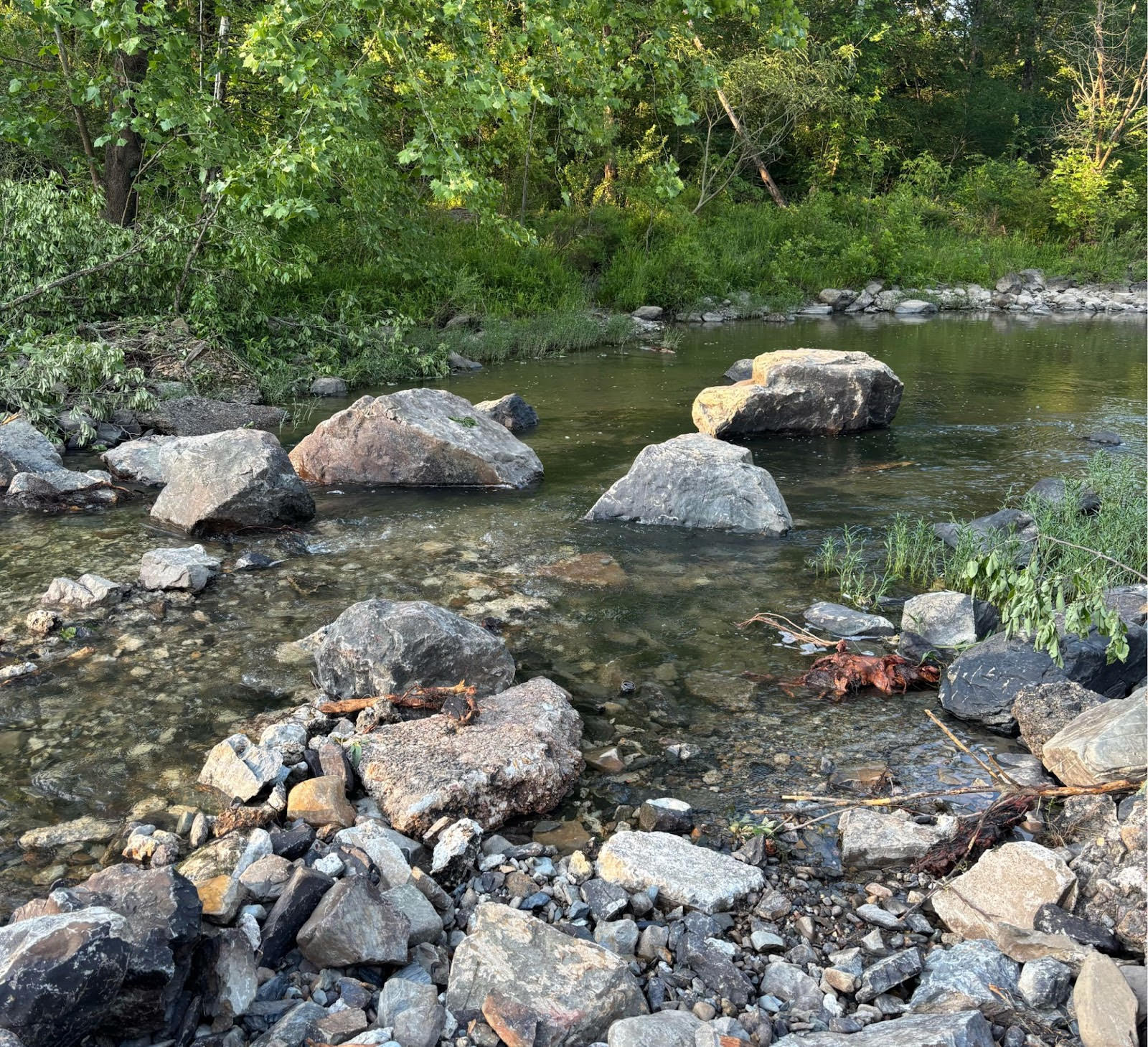
FREEFLOW
This portion of the upper Rolling Fork River has been connected to its headwaters for the first time since the early 1980s, thanks to a grant and partnership coordinated by the AGFC. AGFC photo.
DEMO WORK
AGFC staff and contractors removing a low-water low-water crossing on the Rolling Fork River. AGFC photo.
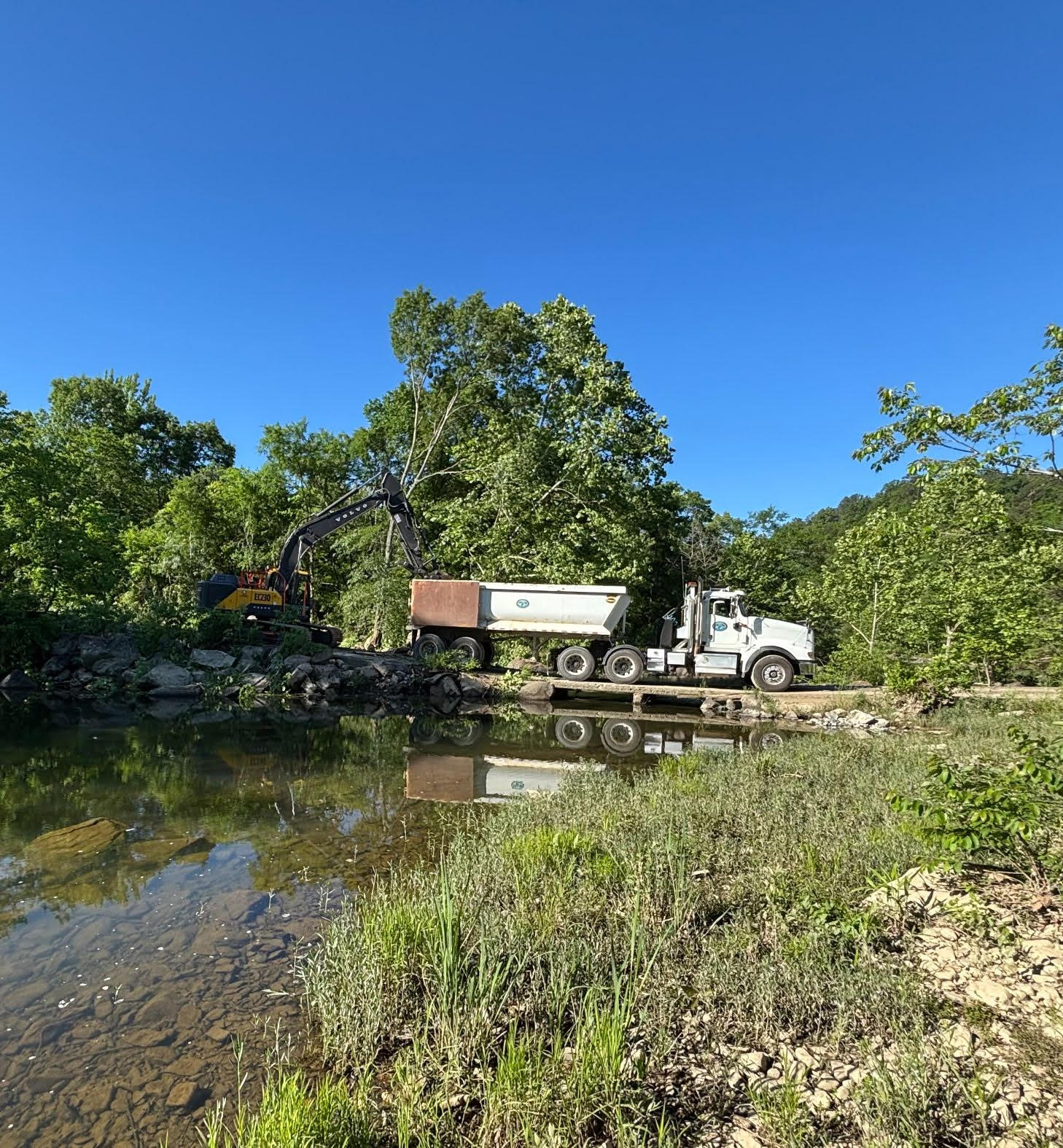
HAULING ROCK
Stream Habitat Program staff moving natural rock to be used in stabilizing the stream banks after the low-water crossing is removed. AGFC photo.
Recent News
Subscribe to Our Weekly Newsletter E-mails
Don’t miss another issue. Sign up now to receive the AGFC Wildlife Weekly Newsletter in your mailbox every Wednesday afternoon (Waterfowl Reports are published weekly during waterfowl season and periodically outside the season). Fishing Reports arrive on Thursdays. Fill in the following fields and hit submit. Thanks, and welcome!