Arkansas Wildlife Weekly Fishing Report
BY Jim Harris
ON 09-10-2026
September 10, 2026
Managing Editor Arkansas Wildlife Magazine
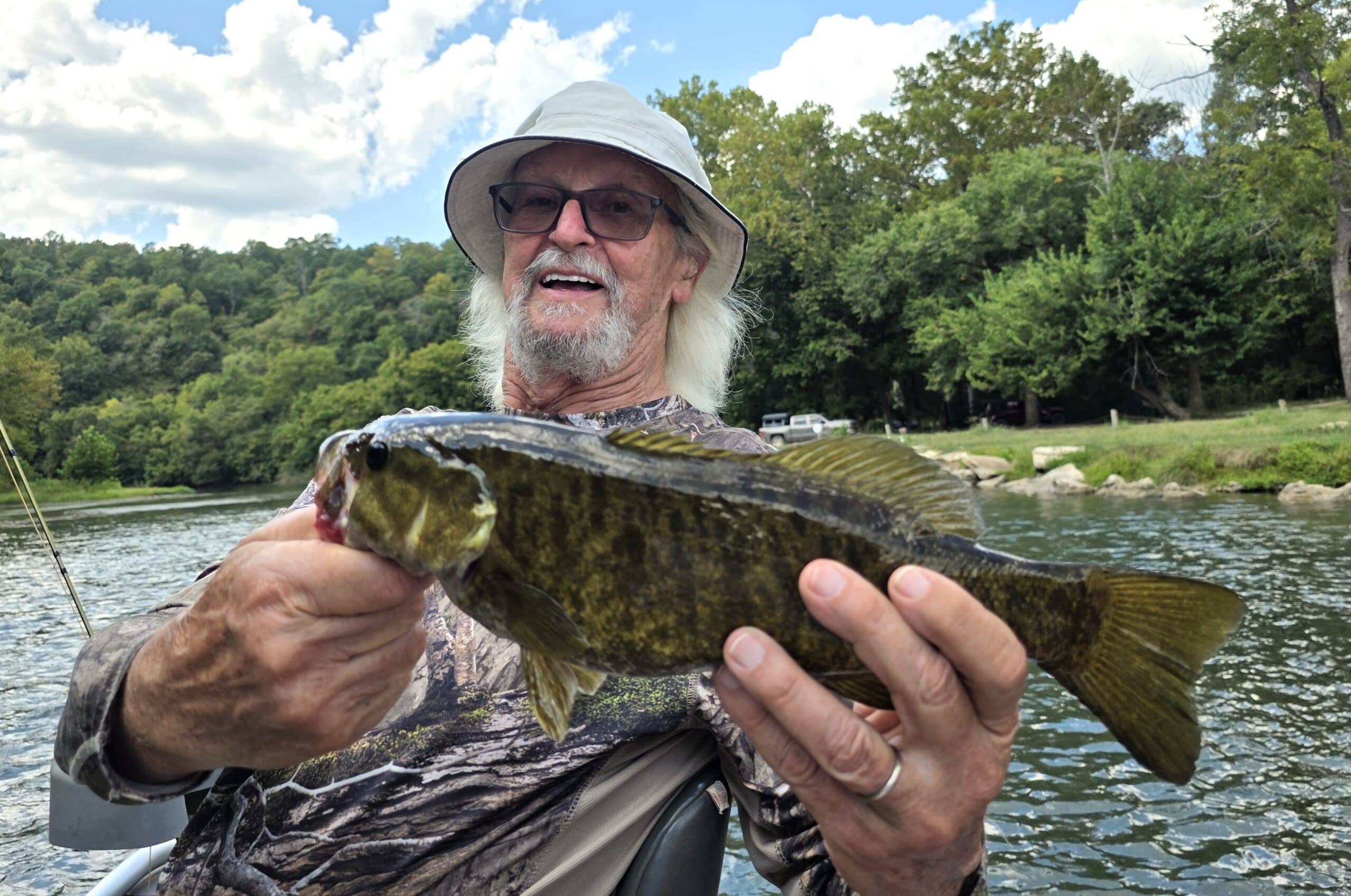
Neauman Coleman enjoyed the fishing on the Spring River recently with guide Mark Crawford, who says there are lots of hungry bass on the Spring these days, even with lower-than-average water. Streamers can be a lot of fun to throw at the bass when the bite is on, he says, and Woolly Buggers, Clouser Minnows and more are working. But this smallmouth was caught below a hopper on a pink San Juan Worm, Crawford told us.
Reports are updated weekly, although some reports may be published for two weeks if updates are not received promptly or if reporters say conditions haven’t changed. Contact the reporter listed for the lake or stream you plan to fish for current news.
Arkansas River and White River levels are available at: https://www.weather.gov/lzk/wxcntl4.htm
For real-time information on stream flow in Arkansas from the U.S. Geological Survey, visit: http://waterdata.usgs.gov/ar/nwis/rt
For water-quality statistics (including temperature) in many Arkansas streams and lakes, visit: https://waterdata.usgs.gov/state/Arkansas/
Download the Fish Brain app and follow AGFC at: https://join.fishbrain.com/agfc-page
Quick links to regions:
- Central Arkansas
- North Arkansas
- Northwest Arkansas
- Northeast Arkansas
- Southeast Arkansas
- Southwest Arkansas
- South-Central Arkansas
- West-Central Arkansas
- East Arkansas
Central Arkansas
Craig D. Campbell Lake Conway Reservoir (under renovation) and Nursery Pond
(updated 9-10-2026) AGFC staff in Mayflower note that while Lake Conway is drawn down for renovation, the Lake Conway Nursery Pond provides a nice fishing opportunity for area anglers, and as the weather begins to cool, it should provide a good fishing destination for families. The 70-acre pond has been stocked by the AGFC with mature bass, crappie, catfish and bream (as well as rainbow trout for the cold weather months).
Lake Conway renovation is proceeding on schedule. Read more here, or check out what was written in the May-June issue of Arkansas Wildlife magazine (or read online) for an in-depth look at the new weir and dam construction.
Little Red River
For the Army Corps of Engineers’ real-time outflow report from Greers Ferry Dam, visit the Corps’ Little Rock office website or by calling (501) 362-5150). Also check the Southwestern Power Administration website to see forecast generation schedule.
NOTE: Trout limits for the Little Red River below Greers Ferry Dam changed in early 2026. Anglers may keep two trout daily; trout 14 inches or longer must be released immediately. This rule is in effect until further notice.
(updated 9-3-2026) Mike Winkler of Little Red River Fly Fishing Trips (501-507-3688) said, “The weather forecast for this Labor Day weekend looks like a hot one, with the temperature pushing 100 degrees and a heat advisory in effect. There’s little to no chance of rain until next weekend, so plan on some serious summer heat.
“With the heat we’ve had in place for several weeks now, the Southwestern Power Administration has been running a pretty consistent generation schedule at Greers Ferry Dam. They’ve generally been running two units, usually starting somewhere between 1 p.m. and 3 p.m., and releasing water for six to eight hours. As always, check the USACE Little Rock app before heading out to see the projected generation schedule. Generation is subject to change.
* “The Little Red River has been fishing well, thanks to the consistent generation schedule we’ve had over the past several weeks. The best bite has been early in the morning and again in the late afternoon into the evening. Early mornings have a good flow from the previous night’s generation, and the fish have been taking advantage of it.
“With the hot weather, remember not to overplay your fish. Get them back in the water quickly and give them a chance to recover.
“We’re also seeing a blue-winged olive hatch in the afternoons and into the evening, especially on the lower river sections. The bugs coming off look like small gray flies, and the fish have definitely been noticing them. We’re seeing fish raise and look up, so now is a good time to have a dry fly or hopper ready.
* “Wade fishing opportunities are good up and down the river. If I were fishing on foot, I’d start at either JFK Park below the dam or Barnett Access. Both have been solid choices, and they’ve been stocking both access points heavily.
* “When I’m fishing from the boat, I’ve been starting most days with a double-nymph rig. A Pheasant Tail Soft Hackle or Guide’s Choice Hare’s Ear with a midge dropper underneath has been a good combination.
“For beginner fly-fishermen, I’ll usually simplify things and run a single Hare’s Ear or Pheasant Tail Soft Hackle under an indicator. A pink San Juan Worm is also hard to beat.
“Since the fish have been looking up, this is also a good time to fish a hopper or small dry fly. With the good water releases we’ve been having, there are plenty of different ways to approach the river right now.
“The streamer bite has been solid, too. Early mornings have been good while fishing the falling water, and the afternoon generation can get them going again. When the flows are high, don’t be afraid to pound the banks with some big articulated streamers.
* “A quick reminder on the new regulations: For anyone who hasn’t been on the river in a while, the AGFC has implemented some new regulations on the Little Red. The daily limit is now two trout, and no fish over 14 inches may be kept. The new regulations are posted at several access points along the river, but not everyone knows the rules have changed. I’d hate to see anybody get a ticket from a game warden, so make sure you know the current regulations before you start fishing. You can check the Arkansas Game and Fish Commission website for all the details.
“Most importantly, get out early this weekend and beat the heat. The fishing has been good, the river is in great shape, and there are plenty of opportunities to catch them a bunch of different ways. I hope everyone has a great Labor Day weekend. Be safe, stay cool, and I hope to see you out on the river!
“If you’d like to book a trip or learn how to fly fish, give me a call at 501-507-3688.”
Greers Ferry Lake
For the Army Corps of Engineers’ real-time lake level and outflow report from Greers Ferry Dam, visit the Corps’ Little Rock office website.
No reports.
Harris Brake Lake
(updated 9-10-2026) Bing Watkins at Harris Brake Lake Resort (501-889-2745) said that not many people have been on the lake in recent weeks because of the hot weather. As the weather cools, though, look for bass, bream and catfish to bite, she said. “Still too hot for crappie,” she adds. Nighttime is good for catfish at Harris Brake, and bream are catchable at that time on crickets and redworms. Catfish at Harris Brake Lake favor chicken liver, and that was working well a couple of weeks back, she noted.
The lake water level is very low. It’s hard to fish from the bank with both the current water temperature as well as the level, Bing said. “Lots of stumps are showing around the lake.”
At the bait shop, she says she can see to the bottom of the lake. But she also adds that for people living on the lake, this is a good time to be working on their docks.
For more updates, follow Harris Brake Lake Resort on its Facebook page.
Lake Overcup
NOTICE: AGFC employees and contractors will be conducting herbicide applications at Lake Overcup in Conway County this summer, preventing the use of the lake’s water for irrigation by lakeside landowners until Oct. 1.
Application of the EPA-approved aquatic herbicides should take roughly two weeks, and multiple applications will take place throughout the summer. The treatment causes no harm to wildlife, people or aquatic life, but water drawn from the lake could kill gardens, flowerbeds and lawns if used on neighboring lands. By federal law, these herbicides have up to a 120-day irrigation restriction after application. The AGFC asks adjacent landowners to NOT irrigate for lawn or garden use with water from Lake Overcup until October.
The use of aquatic herbicides is necessary to control the current problems with nonnative invasive aquatic plants that can infest Arkansas lakes, restricting access to boathouses, boat ramps and fishing locations. If left unchecked, many of these invasive plants can outcompete and replace native vegetation.
For more information, please contact the AGFC Fisheries Office in Mayflower at 833-338-3636.
No reports.
Lake Maumelle
(updated 9-10-2026) WestRock Landing in Roland (501-658-5598) said the lake is 10.5 feet below normal pool. The front launch ramp at WestRock is CLOSED. The back launch ramp has a drop-off with 6 inches to a foot of water remaining. Small boats, aluminum boats and four-wheel drive for putting the boats in the water are heavily RECOMMENDED, they report.
“Please use caution on the ramp and in the main lake.”
The water temperature remains a hot 88-90 degrees.
They had no fishing reports this week.
Arkansas River at Morrilton
For the real-time water flow at the Ormond Lock and Dam and Morrilton stage level, visit the Corps’ Little Rock office website.
Little Maumelle River
(update 9-10-2026) Ray Hudson at River Valley Marina (501-517-1250) said that although it’s been very hot, he’s had people out fishing the river and they are still catching the bass. But the surprise, Ray said, was hearing about some crappie success from one regular crappie angler who was out a couple of days last week with his wife. “They were catching near-limits of crappie,” Ray said. “The guy fishes this creek a lot, he knows them.”
Black bass are biting well in 3 feet of water on soft-plastic worms and topwater lures. Try a black-and-chartreuse jig and surprise yourself with some crappie success there; focus on 5 feet depth.
“The main fishing forecast is it’s hot,” Ray said. He’s heard nothing on catfish or bream “but you can catch them anytime here. I’ve talked to some other people fishing on the lakes around here and they are saying they’re doing good. It must be something in the air, or the moon.”
Arkansas River (Maumelle Pool)
For the real-time water flow at the Toad Suck Lock and Dam, visit the Corps’ Little Rock office website.
Arkansas River (Little Rock Area Pools)
For the real-time water flow at the Murray Lock and Dam and David D. Terry Lock and Dam, as well as the Little Rock pool stage level, visit the Corps’ Little Rock office website.
Peckerwood Lake
(updated 9-10-2026) Donna Mulherin at Herman’s Landing (501-626-6899) said the lingering summer heat is not deterring the crappie anglers here. Conditions have been just right – low water, the stumps now showing and the main channel obvious – to put crappie fishermen in close proximity to their quest. “We have had quite a few fishing, actually,” she said. “They are wearing the crappie out.
“All the fall fishermen have been waiting on these stumps (to show). They find the channel and the fish are right on the edge of that channel.”
Jigs are the bait of choice at Peckerwood for crappie.
Those good conditions for crappie are a non-starter for bass, though, and while a few people have picked up some catfish, the chief draw now is crappie. “You can’t do much else” than crappie fish, Donna says. “You’ve got to have a little boat and use your trolling motor. I wouldn’t bring a bass boat out here, just the two-man, johnboat style of boat to be able to get around.”
North Arkansas
Emergency Trout Regulations have been put in place! Read more: www.agfc.com/TroutRegsNews
The proclamation calls for catch-and-release of all trout in the 45 miles of tailwater below Bull Shoals Dam to the White River’s confluence with the North Fork River (specifically to the boat ramp at Norfork Access), as well as catch-and-release only on the entirety of the Norfork Dam tailwater. The trout waters below the White River-North Fork River confluence, from the Norfork Access boat ramp to the Highway 58 bridge at Guion, will have a two-trout-only limit with normal length and daily limits (only one trout over 14 inches). Tackle restrictions for the regular Bull Shoals and Rim Shoals catch-and-release areas on the White and the usual Norfork catch-and-release area still apply (artificial tackle only, and barbless hooks).
White River
NOTE: Trout limits for the White River below Bull Shoals Dam were changed in February by the AGFC and effective until further notice. From the dam to the Norfork Access boat ramp, anglers may keep two rainbow trout daily; all trout 14 inches or longer must be released immediately. From the Norfork Access boat ramp to Arkansas Highway 58 (at Guion), anglers may keep two trout of any species; only one may be longer than 14 inches. Brook trout must be 14 inches or longer to keep; brown, cutthroat and tiger trout must be 24 inches or longer to keep.
Cotter Area
(updated 9-10-2026) Cotter Trout Dock (870-435-6525) said Bull Shoals Lake is holding steady at 656.48 feet msl. “The water level continues to be extremely low throughout the day, providing great catches of trout and wonderful wading opportunities. Late in the afternoon, when releases climb to 16,000-plus cfs (about five units or more), floating a wriggling worm near the bank takes precedence.”
The rainbows are seeking deeper holes during the morning hour; even this late in the summer, crawdad tails continue to lure them out for a nibble. Shad, soft-shell crawdads and, always, sculpins are to go-to baits for browns. “This low, low water allows us to use so many different lures and baits successfully: jigs, Rooster Tails (orange or rainbow colored), floating No. 5 Rapalas (silver/black or rainbow), red-gold or blue-silver Buoyant spoons. The rainbows always seem to follow a bubblegum pink Berkley Mouse Tail. For our fly guys: Keep the never-fail red-silver midge on hand.
“The summertime heat has followed us into September but the weather folks are promising a break in the heat soon. Come see the works of His hands here in the never-fail beauty of The Natural State of Arkansas.”
Calico Rock Area
(updated 9-10-2026) Dave McCulley, owner of Jenkins Fishing Service in Calico Rock, said, “This week, we’ve seen the river rising in the mornings and cresting around 7 feet. Depending on when the water starts rising, the guides have either gone downriver to get ahead of the rise or go upriver to get behind the rise. With the deeper water in the mornings, we are seeing a lot of success drift-fishing with two Uncommon Bait Neo Pink eggs and tipping the hook with raw shrimp. If using artificial lures, fish near the banks.”
Bull Shoals Lake
For the Army Corps of Engineers’ real-time outflow report from Bull Shoals Dam, visit the Corps’ Little Rock office website.
(updated 9-3-2026) Fishing guide Del Colvin at Bull Shoals Lake (815-592-4302), delcolvinfishing.com, said Wednesday that this record-setting heat wave may be starting to slow down. The water temperature was 85 degrees, give or take. The bite still hasn’t changed much. “ It’s junk-fishing time of year. The bite has been fair. Powerfishing can be slow; better have wind/clouds/rain/stain. There are definitely some fish up shallow. Look for shallow brush and bushes, anything to flip a Beaver, jig or worm in the backs of creeks with any kind of flow. If it’s the right conditions, you will most likely notice bait fish. “
He suggests using a Toad, buzzbait or Whopper Plopper-style lure on shallow windblown banks and covering water. “Better get up early and beat the nasty heat. The topwater bite has slowed some, but it’s not done. If you’re finding surface activity, try a big Spook. Those fishing have moved to schools and they are fast. The Jewel Shad Spoon is working. Or you can take your favorite minnow to look at them. I’m using a one-eighth-ounce up high or deep with a three-eighth-ounce Tater.
“If the conditions are postfrontal, flat water, high pressure and bluebirds it will get really tough. Lots of guys are going at night to beat the heat. I will slow down, downsize and get off the bank, look at deep ledges and brushpiles, and bomb cast with lighter fluorocarbon line. You can try a drop-shot with a Robo in suspended schools, or use a half-ounce Jewel Football Jig in green-pumpkin orange, PB&J or Bass Whacker sitting off of deep points. Traditional bass fishermen are dragging the long points and ledges with big red worms or craw baits in brushpiles and timber tops on bluffs and bluff ends.
“There is a thermocline down around 32 feet. Lots of fish are holding around this depth. It’s that time of year to keep moving, hitting as many spots as possible. Remember: ‘Fish the Conditions!’.”
Del regularly posts new YouTube videos. Visit his YouTube site (Bull Shoals Fishing Report) or delcolvinfishing.com for more information and tips on fishing Bull Shoals Lake.
(updated 9-10-2026) Southernwalleye Guide Service (501-365-1606) said there’s been no significant changes in walleye fishing patterns this week, with the exception of fish moving a little bit deeper on the lower end of the lake, and some good fish are being caught suspended 5 feet off the bottom in 35 feet of water. Summer patterns are still in play. “We are seeing fish closer to the lower end of the lake are a few feet deeper than mid-lake areas.”
Fishing has been fair. The Army Corps of Engineers has been running a little water through the dam in the afternoons, and this has helped the bite pick up a bit more when the water is running. Fish are holding on flatter points with deep water on one side.
Look for fish on the tips of long points as well as the sides that are close to the sharper drop-off. Walleyes seen next to brushpiles still seem to be situated on the offshore side of the brushpiles where deep water is closer.
Main lake and secondary points have been producing fish during the day. Fishing slow has still been the key to picking up better-size fish.
Fish shallower in the early mornings and on cloudy days in 32-34 feet of water, and deeper in 35-40 feet of water if there is little or no wind or cloud cover. Casting
jigging spoons in white, chrome and blue and jigging Rapalas in blue and chrome or Helsinki Shad color, in half-ounce to three-quarter-ounce size, into 30 feet of water and working it back out into 40 feet has been working. Drop-shotting live crawlers around the offshore side of brushpiles in 32-37 feet is also working.
Bottom-bouncing orange, chartreuse or gold No. 3 Colorado deep cup blades or brass or gold willow leaf bladed spinner rigs and crawlers around the sides and tips of point close to channel swings is producing a lot of short fish as well some good 18- to 23-inch walleyes.
If trolling, try shad-style and small banana-style baits like No. 7 Flicker Shads or No. 9 Flicker Minnow in natural colors. Trolling in 35-40 feet of water at speeds of 1.8 to 2.2 mph seems to work best .
(updated 9-10-2026) Crappie 101 Guide Service (870-577-2045) reports that not much has changed of late on the crappie. They are mainly on brush from 20-30 feet in the creeks. Minnows have been best.
Norfork Lake
For the Army Corps of Engineers’ real-time outflow report from Norfork Dam, visit the Corps’ Little Rock office website.
No reports.
Norfork Tailwater
Note: On Feb. 1, 2026, the Arkansas Game and Fish Commission changed trout limits for Norfork tailwater. Anglers in the Norfork tailwater may keep two rainbow trout daily; all trout 14 inches or longer must be released immediately.
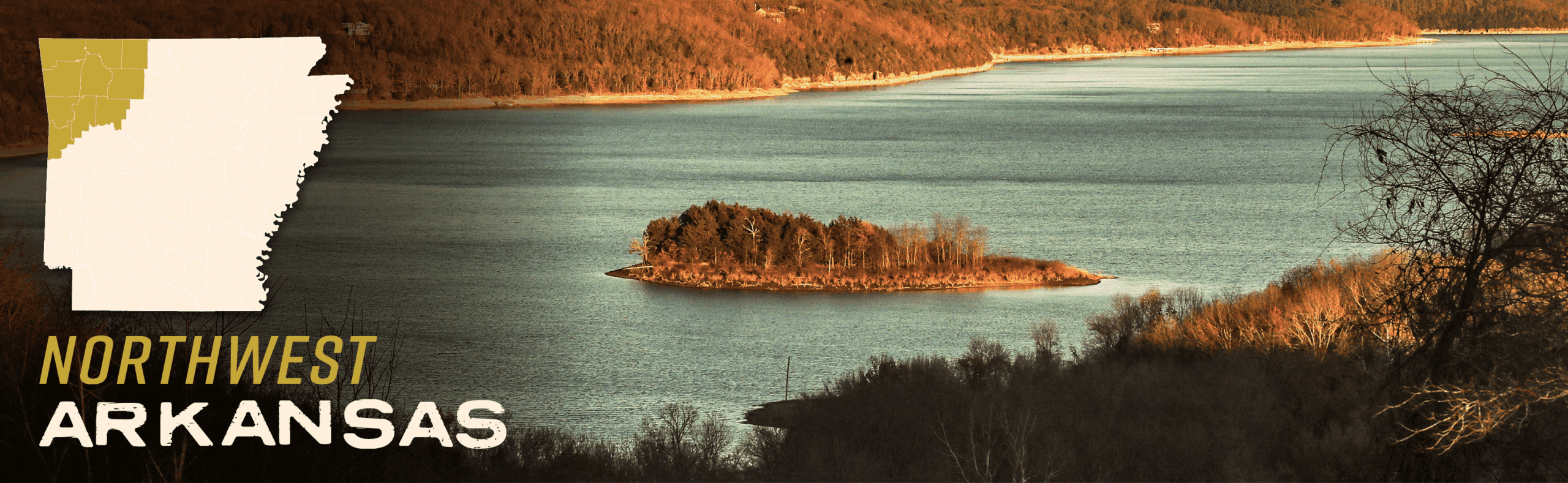
Northwest Arkansas
Beaver Lake
For the Army Corps of Engineers’ real-time outflow report from Beaver Lake Dam, visit the Corps’ Little Rock office website.
(updated 9-10-2026) Jon Conklin with FishOn Guide Service (479-233-3474) said Beaver Lake is down to 1,114.28 feet msl, and that’s around 7 feet below normal pool. This prolonged heat and lack of rain has the lake dropping 1 foot or so a week. ‘At this rate, and with the lack of rain in the forecast, we will be visiting some lower water levels soon. Water temps are still hot: upper 80s in most places on the lake.
“Stripers are still good, although this dropping water has them moving all over the north end. Early is still the name of the game. Crappie still can be caught on the troll. This is our typical summer pattern. Walleye are being caught on crawlers . Look at points in 25-35 feet of water. Catfish are always possible on trotlines and/or jugs.
“Lots of people are out and hazardous areas are starting to show at this lake level. Keep your eyes open and be careful. We did have a fatality in a boat hitting a swimmer last week. You must always keep aware of what’s ahead of you, especially traveling at high speeds. Things happen very fast. Wear your life vest and use your kill switch.
“Hopefully this relentless summer breaks soon!”
Visit Jon’s Facebook page for the latest updates between weekly reports at FishOn Guide Service Goshen AR.
Beaver Tailwater
NOTE: The Arkansas Game and Fish Commission changed trout limits for the White River below Bull Shoals Dam, effective Feb. 1, 2026, due to significant loss of stocking population at two Arkansas hatcheries in 2025. Anglers may keep two trout daily; all trout 14 inches or longer must be released immediately. This rule is in effect until further notice.
(updated 9-3-2026) Guide Austin Kennedy (479-244-0039) says, “The trout bite on the Beaver tailwater remains fair. With the brutal summer heat, the best fishing has been during the early morning and late evening hours when water temperatures and conditions are more favorable.
“Most trout are being caught using Pautzke Fire Bait fished on the bottom with light terminal tackle. Quarter-ounce spoons have also been producing fish. Keep your presentation light, work the productive water thoroughly, and take advantage of those cooler periods at the beginning and end of the day.
“Walleye fishing remains productive from the Beaver town area upstream toward Holiday Island. This time of year, don’t be afraid to speed up your presentation. Most of our walleye are being caught by jigging soft plastics or trolling crankbaits in about 15 feet of water. As with the trout, early morning and late evening have been the most productive periods.
“Spotted bass are also cooperating, particularly during the early morning bite. Three-inch flukes and small swimbaits have been producing fish.
“The heat continues to be the biggest challenge. Get on the water early, take plenty of water, stay hydrated and don’t overdo it during the hottest part of the day.
“Here’s to hoping the weatherman is wrong and we get some relief from this heat soon.”
Visit Austin’s updated website, www.buschmountainfishing.net, for more information.
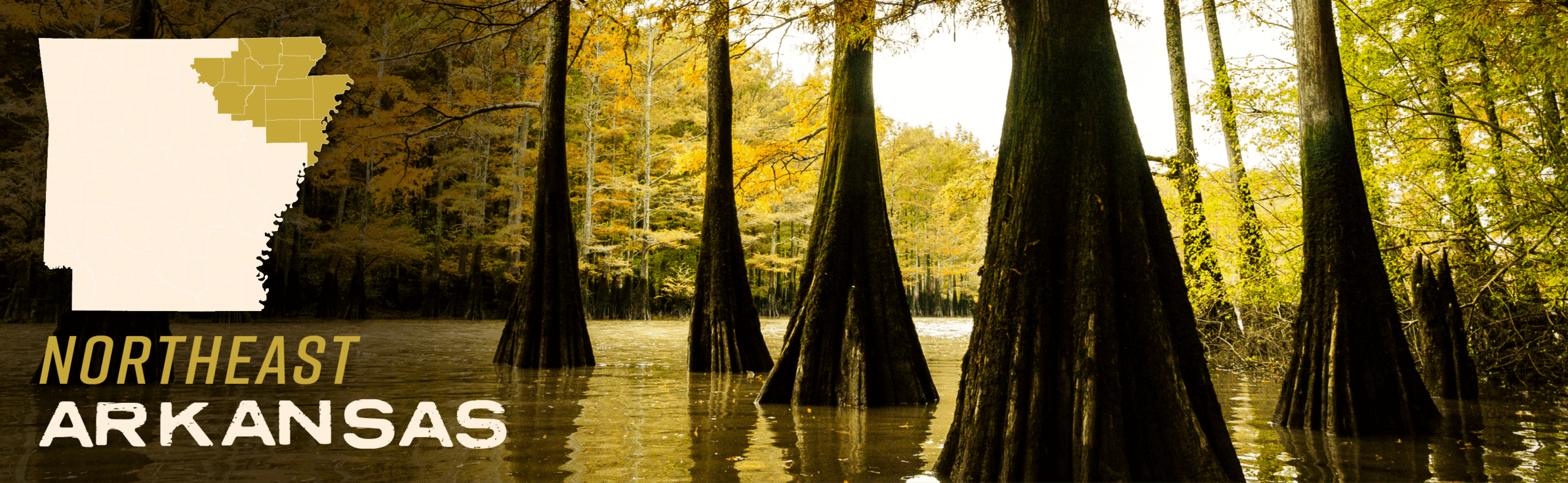
Northeast Arkansas
Lake Charles
(updated 9-3-2026) Marsha Robinson at Lake Charles State Park (870-878-6595) said crappie reappeared for anglers this past week. There were fair results around the shoreline using worms. Catfish also continued to bite well. Worms and cut bait are attracting cats. There were no reports from bream or bass, however.
The surface water temperature rose 3 degrees from the previous Sunday to this past Sunday, though it’s still lower than most readings in the area at 79.8 degrees. The water has been low for a long time. It’s also the usual murky clarity.
Lake Poinsett
(updated 9-10-2026) Jonathan Wagner, superintendent at Lake Poinsett State Park, in his most recent report said, “Lake Poinsett has been slower fishing-wise, but the bream are still biting. No reports for crappie or bass. There have been some reports of catfish caught on lines set out overnight.
“The heat has definitely been a factor negatively impacting anglers as of late, but they are definitely still tossing out lines.
“The Lake Poinsett State Park visitor center is open 8 a.m. -5 p.m. daily for bait sales: minnows, nightcrawlers, redworms, waxworms, dip and dough baits, and more bait and tackle.”
The Arkansas Department of Environmental Quality earlier this week issued a warning for algae bloom on Lake Poinsett. The area of focus earlier this week was on the eastern side, and while the bloom is not considered dangerous, anglers are urged to use caution handling fish, while swimmers are urged to steer clear of the posted year.
Micah Tindall, an AGFC fisheries biologist in Jonesboro, said a small amount of surface algae was found during a routine inspection. ADEQ was notified and a follow-up inspection by ADEQ confirmed the algae bloom. The warning will stay in place until two all-clear inspections by ADEQ, and those inspections are made every 10-14 days.
Fishing is safe, and eating the fish from the lake is safe with some minor precautions. Clean your fish well with potable water and eat the fillet portion only. Boaters also should adhere to the Clean, Drain and Dry policy of the AGFC and to the rules on boat drain plugs.
Spring River
(updated 9-3-2026) Mark Crawford with springriverfliesandguides.com (870-955-8300) said water level is running at 260 cfs (350 cfs is average on the Spring) and water clarity is clear. “It has been a very dry year. The river remains very low and, with this heat, that’s not ideal. Getting out early and fishing late has worked out great. In the heat of the day, take a nap. It’s been hot out there. With this heat, focus on waterfalls or fast stretches of water with higher oxygen content for aggressive fish. Deep pools can be very productive for the bigger fish.
“With the low water conditions, it is ideal for fly-fishing with simple weight-forward rigs. Dry flies can work well early and late. Hopper droppers have still been a blast. No telling what you might catch on a hot pink worm dropper lately. Everything from carp, trout, bass and big ole suckers have been eating them up. If you’re spin-fishing. A hot pink Trout Magnet is perfect. Fish below an indicator about 2 feet.
“Plenty of bass out there on the Spring River. Streamers can be a lot of fun when the bite is on. From big Woollies to Clousers for flies, the chase is the race. But honestly, we’re catching a lot on Hopper droppers, too. Just got to fish for them, like the smallmouth we saw caught below a hopper on a pink San Juan Worm.
“The ‘canoe’ season is just about over, and hopefully rainy weather and cool temps will be here soon. The Spring River is always nice and cold. Just be safe wading; those rocks are slick.
Crawford’s website includes regular updates on his blog along with videos and photos. Check it out.
White River
For the Army Corps of Engineers’ real-time gauge level and flow from the White River stages at Batesville, Newport and Augusta and all other sites within the White River basin in Arkansas, visit the Corps’ Little Rock office website.
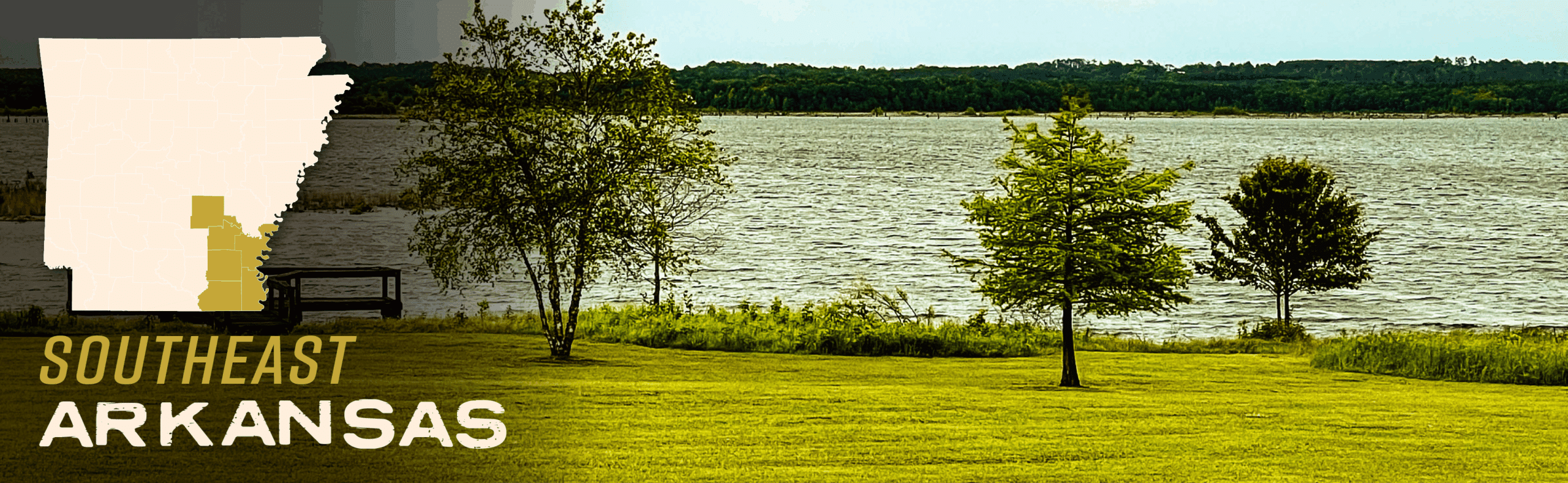
Southeast Arkansas
Arkansas River (Pine Bluff Pool)
For the real-time water flow at the Emmett Sanders Lock and Dam and Maynard Lock and Dam, as well as the Pine Bluff pool stage level, visit the Corps’ Little Rock office website.
Cane Creek Lake
(updated 9-10-2026) Shelley Burr at Cane Creek State Park, (870-628-4714) said Thursday that she had little to report. Between the excessive heat that lingered for most of the summer, they have seen few if any fishermen.
Cane Creek Lake is a 1,700-acre lake in Lincoln County that was built in 1986 and is owned and managed by the AGFC. It is stocked with bass, crappie, bream and catfish. The visitor center offers a pier. The lake has always had abundant floating and submerged aquatic vegetation. Increased focus recently on invasive aquatic species at the lake led to the discovery of the Cuban bulrush.
AGFC district staff also are working to manage other vegetation, such as American lotus, water lily, water shield and hydrilla, that have reached undesirable levels for anglers and biologists at Cane Creek Lake, AGFC staff report.
Lake Monticello
(updated 9-10-2026) This one-time great trophy bass destination when it first opened in the 1990s appears headed back to that designation again, based on what anglers have been catching in the past few months since regulations were eased on bass and crappie. Two bass over 10 pounds were pulled out during the spring, one qualifying for the AGFC’s Legacy Lunker program before the March 31 cutoff. And AGFC biologists say the lake is trending in the right direction with ample forage stocked after its renovation. Catch rates in spring sampling exceeded both the regional average and the 2025 numbers. The survey produced bass in the 6-pound range, but AGFC staff continue to track and value reports from local anglers who have documented catches of 8 pounds and larger.
The lake’s forage base is booming. The staff observed a high abundance of threadfin shad, redear sunfish and bluegill earlier this year, and that means more fuel for growth for the sport fish like bass and crappie.
The AGFC approved fishing regulations for 2026 regarding the harvest of sport fish on Lake Monticello. Anglers may keep 5 bass, but only one bass may be 16 inches or more in length. Anglers may harvest 15 crappie, but only 7 crappie may be longer than 12 inches. All other fish creel limits follow state regulations for the species.
Lake Chicot
(updated 9-10-2026) Lake Chicot, part of Lake Chicot State Park, is home to bluegill, channel catfish, largemouth bass, hybrid striped bass, redear sunfish and other bream, in addition to crappie. If you fish Lake Chicot, Connerly Bayou downstream of Connerly Dam, or Ditch Bayou from Lake Chicot downstream to Ditch Bayou Dam, be aware that crappie shorter than 10 inches must be immediately released and that the crappie daily limit is 20.
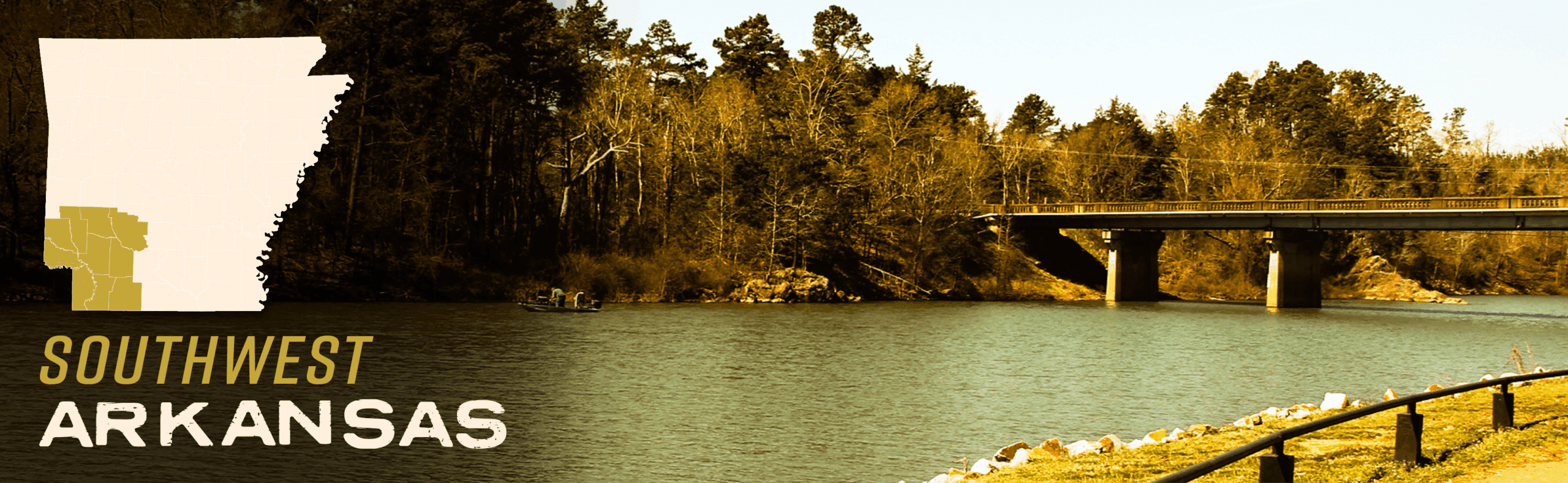
Southwest Arkansas
Millwood Lake
For the Army Corps of Engineers’ real-time lake level and outflow report from Millwood Lake Dam, visit the Corps Little Rock office website.
(updated 9-10-2026) Mike Siefert at Millwood Lake Guide Service said Millwood Lake elevation as of Wednesday was 5 inches above normal pool and stable, 259.6 feet msl. The dam is releasing about 650 cfs as of midweek; tailwater is near 225 feet and stable. Surface temps over the past week continued fluctuating, ranging 85-90 degrees along Little River. Clarity along the river is beginning to clear up with reduced river current. Little River clarity ranges 8-15 inches visibility depending on location. There is improved visibility in the oxbows ranging 12-20 inches in many locations. Clarity in Horseshoe and McGuire continues to be good this week and is about 15-35 inches of visibility, depending on location. Mud Lake had improved clarity this week and improved visibility ranging from 10-15 inches.
Siefert had these specifics on the fishing this week:
* Best activity periods for largemouth bass remain early in the morning and late in the evening, with best activity level found in early morning. Many bass we are seeing are roaming the flats overnight. Creek bend sections of channels continue holding fish on stumps in 5-12 feet depth. Bass reactions to a variety of topwater baits continue improving at daybreak, like on Heddon Spit’N Images, Arbogast Jitterbugs in Coach Dog, Cricket Frog and Perch colors, Pop Rs in bone color, Brazalo WeeWhacker and Bushwhacker buzzbaits, Horny Toads in June bug or Pumpkinseed, and Bass Assassin Shads in Houdini, Pumpkinseed and Chico’s Red Ear. Many bass continue roaming and pulling up onto the flats in lily pad stands at daybreak, chasing plastic frogs and Bass Assassin jerkbaits in lily pad stands and emergent vegetation.
Over the past couple of weeks, various schools of black bass have been noted randomly schooling at daybreak in the oxbows up Little River for a few hours. The best feeding periods have been from daylight to around 8-9 a.m., slowing in the heat of the day. Surface strikes are random on Bill Lewis Stuttersteps, Cordell Boy Howdy’s, Clear Baby Torpedoes, Heddon Dying Flutters and Cordell Crazy Shads in chrome/black back. Blow-up reactions randomly continue in the lily pads early on plastic frogs in black, white or pumpkinseed/pearl belly, near pads and grass. The schooling bass are chasing large pods of threadfin shad to the surface and blowing them out of the water at daylight in Clear Lake, Mud Lake and McGuire oxbows near vertical structure where the flats drop off into 8-15 feet depth.
Between 9-11 a.m., Bill Lewis Lure’s Square Bill ATV Crankbaits in Tennessee Shad and Pro Green Gizzard colors, and the MR-6 Crankbait in Millwood Magic, Silverado and Citrus Shad, are drawing hits and reactions along in creek channel swings on stumps and grass lines in clear water. On vertical structure where the alligatorweed and lily pads converge on receding flats or deeper drops on secondary points — from 5-6 feet deep tapering out to 8-9 feet deep — custom painted S-cranks and Little John cranks in bream and shad patterns are still getting random reactions. Bandit 200 cranks in Splatterback, LA Shad, Chartreuse Root Beer and Fat Free Shads, Fat Free Guppy and Fat Free Fingerlings in citrus and Tennessee Shad have been randomly working for largemouths, especially when surface-breaking chasing shad.
* White bass continue roaming Little River, but have been random in locations. Last week, two anglers found large schools of whites in McGuire oxbow schooling with the largemouths near standing timber in creek mouths near vertical structure, and in creek channel dumps into the oxbow near the back of McGuire and in front of standing timber. Random schooling was taking place from daylight until around 9 a.m. with shad pods breaking as the whites were pushing them to the surface. Red Rooster Tails, H&H Spinnerbaits, Hammered Cordell Chrome Spoons with a white/smoke-colored bucktail, Little George’s, Rocket Shads, quarter-ounce Tail Spinner Rat-L-Traps, Norman Little N and Speed N Crankbaits in Holy Shad, Harvest Moon EVOO and Olive Blue colors, and Little Cleo’s were all randomly catching fish over several days in McGuire.
*The crappie bite is good from early morning up till 11 a.m. on jigs, minnows and grubs from 10-15 feet of depth on standing timber. Electric Chicken, Monkey Milk and Firecracker have been good colors on jigs and tubes. Our friend and Millwood Lake guide John Gathright has been having amazing catches with clients and had several mornings where 30-60 fish limits were caught by both clients over the past few weeks. (Contact John Gathright on Facebook, or call us and we will get you his phone number. John lives on the lake and can schedule one or two clients with John’s Guide Service.)
* No catfish to report this week. Also, no bream update this week, but the backwater sloughs at Millwood State Park were getting a lot of vegetation and grass/vegetation blooming up, and it was getting hard to fish for bream and bluegills due to the vegetation densities at various locations.
For more details, visit the Millwood Lake Guide Service webpage.
DeGray Lake
For the most updated lake level at DeGray Lake, click here.
(updated 9-10-2026) Philip Kastner of Trader Bill’s Outdoors in Little Rock and Hot Springs noted on the weekly “Wild Side Show” on KABZ-FM, 103.7 The Buzz on Tuesday that Lake Ouachita and DeGray are in a similar pattern. “Look at the first of June or July and you look at the first of September. Both lakes are the same levels where they have been the last three years. They (Army Corps of Engineers) are drawing the lake down depending on what they, the Corps, need, the heat we’re dealing with, and the power needed.
“The new moon is Sept. 10, so everything is shrinking, the water temps are in the upper 80s, it’s ridiculously clear on both lakes. The moss is really good right now on both Ouachita and DeGray. The one thing you have to worry about is the bottom following out. They’ve got to make electricity, it is what it is.
“You’ve got to keep up with that deep edge, that’s where all the good fish are being caught right now, that deep edge of the moss line. That’s where you’ve to keep up with where you’re fishing.”
He says it’s a good topwater bite early in the morning and topwater again in the afternoon. “The shad spawn is what they are chasing, so you need to throw a small-sized topwater bait. If you’re on the edge of the moss line, use a wobble head to get down to 15-18 feet. That’s where the better fish are. You’ve got to be universal knowing where you’re at.”
De Queen Lake
For the Army Corps of Engineers’ real-time lake level and outflow report from De Queen Lake, visit the Corps’ Little Rock office website.
Dierks Lake
For the Army Corps of Engineers’ real-time lake level and outflow report from Dierks Lake, visit the Corps’ Little Rock office website.
Lake Greeson Tailwater
For the most updated Narrows Dam generation schedule from SWEPCO, click here.
Lake Greeson
For the most updated lake level at Lake Greeson, click here.
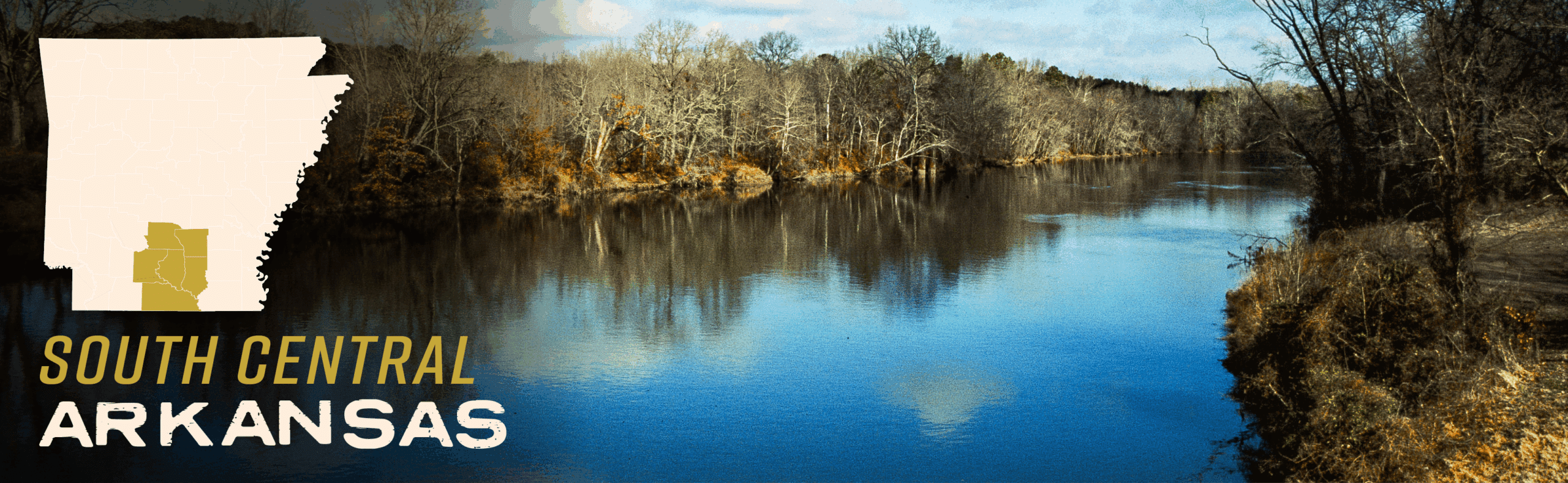
South-Central Arkansas
White Oak Lake Area
No reports.
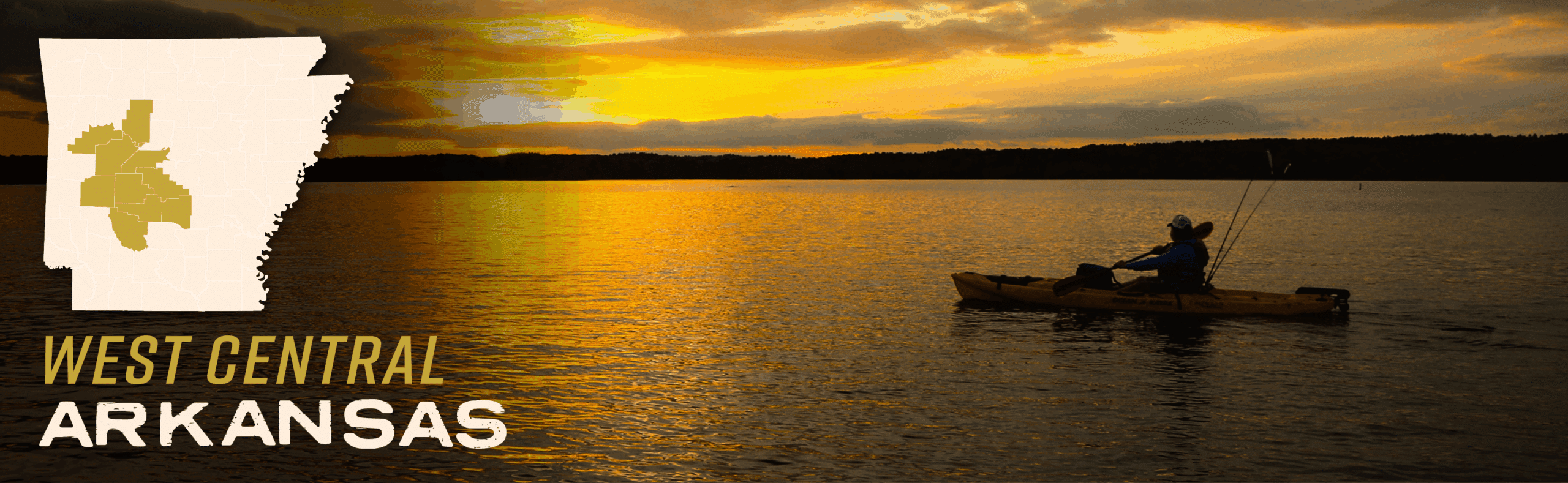
West-Central Arkansas
Lake Atkins
(updated 8-13-2026) Lucky Landing as a bait shop and restaurant is not open, but the AGFC’s access to Lake Atkins and fishing pier remain open to all anglers, according to the AGFC’s Frank Leone, supervisor of the Russellville district.
Frank’s advice to anglers fishing Lake Atkins in early summer depends on their species of choice. “For bluegill anglers, I would advise them to use crickets and move around until they find a school/bed where they can catch multiple fish. For bass anglers, I’d advise throwing a topwater bait (frog, popper, buzzbait) early in the day and transitioning to flipping soft plastics around the cypress trees as the sun gets higher. Crappie anglers can likely find fish suspended in the dead timber and will catch them on jigs and or minnows.”
Lake Catherine Tailwater (Below Carpenter Dam)
For weekly flow releases from Carpenter Dam, visit www.entergy.com/hydro
(updated 9-10-2026) Shane Goodner, owner of Catch’em All Guide Service, reports that water temperature below the dam is 67 degrees with clear conditions in the tailrace. Entergy is running 10-hour generation periods starting in the late afternoon. Weekend and recreational releases have been reinstated. The only productive fishing below the dam involves catching white bass and hybrid bass that remain in the area after the yearly spawn. Some topwater activity has been observed below the dam in the early morning as bass chase threadfin shad schools. Casting Alabama rigs has proven to be an effective technique to target these fish, which will strike a lure that closely resembles a fleeing shad. Trolling shallow-running crankbaits, imitating shad, against the current has taken numbers of bass in the late evening.
Excessive heat has kept many anglers off the lake and shortened fish feeding times, which is a normal occurrence on Lake Catherine in the late summer. This report will stay much the same until November, when the first stocking of rainbow trout is scheduled for the lake. Trout in the tailrace completely changes the dynamic of the area for the better.
Always remember to wear a life jacket when on the water and remember to follow all lake and park regulations. Trash cans are limited in the area, so pick up after yourself and be aware of rising lake levels when the turbines are running.
Lake Dardanelle
For the Army Corps of Engineers’ outflow and gauge level reports from Dardanelle, visit the Corps’ Little Rock office website.
No reports.
Lake Hamilton
No reports.
Lake Nimrod
For the Army Corps of Engineers’ real-time lake level and outflow reports from Nimrod Lake, visit the Corps’ Little Rock office website.
No reports.
Lake Ouachita
For the current lake level at Blakely Dam, click here.
(updated 9-10-2026) Mountain Harbor Resort and Spa (870-867-2191/800-832-2276 out-of-state) reports that black bass are still slow. Try a big, soft-plastic worm near brush or a finesse drop-shot rig on main lake and secondary points. Try a riser bait for a fun topwater bite, too! Walleye are fair. For best results, try a drop-shot rig or a Texas-rigged jig with a nightcrawler fished near brush. Bream are still good on crickets and worms. Try deep structure in the 20-foot range, give or take a foot.
No reports this week on stripers, crappie or catfish.
Water temperature is steady from where it was a week ago, ranging a hot 82-88 degrees. Water clarity is clear. Lake level remains on a slight weekly fall, now at 571.46 feet msl, another half-foot or more lower than this time last week (nearly 6.6 feet below normal power pool). Call the Mountain Harbor fishing guides (Mike Wurm, 501-622-7717, or Chris Darby, 870-867-7822) for more information.
(updated 9-10-2026) Philip Kastner of Trader Bill’s Outdoors in Little Rock and Hot Springs noted on the weekly “Wild Side Show” on KABZ-FM, 103.7 The Buzz on Tuesday that Lake Ouachita and DeGray are in a similar pattern. “Look at the first of June or July and you look at the first of September. Both lakes are the same levels where they have been the last three years. They (Army Corps of Engineers) are drawing the lake down depending on what they, the Corps, need, the heat we’re dealing with, and the power needed.
“The new moon is Sept. 10, so everything is shrinking, the water temps are in the upper 80s, it’s ridiculously clear on both lakes. The moss is really good right now on both Ouachita and DeGray. The one thing you have to worry about is the bottom following out. They’ve got to make electricity, it is what it is.
“You’ve got to keep up with that deep edge, that’s where all the good fish are being caught right now, that deep edge of the moss line. That’s where you’ve to keep up with where you’re fishing.”
He says it’s a good topwater bite early in the morning and topwater again in the afternoon. “The shad spawn is what they are chasing, so you need to throw a small-sized topwater bait. If you’re on the edge of the moss line, use a wobble head to get down to 15-18 feet. That’s where the better fish are. You’ve got to be universal knowing where you’re at.”
(updated 9-3-2026) Capt. Darryl Morris of Family Fishing Trips (501-844-5418) said, “Crappie are tough for me right now. They are scattered and holding tight to deep brush. Bass are chasing shad early in the mornings feeding over and near the ever-growing and spreading aquatic vegetation. Casting spoons, spybait and topwater lures have produced for us. Trolling crankbaits have produced well, too. The best advice I can give right now is: Start early, finish by mid-morning and don’t get overheated.”
Blue Mountain Lake
For the Army Corps of Engineers’ real-time lake level and outflow reports from Blue Mountain Lake, visit the Corps’ Little Rock office website.
NOTE: Blue Mountain Lake is undergoing a two-phase drawdown proposed by the Army Corps of Engineers to improve aquatic and waterfowl habitat by exposing mudflats for seeding and for critical maintenance on the lake’s intake structure. Phase one began Sept. 2025, lowering the lake to its normal winter pool elevation of 384 feet. The second phase will begin May 1, 2026, with the lake further lowered to 374 feet through Nov. 1, 2026. During the drawdown, water activities will be limited, boat ramps may be affected, and areas around the lake will be seeded.
Japanese millet will be seeded on the mudflats during phase one to improve habitat for waterfowl and other aquatic species. Call 479-947-2372 for more information.
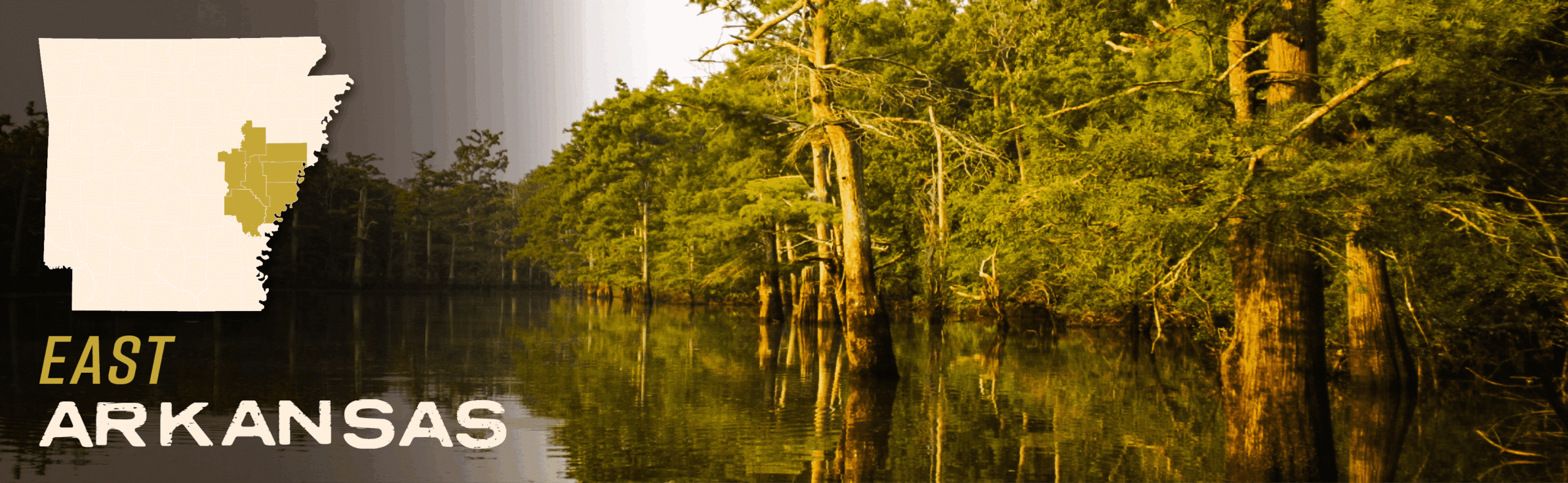
East Arkansas
White River/Clarendon Area
For the Army Corps of Engineers’ real-time gauge level and flow from Clarendon, visit the Corps’ Little Rock office website.
Note: msl is mean sea level; cfs is cubic feet per second.
Recent News
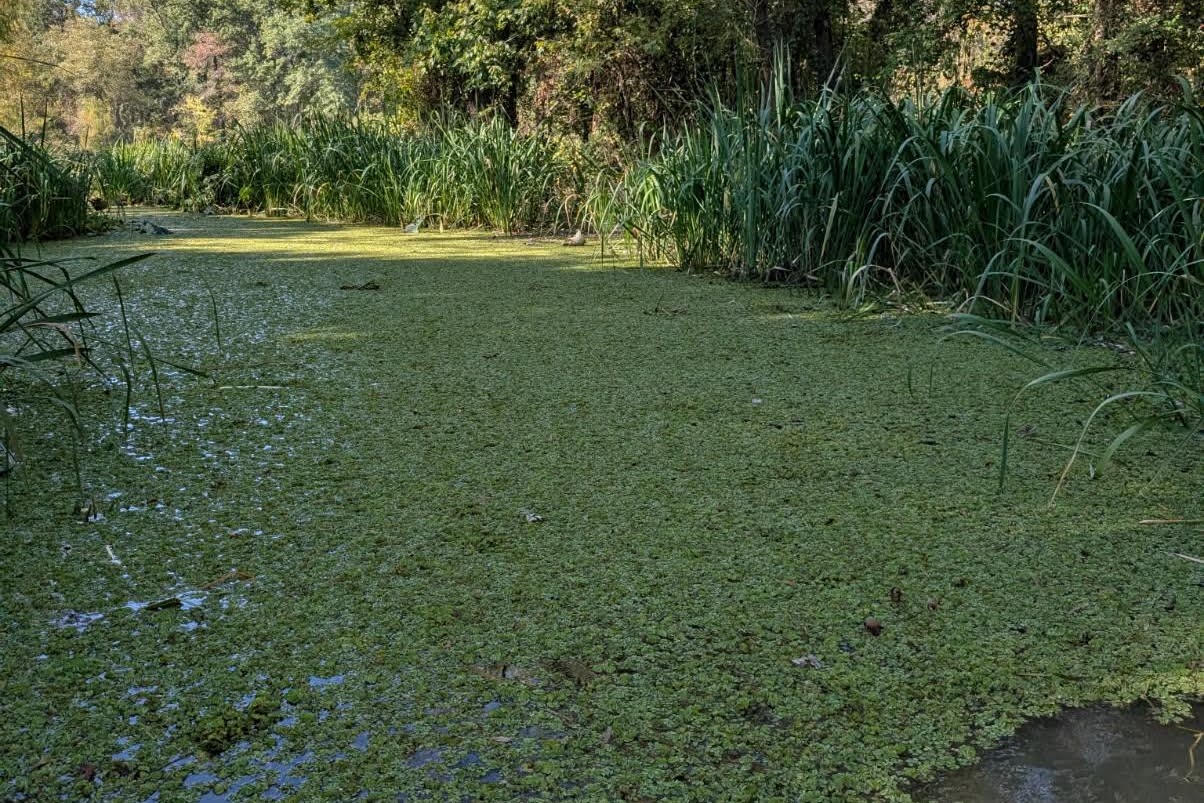
Giant Salvinia Identified in Millwood Lake Tributary
Oct. 27, 2026
Bat Week Offers Fresh Look at Misunderstood Mammals
Oct. 23, 2026
Subscribe to Our Weekly Newsletter E-mails
Don’t miss another issue. Sign up now to receive the AGFC Wildlife Weekly Newsletter in your mailbox every Wednesday afternoon (Waterfowl Reports are published weekly during waterfowl season and periodically outside the season). Fishing Reports arrive on Thursdays. Fill in the following fields and hit submit. Thanks, and welcome!