Conservation Incentive Program Paves Way for Landscape-Level Wildlife Habitat Improvement
ON 08-04-2026
The Arkansas Game and Fish Commission’s Conservation Incentive Program continues to pay big dividends for wildlife habitat in Arkansas. During July’s regularly scheduled meeting, AGFC Commissioners heard a presentation on the status of the program, which is now in its second year with plans already underway to hit the ground running for a third round of conservation funding to help private landowners increase wildlife habitat on their property.
“More than 85 percent of the land in Arkansas is privately owned,” said Garrick Dugger, chief of the AGFC’s Private Lands Habitat Division. “That means that even if we accomplish all of our goals on the public land we control, we’ve still improved less than a quarter of the state’s habitat to make changes on a landscape level. Private land practices have always been the deciding factor in the improvement of wildlife on a population level. Many landowners want to improve the habitat on their property, but don’t have the expertise or the financial means to make it happen, and that’s where the AGFC’s Private Lands Habitat Division can make a difference.”
In 2024, with help from $3.5 million in set-aside funds from the Arkansas General Assembly, the AGFC was able to launch CIP as a pilot program to incentivize and assist private landowners to improve wildlife habitat on their properties through a set of approved practices. Prescribed fire, forest thinning, wetland management, and feral hog trapping were among the nine practices authorized for cost-share reimbursement through the program.
The program hit the ground running, with 585 landowner applications funded and more than 16,000 acres of habitat improved, but that was just a taste of what could be possible with the right funding and time. According to Michelle Furr, program coordinator for the AGFC, nearly 1,600 applications came in, representing all but one of Arkansas’s counties.
“If we saw anything else, we saw the extreme need for such assistance in Arkansas landowners,” Furr said. “The first year of the program was managed on a first-come, first-served basis and we reached the limit of landowners we could help in some of the practices in less than a month. The total time until all practices were claimed took about 8 months, but most of them were spoken for very quickly.”
That progress led the way for the AGFC’s Private Land Habitat Division to pursue additional grants to directly support private landowners in managing their land for wildlife.
“We’ve made selections for a new group of landowners and are now completing CIP 2.0,” Furr said. “While the set-aside was not available this year, we were able to secure a $2.5 million grant from the U.S. Forest Service to continue our effort for private landowners. That grant’s purpose is to improve forest health, reduce wildfire risk and enhance wildlife habitat, all of which were covered by certain practices in our original program.”
The second iteration of CIP being implemented this year has a few substantial changes.
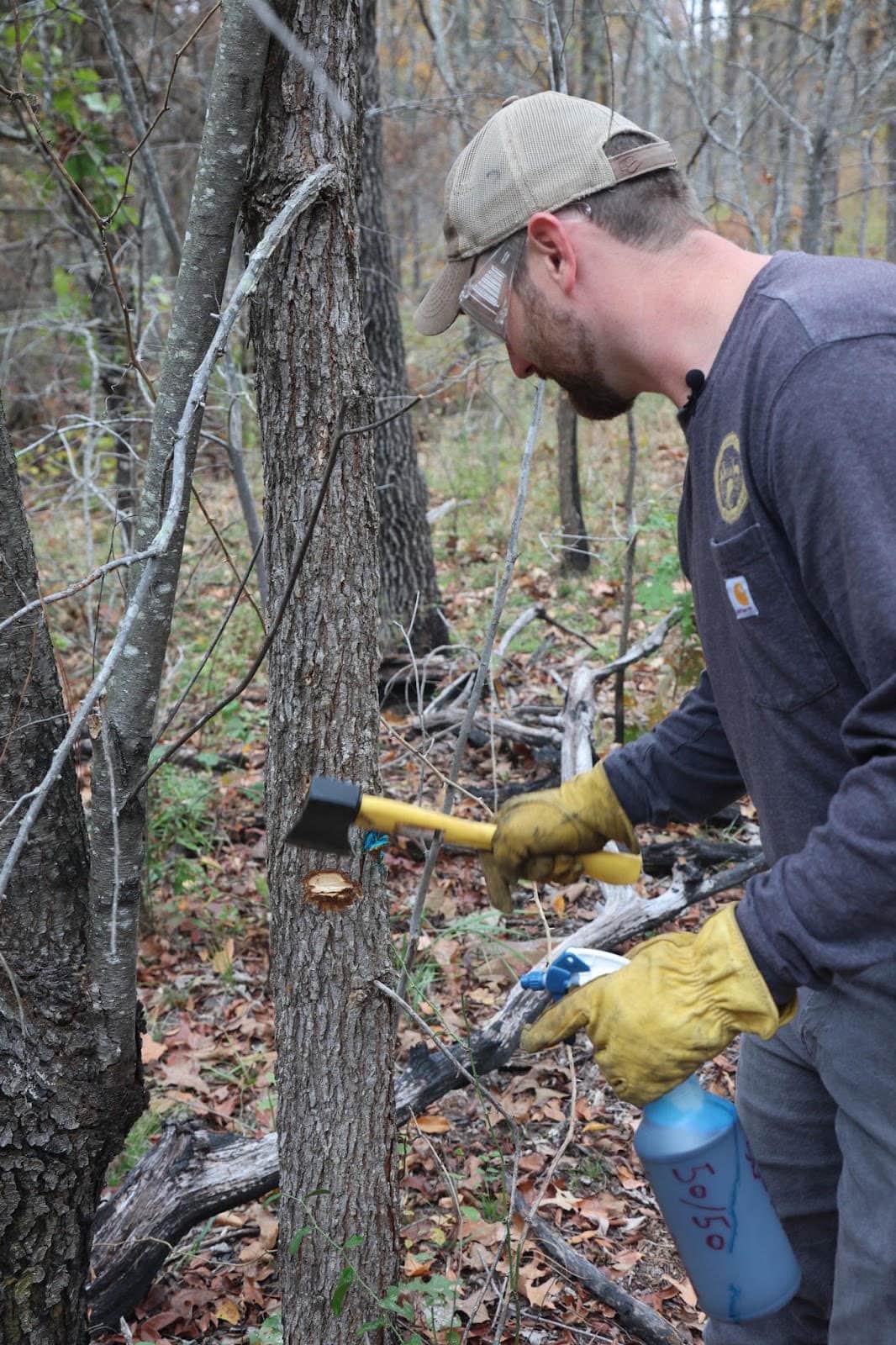
Only three practices are covered this year, instead of the nine from the previous model, and those focus on forestry-based activities. Invasive tree removal, specifically removal and treatment of Chinese Tallow, Tree of Heaven and Callery Pear, is authorized, as are forest thinning operations and prescribed fire and firebreak establishment to reduce fuel loads and enable more vegetation at ground level for native wildlife species.
The reimbursement, which was limited to $20,000 per landowner, and only covered up to 75 percent of the landowner’s expenses to ensure they committed some of their own money into the work and were more likely to continue the progress after funding. CIP 2.0 also changed to a competitive application process where projects were ranked based on location near previously designated conservation opportunity areas, forest priority areas and underserved communities.
“Even with these changes, demand overwhelmed our highest estimates,” Furr said. “In two application periods totalling 38 days, we received 1,129 applications to review with more than $12 million in cost-share requests.”
Contracted projects are not simple handouts, but structured assistance that requires plans created by certified biologists. In Fiscal Year 2026, AGFC biologists and Quail Forever biologists logged more than 100 boots-on-the-ground site visits and completed more than 550 management plans. Of the 1,129 applicants, 349 landowers were selected, covering 380 projects outlined in those management plans.
“We have finished allocating the $2.5 million, plus an additional $600,000 in firebreak funds as of Aug. 1,” Dugger said. “We have approved 380 projects that will result in 91 miles of firebreak establishment, 20,000 acres of prescribed burning, 629 acres of invasive tree removal and nearly 6,900 in timber stand improvement to benefit wildlife in working forests.”
Furr and the Private Lands Habitat team are gearing up for a new round of Conservation Incentive Program opportunities, with a recent commitment of $5 million in set aside funding with support from the Governor’s office and approval from the Arkansas General Assembly, the largest amount they’ve had to work with since the inception of CIP.
Eight of the initial practices will be available for cost-share reimbursement, with applications for some practices beginning soon.
“Reimbursements for feral hog traps was one of the most popular practices last year, and we’ll start the process for accepting applications and ranking need for reimbursements in that practice in August and September,” Dugger said. “We won’t have the money budgeted to spend until after August, but we want to start the process of developing applications now, so we can get those practices in action as soon as possible.”
AGFC Chairman Rob Finley complimented the Private Lands Habitat Division on bringing the program from an idea to fruition.
“It’s so neat to know where we were three years ago and to see where we’re at now,” Finley said. “And the implementation of the ranking system over the first-come, first-served model is much better to look at the entire landscape to see where we can get the most out of those dollars.”
Furr said the AGFC isn’t stopping with the current funding structure, either. Biologists are looking to secure more long-term funding through the USDA’s Regional Conservation Partnership Program to make the most of the momentum CIP has gathered.
“We hope to use any unspent set-aside funding as required cash contributions to the Regional Conservation Partnership Program, turning those funds into a force multiplier for long-term impact,” Furr said. “Upland pine RCPP work in south Arkansas is an example of an RCPP project that’s seen a lot of success in habitat enhancement. The one we’re proposing would be a statewide program. We’re still working on the proposal; if it’s not approved, we still will be working with the current $5 million commitment, but if it goes through, we will have up to double the funding to help private landowners put habitat on the ground that benefits wildlife populations throughout the state.”
####
CUTLINES:
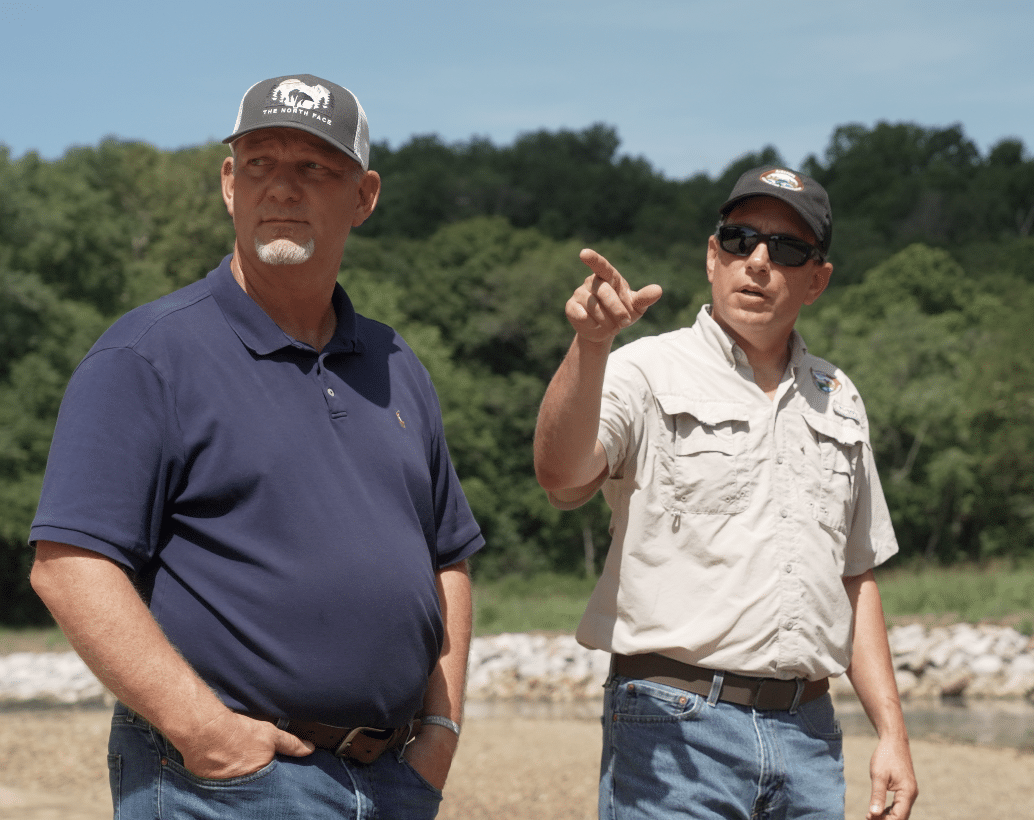
TWO MEN
Landowner Gary Box (left) visits with AGFC Biologist Sean Saunders on a vital streambank stabilization project, one of the many practices available for reimbursement through the Conservation Incentive Program. AGFC photo by Forrest Talley.
HATCHET MAN
AGFC biologist Noah Wyatt cuts a gash in an undesirable tree to inject it with herbicide and open the canopy to allow sunlight to reach the forest floor. AGFC photo by Mike Wintroath.
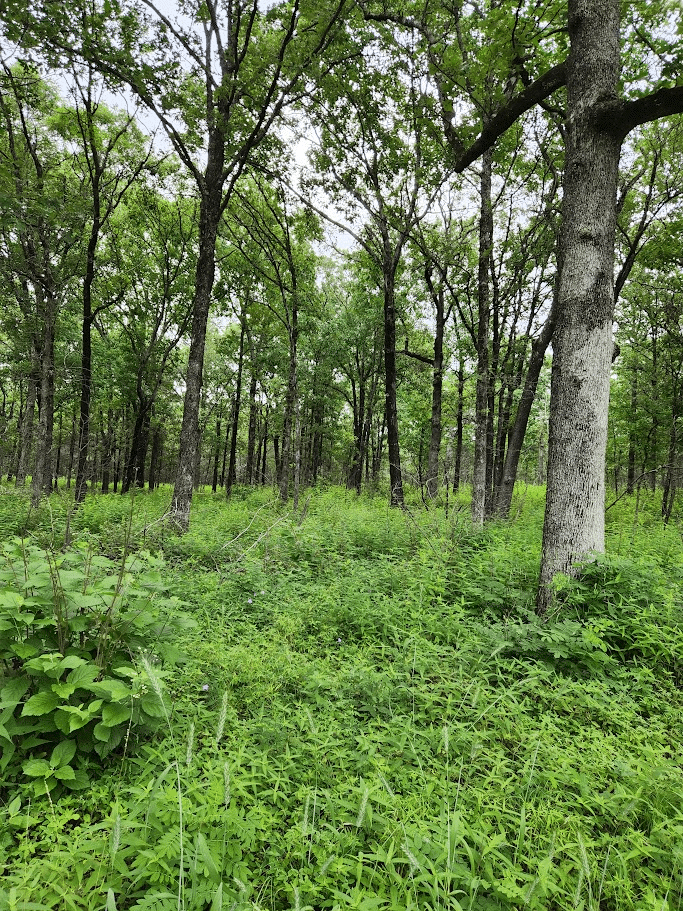
OPEN FOREST
Improved forestry practices open the forest canopy and allow large amounts of vegetation to grow at ground level, offering food and cover for wildlife throughout the year. AGFC photo by Michelle Furr.
Recent News
Arkansas Wildlife Weekly Fishing Report
Sep. 17, 2026

Subscribe to Our Weekly Newsletter E-mails
Don’t miss another issue. Sign up now to receive the AGFC Wildlife Weekly Newsletter in your mailbox every Wednesday afternoon (Waterfowl Reports are published weekly during waterfowl season and periodically outside the season). Fishing Reports arrive on Thursdays. Fill in the following fields and hit submit. Thanks, and welcome!