
Chasing Cats After Hours: Passive fishing offers sweat-free summer angling opportunity
ON 07-28-2026
Arkansas weather has finally reached the melting point for even the most dedicated daytime anglers, but there’s still a way to supply a late-summer fish fry with tasty fillets. Running trotlines and jugs at night may seem lazy to some, but those people have never spent a night running lines, rebaiting and bringing in their catch. When it comes to catfish, these passive methods can offer even more excitement than setting the hook on a rod after waiting for a telltale “tap.”
Catfish move deep during the heat of the day in late summer, but anglers can set up some ambush points at the edges of creek channels leading to shallow flats, where the catfish will move up to feed as the sun dips below the horizon. Juglines, limblines and trotlines set relatively close to the bottom in no more than 6 feet of water can be extremely productive during the night shift as fish need to bulk up for another lazy day in the depths.
Limblines are likely the simplest way to set up for summer evening catfish. Just find a tree in the right depth of water that has green limbs overhanging the water and tie a length of high-break-strength cotton line to it with a hook, a little bit of weight and some live or cut bait at the opposite end. As fish find your offering, the limb will bend slightly but offer enough resistance that the fish sets the hook on itself as it swims away. Checking your limblines can be as simple as cruising the bank, watching for branches bending and waving as the fish tries to swim away.
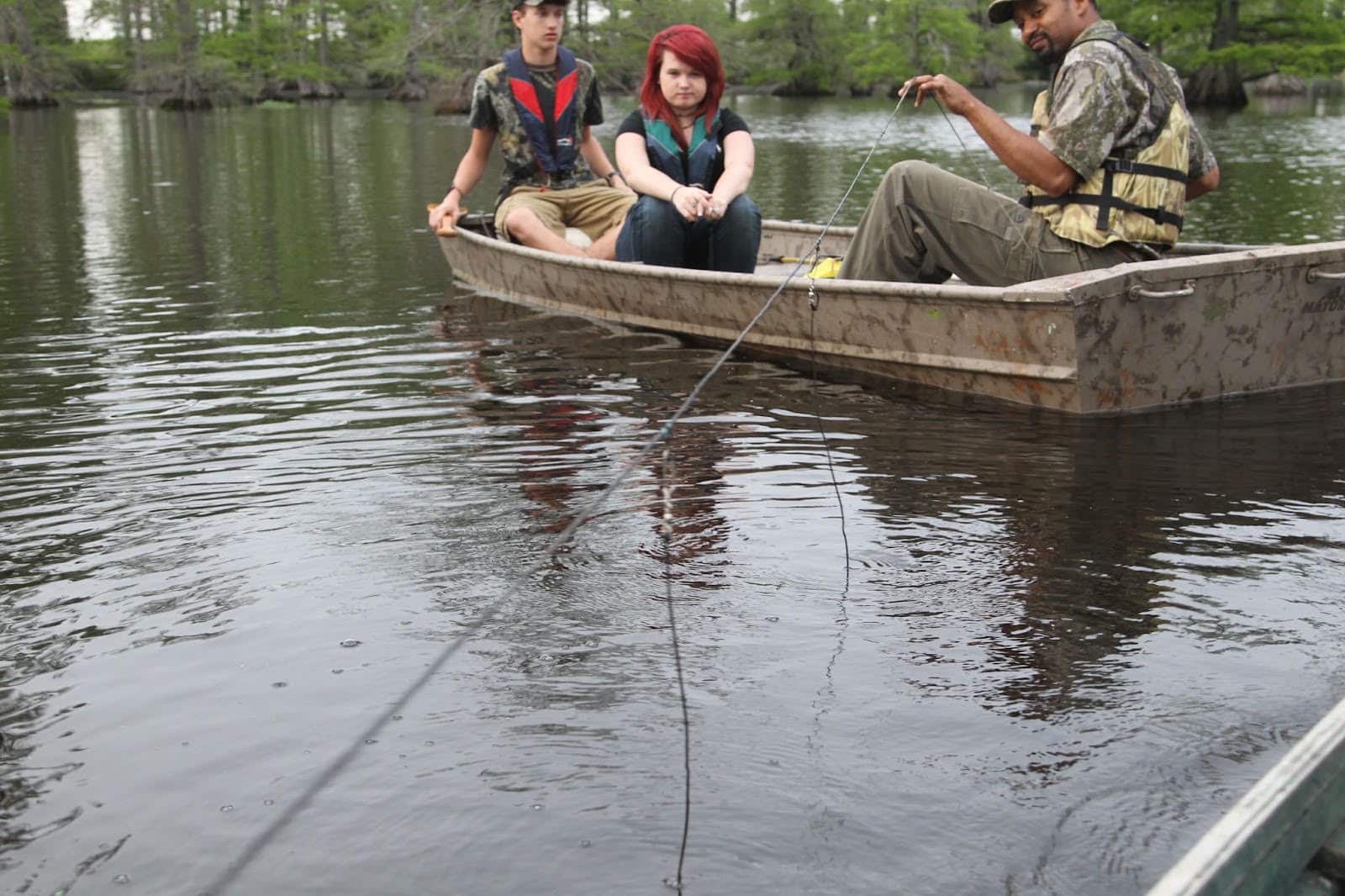
Trotlines are the next evolution of passive fishing gear. Instead of a single line suspended from a tree branch, trotliners run one line from the bank about 50 to 100 yards away, with drop lines tied at least 24 inches apart to give anglers multiple opportunities to catch a cat per line. One important note for trotliners: Be sure to anchor the deep end of your line or place weight in the middle of it if you’re tying it off to two points at the water’s edge so that the line stays well below the surface and out of the way of passing boaters. Keeping the baited hooks near the bottom increases your catch and helps prevent accidents or nuisances if your line gets wrapped around a propeller. It’s also good to have a clip of some kind or cleat on the boat to keep the line secure while you’re retrieving any fish from drop lines; dropping the line halfway down its length means going all the way back to the bank to trace the line back and check the remaining hooks.
The most popular passive fishing devices are free-floating lines, often made from plastic bottles or pool noodles. Empty bleach bottles were once the norm for “jugging,” but people have begun to transition to 12-inch sections of pool noodles, which offer plenty of buoyancy, are brightly colored, and pack away much more compactly than their clunky white counterparts. Some industrious anglers have even created advanced noodle jugs using a sealed piece of PVC pipe inside a pool noodle with weight inside that tips up when a fish bites. These let anglers know from a distance that they’ve been the target of a strike, and you need to either retrieve their catch or rebait the hook.
Speaking of baits, the offering you put on the end of your hook can play a big role in what sort of fish you’re targeting. Channel catfish are the most common targets for most anglers, and they’re also the most agreeable to any sort of prepared baits you find in a tackle shop or grocery store. Chicken livers, shrimp, hot dogs, cheese bait and stink bait all are good options to bait a line for small- to medium-sized channel catfish. Blue catfish also fall for prepared baits, especially those that are meaty. The state record blue catfish, which weighed a whopping 116 pounds, 12 ounces, and came from the Mississippi River in 2001, was tempted to bite by a big piece of canned SPAM.
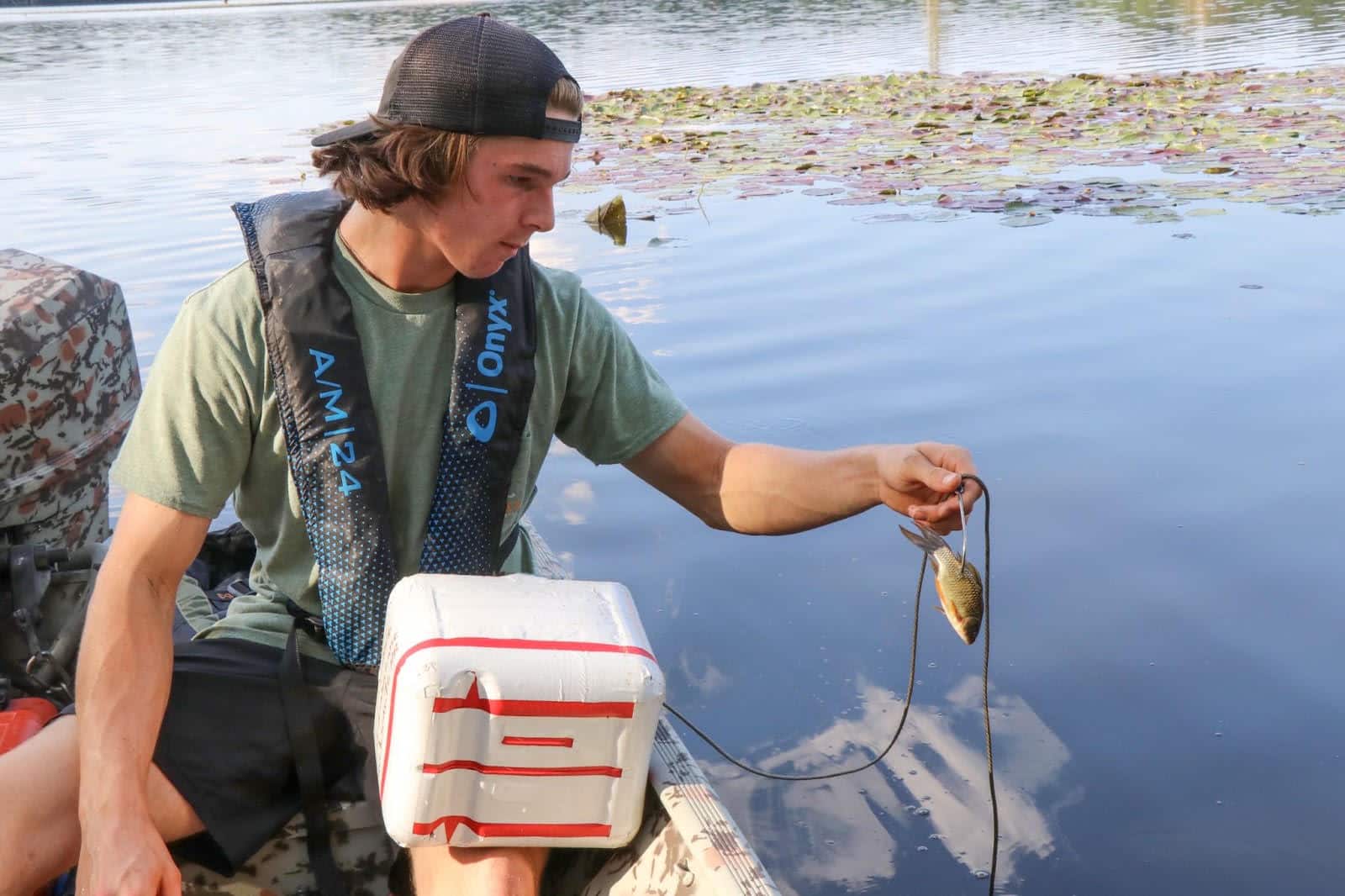
If you’re after flathead catfish, you’re going to need something a little more lively than a chunk of meat. Flatheads will occasionally eat a prepared bait or cut piece of fish, but they primarily focus on live prey. Bait shops often offer green sunfish, brood minnows or black salties (a hardy hybrid goldfish species developed in Arkansas that can survive fresh or saltwater). Shad and bream under 4 inches long can be caught using a cast net; bream larger than 4 inches must be caught by hook and line before being used as bait, and all live bait must either be from the same watershed or purchased from a certified baitfish dealer.
No matter the method of passive fishing gear, all anglers must properly identify their lines or jugs using either their name and address, fishing license number or vehicle registration number. Each angler may have up to 25 limblines or free-floating juglines (pool noodles). Limblines and trotlines must be checked and fish removed at least once every 24 hours, and free-floating fishing devices should be collected after the night’s fishing.
Nighttime navigation on a boat requires a little preparation. Not only should you bring along a spotlight to shine and observe your lines from time to time, but your boat should be properly equipped with lights so other boaters can see you’re there. On federally controlled waters, all boats must have a white light visible from 360 degrees at the back of the boat (called an anchor light) and a visible red-and-green navigational light at the front of the boat. On other waters in the state, you legally only need a single light source, but it’s still a good idea to have both an anchor and navigation light visible at all times. A good whistle also can come in handy in case of emergencies to signal for help.
One last word of caution for those tempted to join the nighttime catfishing club: Always use a boat paddle, branch or other pole to check lines initially. If a large catfish is on the other end of the line and makes a sudden dive, the line can give your hand a nasty cut or, even worse, pull you off balance and into the water. Checking with a pole or paddle lets the fish take off without taking you with them.
####
CUTLINES:
BIG CAT
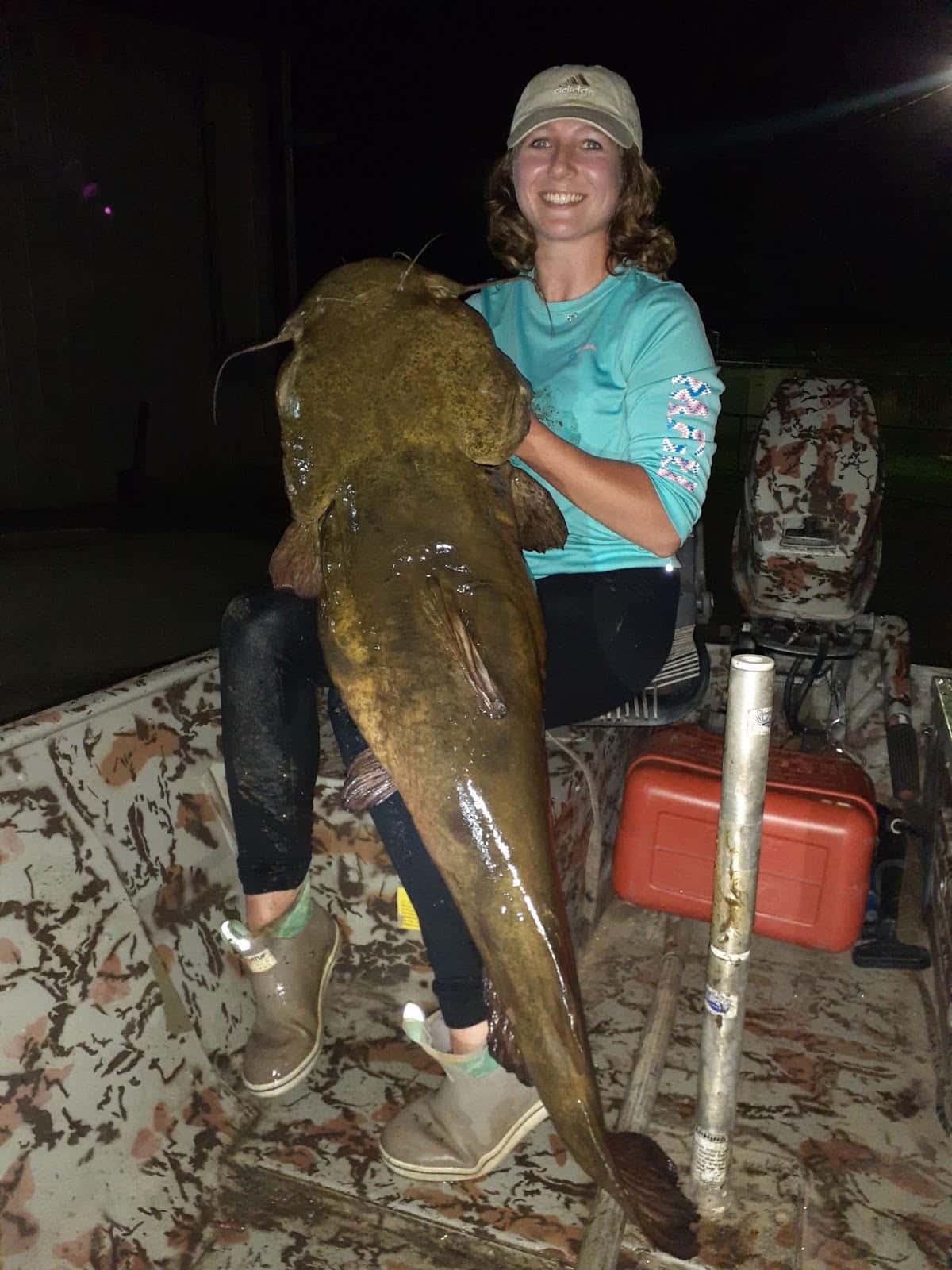
AGFC Game Warden Haylee Applegate with a 50-pound-class flathead caught a few years ago while running free-floating jugs. Photo courtesy Logan Applegate.
TROTLINE
Setting and checking trotlines can be as much work as casting. Photo by Mike Wintroath.
BAIT
Logan Applegate shows how to hook live bait when targeting flathead catfish. AGFC photo.
Recent News

World Champion Squirrel Cook Off Saturday
Sep. 11, 2026
Arkansas Wildlife Weekly Fishing Report
Sep. 10, 2026
Subscribe to Our Weekly Newsletter E-mails
Don’t miss another issue. Sign up now to receive the AGFC Wildlife Weekly Newsletter in your mailbox every Wednesday afternoon (Waterfowl Reports are published weekly during waterfowl season and periodically outside the season). Fishing Reports arrive on Thursdays. Fill in the following fields and hit submit. Thanks, and welcome!