Point Remove Pumping Again: Surface water is lacking around the state, however
BY Jim Harris
ON 12-18-2025
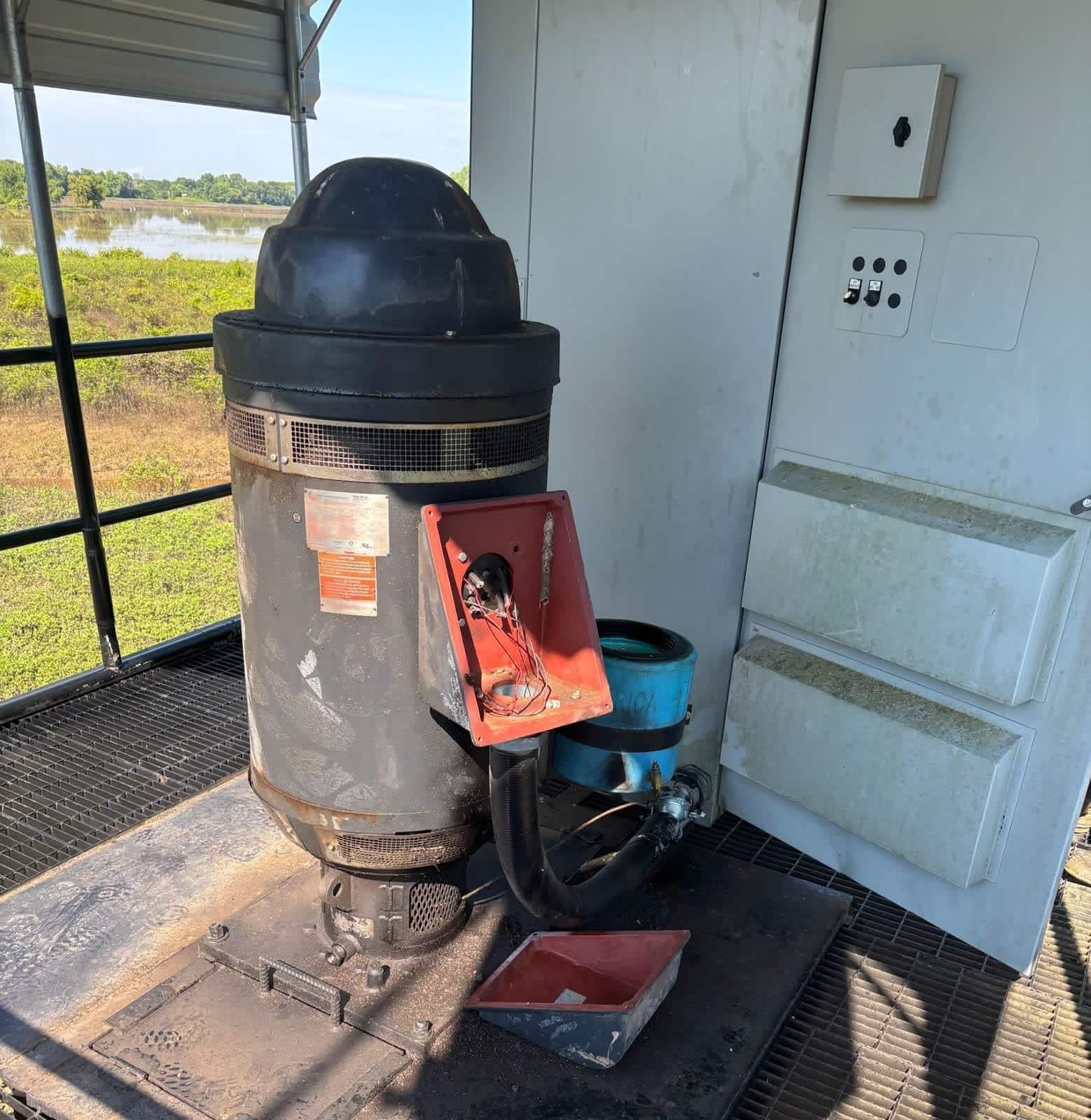
Ed Gordon Point Remove Wildlife Management Area’s 200-horsepower pump has been back up and running since Dec. 8. Vandals significantly damaged the machine (photo, below) in a copper theft back in the summer, and getting the necessary equipment in for repair took more time than expected, causing pumping delays at the WMA before the opening of the state’s duck season.
Now, though, “They’ve been pumping water like crazy,” Jason “Buck” Jackson, the AGFC’s Statewide Wetland Renovation Program coordinator, said Wednesday. “It’s been running round-the-clock.”
Some minor work was being finished this week with the installation of a pipe, replacing two smaller, old and corroded pipes, for retaining water in Point Remove Creek, but that work was not affecting the pumping efforts, Jackson said, to put water on the moist-soil units at Ed Gordon Point Remove, a popular spot in the Arkansas River Valley for waterfowl hunters near
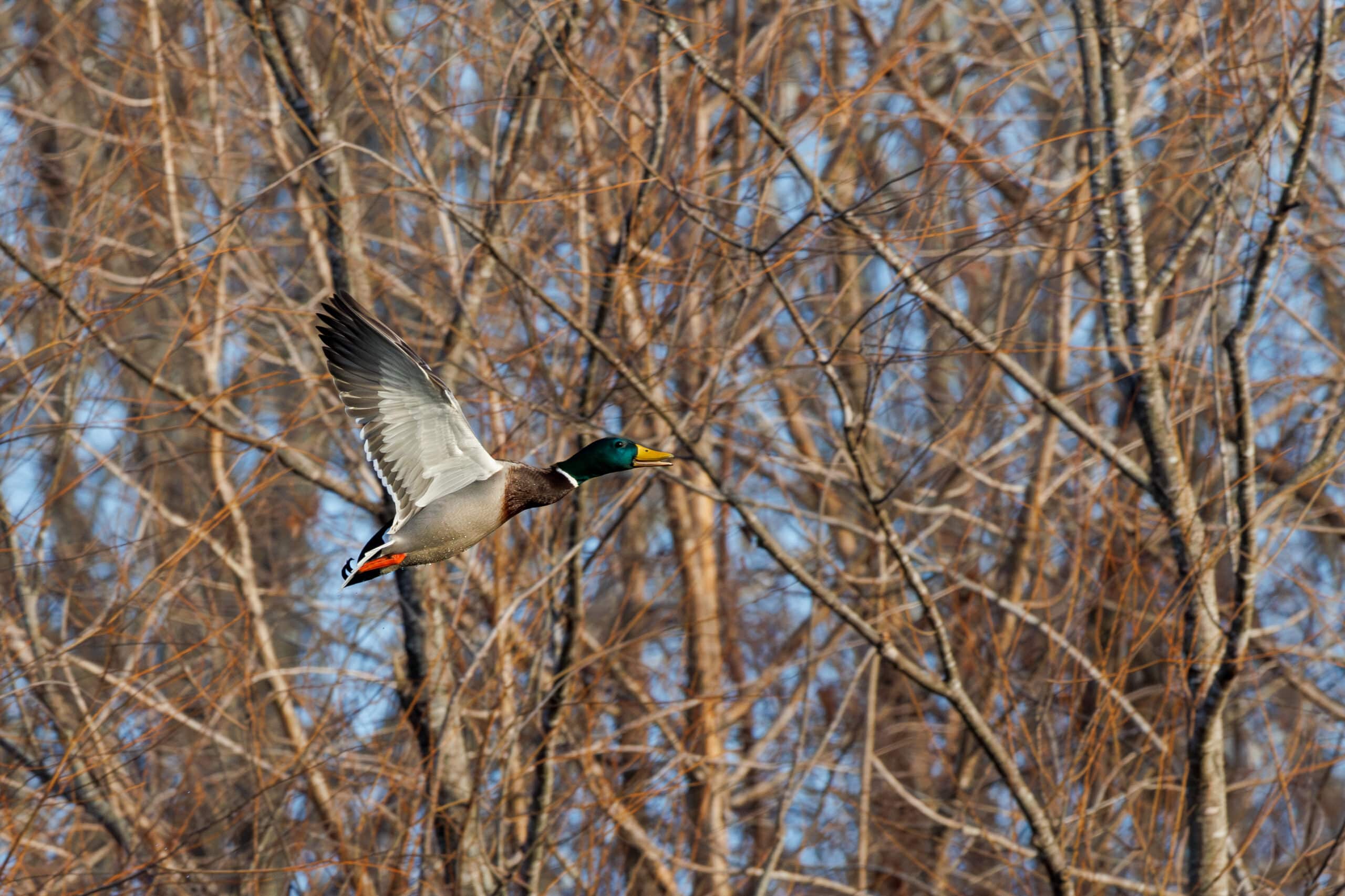
Morrilton. (In the photo at top, a mallard drake makes his way through the trees and buckbrush just outside the moist-soil units of Ed Gordon in a recent photo taken by AGFC photographer Mike Wintroath.)
Jackson said the AGFC has tightened security around the pump, but he also encouraged hunters to report anything unusual that they might notice while out on the WMA.
The only real problem for this WMA and other waterfowl hunting areas around the state now is a definite lack of rainfall. Though there were some rain events in late November and during the nine-day closed period between the first and second season splits, along with a big drop in temperatures for several days, there is not enough surface water on the horizon, Jackson said.
He says he’s heard people griping about not enough water being pumped in hunting areas, but “there isn’t a lot of water on the ground” to pump.
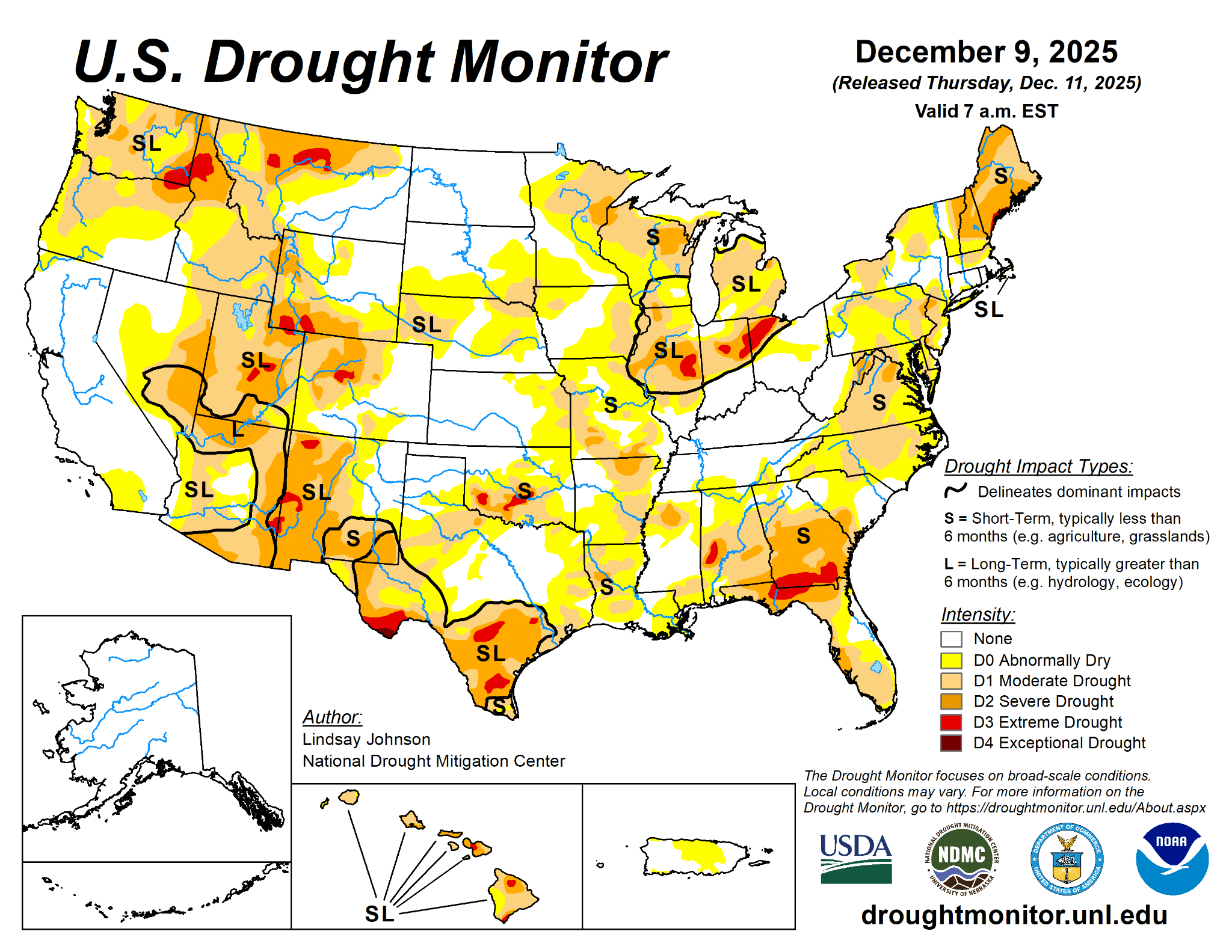
“Look at the drought monitor on the internet,” Jackson said. “We’re at Level 2 in a lot of Delta, as is a lot of the Delta in Mississippi.”
Severe drought or moderate drought conditions throughout the Delta are indicated on the drought monitor map through Dec. 9. Jackson said, “It’s not good … I hear people saying the Game and Fish needs to be pumping water. What water?”
Surface water is all that is pumped by the AGFC to flood waterfowl hunting areas, rather than pumping water from wells from below the surface from the aquifer, which would entail pulling vast amounts of water for the required flooding. The water for pumping and filling hunting areas needs to be delivered by Mother Nature, and right now, it’s like the past several seasons — behind schedule.
“I think it’s worse this year than it was last year,” Jackson said. “Even on the White River, it’s substantially lower than it was last year … We’re in a seriously dry La Nina. There are a lot of dry conditions all over. We don’t hold the cards to make it rain. If we do, I’ve not been let in on that. If we could make it rain anytime we wanted to, I wouldn’t have to put the pumps in where we have them.”
Thursday’s forecast calls for some rain around the state, but expectations are perhaps a quarter of an inch. “That’s not going to cut it. We need a massive, abnormal rain event,” he said. “We need one where we get 8 to 10 inches of rainfall to salvage the duck season, in my opinion. There’s not a lot of water on the landscape. A lot of people are relying on the surface water, and there’s just not much going out there.”
What Jackson has heard out and about with waterfowl hunting in Arkansas “isn’t good,” he said. “I know there are isolated cases where they’ve got some ducks here and there, the private clubs and all, but those clubs are being very strategic in how they manage the waterfowl … What I hear is, it’s very light.”
Information passed along to the Waterfowl Report desk indicated a good day or two last weekend in some areas, particularly in the east-central area, after the resumption of the season on Dec. 10, with a good influx of “new” mallards. But then things seemed to slow quickly.
Brett Leach, the AGFC’s waterfowl program coordinator, said some of AGFC waterfowl biologists began flying their December surveys this week, but with a very low ceiling throughout the region on Wednesday and the expected rain front moving through Thursday, the surveys would likely be continued into next week. He did receive some reports on waterfowl sightings that were mixed.
“With the ice (earlier this week), birds were concentrated, but they should be spreading out again,” Leach said. “So, it’ll be interesting to hear what they see later this week as they cover more ground.”
The Next Brief Pause
The second split of Arkansas’s 60-day waterfowl season will close at sunset Tuesday, Dec. 23, and the hunting will take a three-day break before resuming Saturday, Dec. 27, running uninterrupted through Jan. 31, 2026.
Remember to make your permit application plans for the Dec. 27-28 weekend and for permit hunts the following week during the next four days. The online permit application period for public hunts on the AGFC’s 50 WRICE private fields for that post-Christmas weekend, as well as permitted hunts in several WMAs, begins Thursday. Applications for the private land permit hunts on the WRICE leases and permits for hunting in certain WMAs can be made online at agfc.com under “Get a License,” or by clicking here, between 3 p.m. Thursday and midnight Sunday. Winners are notified on Monday with instructions and directions to their hunting locations.
Also, we know it’s taken some getting used to with the water levels and habitat conditions not attached to the weekly online waterfowl reports, but the information is easy to find. For both the AGFC’s greentree reservoirs and the moist-soil units, you can go to the “Waterfowl” page on the agfc.com website, and at the top of the page, just below the mallard drake in flight, are the links to the most up-to-date information. The numbers are updated on those pages only when new information is added from the field biologists; if there are no changes in levels or conditions, it is not updated.
To go directly to the moist-soil habitat page, click here. To access habitat information in the GTRs, click here.
Click HERE for All Waterfowl Dates and Limits
Recent News
Hunter Orange Celebrates 50 Years in Arkansas
Oct. 16, 2026
Arkansas Wildlife Weekly Fishing Report
Oct. 15, 2026
Subscribe to Our Weekly Newsletter E-mails
Don’t miss another issue. Sign up now to receive the AGFC Wildlife Weekly Newsletter in your mailbox every Wednesday afternoon (Waterfowl Reports are published weekly during waterfowl season and periodically outside the season). Fishing Reports arrive on Thursdays. Fill in the following fields and hit submit. Thanks, and welcome!