Red oaks at Dagmar, Bayou DeView WMAs making comeback thanks to management shift
ON 12-02-2025

WEINER — Cutting trees to save a forest doesn’t seem logical on the surface, but that’s the exact prescription to cure what’s ailing Arkansas’s famous flooded timber — that and a re-examination of how and when to intentionally flood those trees to provide waterfowl habitat.
Well into its first decade, the Arkansas Game and Fish Commission’s revised management approach to repair degraded habitat for mallards is showing signs of success — you just have to see the forest for the trees.
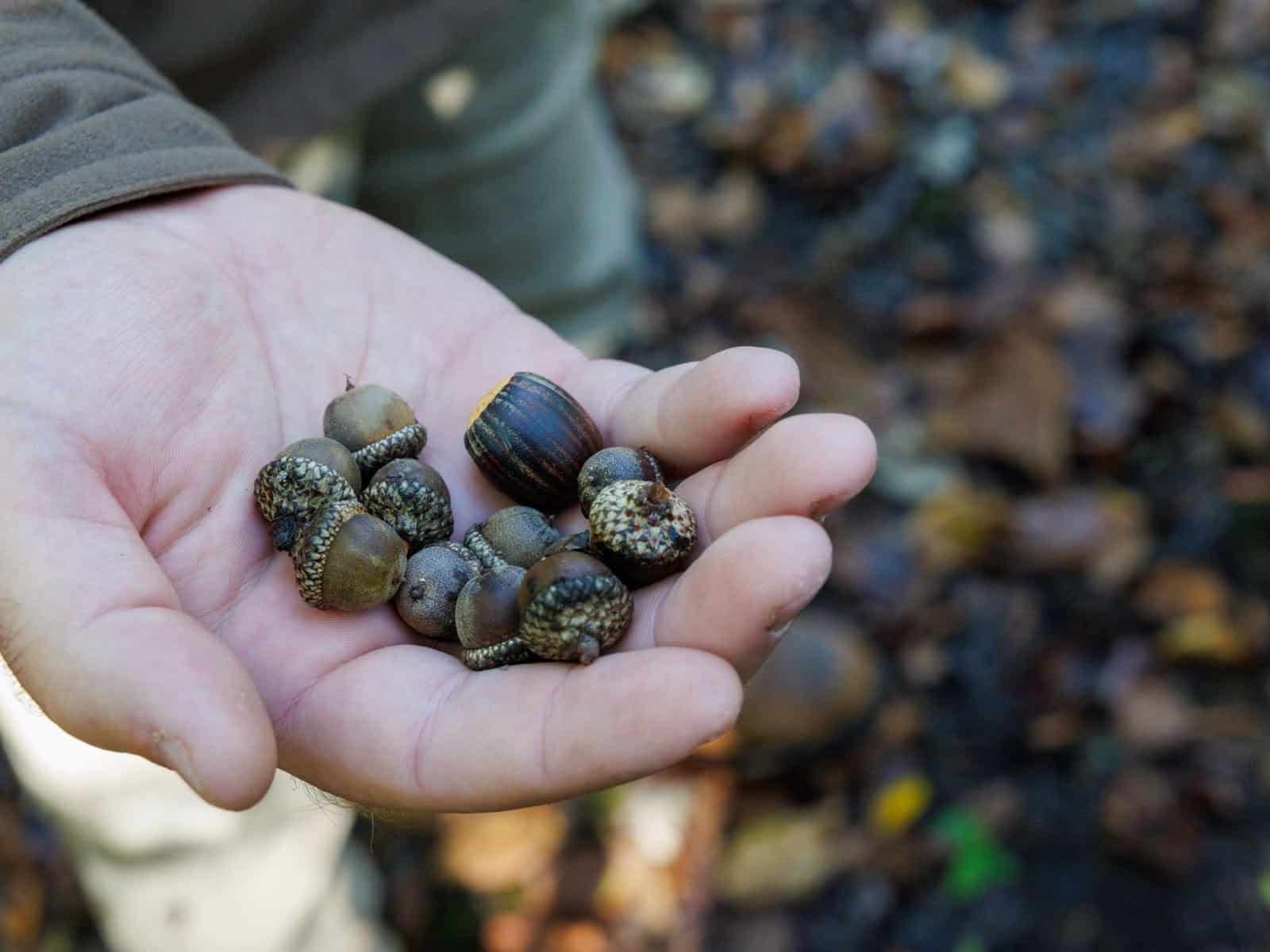
Ducks, primarily mallards and wood ducks, seek bottomland hardwoods for three primary reasons: thermal cover in winter, sanctuary for pair bonding, and food. The food resource comes in the form of invertebrates found in decaying leaves and energy-rich acorns. Acorns from the red oak family — namely, willow oaks and Nuttall oaks — have that secret sauce the ducks crave. In addition to lasting well in flooded environments, these acorns are just the right size to swallow whole and have small caps, a requirement for an animal with no teeth or claws. The trouble is that these preferred oak species cannot handle constant flooding and are slowly replaced by more water-tolerant species that provide much less food value.
“A lot of our desirable tree species are showing major signs of stress in our greentree reservoirs that have been in operation for decades, many past the point of no return,” Rob Willey, statewide habitat program coordinator for the AGFC, said. “In some cases, the red oak component has been slowly replaced by overcup oaks and other water-tolerant species. In others, like at Henry Gray Hurricane Lake, we’ve seen massive die-offs of even the water-tolerant species because of the flooding.”
During the last decade, the AGFC has been working to save what remains of the red oak component by improving drainage throughout many of the public greentree reservoirs in the state and delaying flooding until the trees are well into their dormant period. At the same time, foresters with the AGFC are removing those dying and undesirable trees to benefit the desirable trees that are still in good condition and allowing their acorns to sprout in the sunlight, which now reaches the forest floor. The results are becoming more evident each year as a new red oak-dominated forest is again beginning to thrive in areas where these species once faltered.
According to Luke Naylor, AGFC chief of wildlife management, the work at Earl Buss Bayou DeView highlights not only the effects of improved infrastructure to move water off the area quickly at the end of winter, but also the increase in desirable species after foresters select and remove undesirable species and trees in poor health and reduce competition for light and nutrients.

“The Thompson Tract at Bayou DeView was chosen as one of the first greentree reservoir renovations because it is a smaller area that we could use as a proving ground for the work we planned for all GTRs,” Naylor said. “It was developed with a severely undersized water-control structure, which was fine at holding water but simply couldn’t allow enough water to drain once the wintering period was over. Trees were showing severe signs of stress, and many were past the point of recovery.”
In addition to a major improvement in the water-control structure, habitat management staff completed a harvest focused on creating canopy gaps and an overstory composed of multiple age classes of trees on the Thompson Tract in fall 2021. During the final summer of the harvest, staff reported notable willow oak regeneration.
“We saw both seedlings and saplings with stems up to 4 inches in diameter where the cuts had taken place,” Willey said. “We altered water management to increase survival here, and saw an average of 612 red oak seedlings per acre across the harvest area.”
Willey said the area won’t stay completely high and dry, and staff have recorded the elevations at which the red oaks are most plentiful. This data will be used in the future to refine the flood regime.
“This will maximize the survival chances of the red oak reproduction and give waterfowl hunting opportunities when the water becomes available,” Willey said. “We’ll be following the cues that Mother Nature is giving us to get the best of both worlds.”
Mud Slough Greentree Reservoir at Sheffield Nelson Dagmar WMA near Brinkley is another location where the AGFC has reversed the trend of dying red oaks and declining bottomland hardwood health. A harvest to open up the canopy and begin regenerating the next generation of forest was completed in 2019. This harvest took several years, as the site allowed only a small window of time when the area was dry enough to cut without major effects to the soil and topography.
“In 2019, staff reported considerable red oak regeneration at the seedling level,” Willey said. “We saw seedling establishment at an average of 889 red oak seedlings less than 3-feet tall per acre.”

A recommendation was made and approved to discontinue artificially flooding the Mud Slough GTR until the red oak seedlings reached a point where they could handle moderate winter water. According to Willey, seedlings may be able to survive periodic short-term flooding, but water levels once typical of winter flooding for waterfowl hunting would smother the burgeoning forest.
Those seedlings have continued to grow, with the best of them reaching 15 to 20 feet in height only 6 years post-harvest.
“The area still flooded occasionally, and hunters still saw some waterfowl hunting access, but the water was not there long enough to kill off those seedlings,” Willey said. “We now see a definite trend in the elevation at which the red oak reproduction peaks, and we are recommending future water management to include some intentional flooding up to that point.”
####
CUTLINES:
SAPLINGS ON GROUND
Following a supervised harvest to remove undesirable tree species and trees in poor health at Earl Buss Bayou Deview WMA, hundreds of willow oak and Nuttal oak saplings are taking root to create the next generation of bottomland hardwood forest. AGFC photo by Mike Wintroath.
ACORNS
Willow oak and the larger Nuttall oak acorns provide energy-rich food for mallards and wood ducks once the bottomland hardwoods flood in winter. AGFC photo by Mike Wintroath.
BRUSHY AREA
Red oak saplings that sprouted after a harvest in 2021 make up a large component of the understory at Earl Buss Bayou Deview WMA. AGFC photo by Mike Wintroath.
OVERHEAD TREES
Willow oak and Nuttall oak trees at Mud Slough Greentree Reservoir on Sheffield Nelson Dagmar WMA now reach up to 20 feet tall following a harvest to open the canopy and a change in water management to prevent intentional flooding. AGFC photo by Mike Wintroath.
Recent News

Subscribe to Our Weekly Newsletter E-mails
Don’t miss another issue. Sign up now to receive the AGFC Wildlife Weekly Newsletter in your mailbox every Wednesday afternoon (Waterfowl Reports are published weekly during waterfowl season and periodically outside the season). Fishing Reports arrive on Thursdays. Fill in the following fields and hit submit. Thanks, and welcome!