Rain Needed on the Landscape: Waterfowl hunters still waiting on the deluge that won’t come
BY Jim Harris
ON 01-07-2026
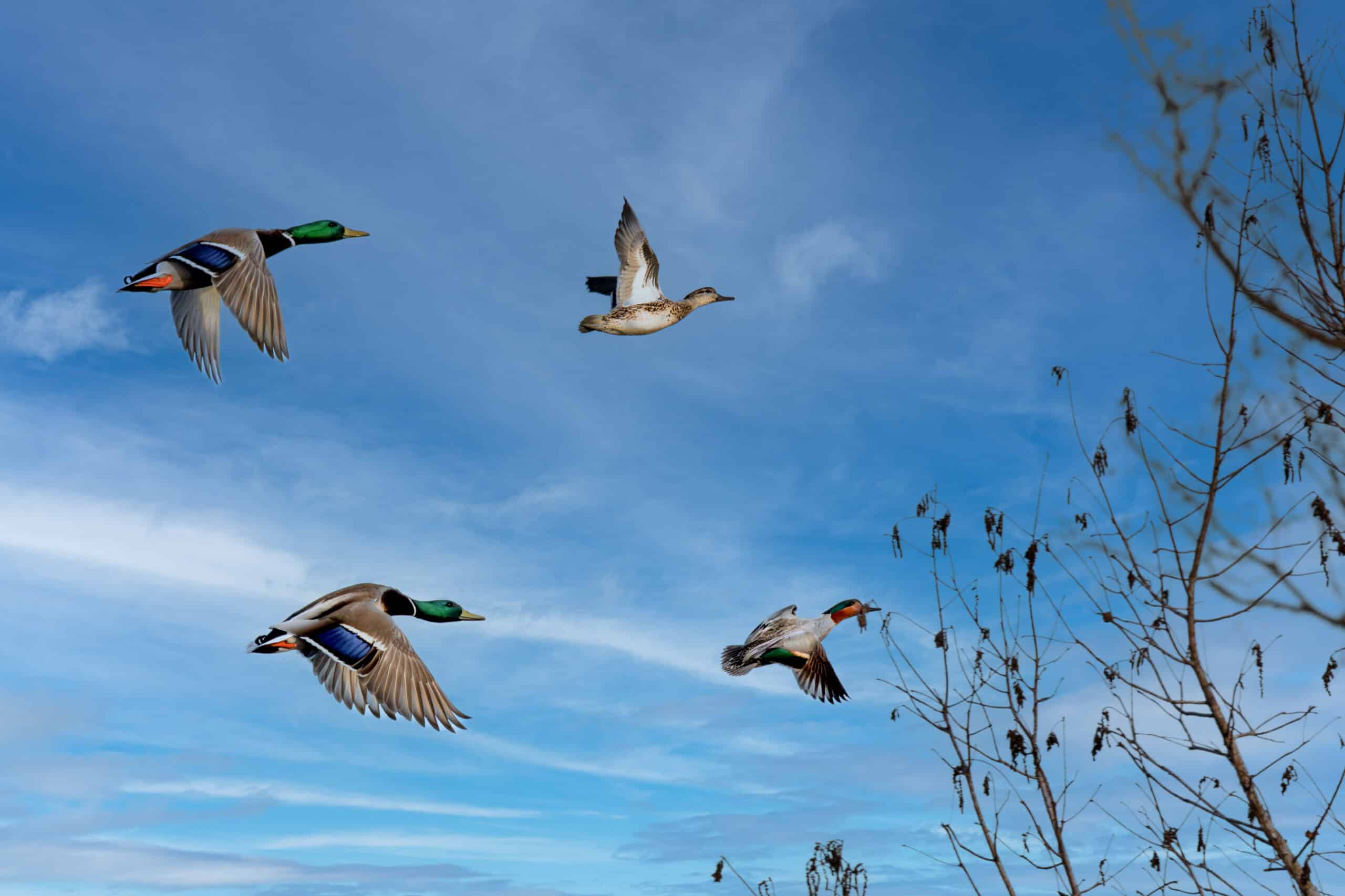
The weather forecast calls for some rainfall on Thursday and Friday of this week, but it won’t come close to what is probably needed to give waterfowl the best conditions on the Arkansas Delta. That big, 6- to 8-inch deluge that typically arrives in late winter in recent years to finally drench the landscape and give the waterfowl a lot more options has yet to show up in 2025-26.
Trey Reid, the Arkansas Game and Fish Commission’s host of “Arkansas Wildlife TV” and the voice on a variety of weekly radio and TV appearances for the agency, said Wednesday morning on an appearance on KABZ-FM, 103.7 “The Buzz” that there are ducks being harvested, but there just isn’t enough water around to spread the ducks out and make it a good harvest all over. Ducks have been concentrated in pockets in the Delta, as was evident to the AGFC’s aerial survey crew of biologists for the December estimate of the state, which wasn’t completed until Dec. 23 due to weather and equipment issues.
Central Arkansas may see less than a half-inch of rainfall over the two days, according to the National Weather Service. Of course, amounts could vary from the north end of the Delta to the south.
There are anecdotal signs of hunting success, just by checking out social media. And one telltale sign that hunters are enjoying some success, at least on a scale better than last year, is the lack of complaining we’re seeing on social media these days about the hunting. Actually, there seems to be a lot of quiet on the prairie these days.
Migration maps that indicate waterfowl observations based on biologist reports and other data showed a strong amount of ducks counted and/or estimated in eastern Arkansas near the Mississippi River, which falls in line with the aerial survey results that were released last week by Brett Leach, the AGFC’s waterfowl program coordinator.
Speaking of surveys, Leach and other agency waterfowl biologists were scheduled to fly this week for the annual mid-winter waterfowl survey. Those results could be available later next week, though any flying still needed this week might have to wait if the weather turns bad on Thursday and Friday.
The late December estimate of mallards in the Delta by the aerial count was nearly 500,000 birds, a big jump over the December 2024 estimate. January’s midwinter survey is when the mallard numbers typically peak in Arkansas. Leach noted in his report, published last week, that birds were clumped in areas around limited water sources, and that this introduced greater uncertainty into the estimate.
Four areas contained the most significant number of mallards seen: the Bayou Meto-Lower Arkansas River, Big Creek in eastern Arkansas, the Cache River and the L’Anguille River areas. These survey zones accounted for 79 percent of the Arkansas Delta mallard estimate and 76 percent of the total duck estimate. Also, the Black River-Upper White River survey area had a relatively high total duck estimate of 106,953 birds. And, most notably, the Big Creek zone in eastern Arkansas had 429,157 total ducks, which made up 29 percent of the total duck estimate.
Total ducks in the Delta were 1.4 million. Arctic geese were estimated at more than 2 million. This is all within a region classified as in moderate to severe drought. Observed rainfall totals in November and December were about 62 percent below normal in central Arkansas, and it’s still dry a week into January. To see the latest survey and the maps of duck distribution around the state, click HERE.

* Despite the drought conditions throughout the Delta during the 2025-26 waterfowl season, hunters will have access this weekend to 44 of the 50 private, leased WRICE fields that the AGFC makes available for hunting through the Waterfowl Rice Incentive Conservation Enhancement program. And, hunters are definitely taking advantage of the opportunity in numbers not seen before in the 6-year-old program. For this week, there were 814 applications, with the aforementioned 44 winning hunters finding a spot for a hunting party of up to four total hunters. While this information is available to the public on the agfc.com website (great for planning where you might want to apply for next week), we’ll tell you that the most in-demand spot is at Georgetown, just off the White River and near Steve N. Wilson Raft Creek Bottoms WMA. A total of 93 hunters applied to win the “A” spot there, and another 73 tried for the “B” field.
After a record 961 hunters tried applying for a WRICE field on opening weekend, Nov. 22-23, the number of applicants fell off to 560 for the following week, but it’s been on a steady rise since. A total of 735 applicants cast their lot for last week’s open fields.
After this weekend, you still have two more full weekends and Saturday, Jan. 31, the season’s closing day, to win a spot to hunt by applying from 3 p.m. Thursday to midnight Sunday for the following weekend. Winning applicants are able to hunt all day both Saturday and Sunday and take three other hunters along to the private field. Most have brushed blinds or cover; you bring your decoys; information is provided to the winning applicant on Mondays.
The reason six of the 50 fields still aren’t available for the draw is due to the drought conditions; WRICE field owners are required to use surface water to pump into the fields.
* The AGFC’s permit application process is also open for the same period to land a spot in the wildlife management areas that require a permit to hunt. Those permits are for one day only, and hunting ends at noon. Youth and mobility-impaired blinds that are available in those WMAs also may be applied for from Thursday to Sunday. The application fee for all permit applications is $5, online at agfc.com under “Get a License,” or by clicking here.
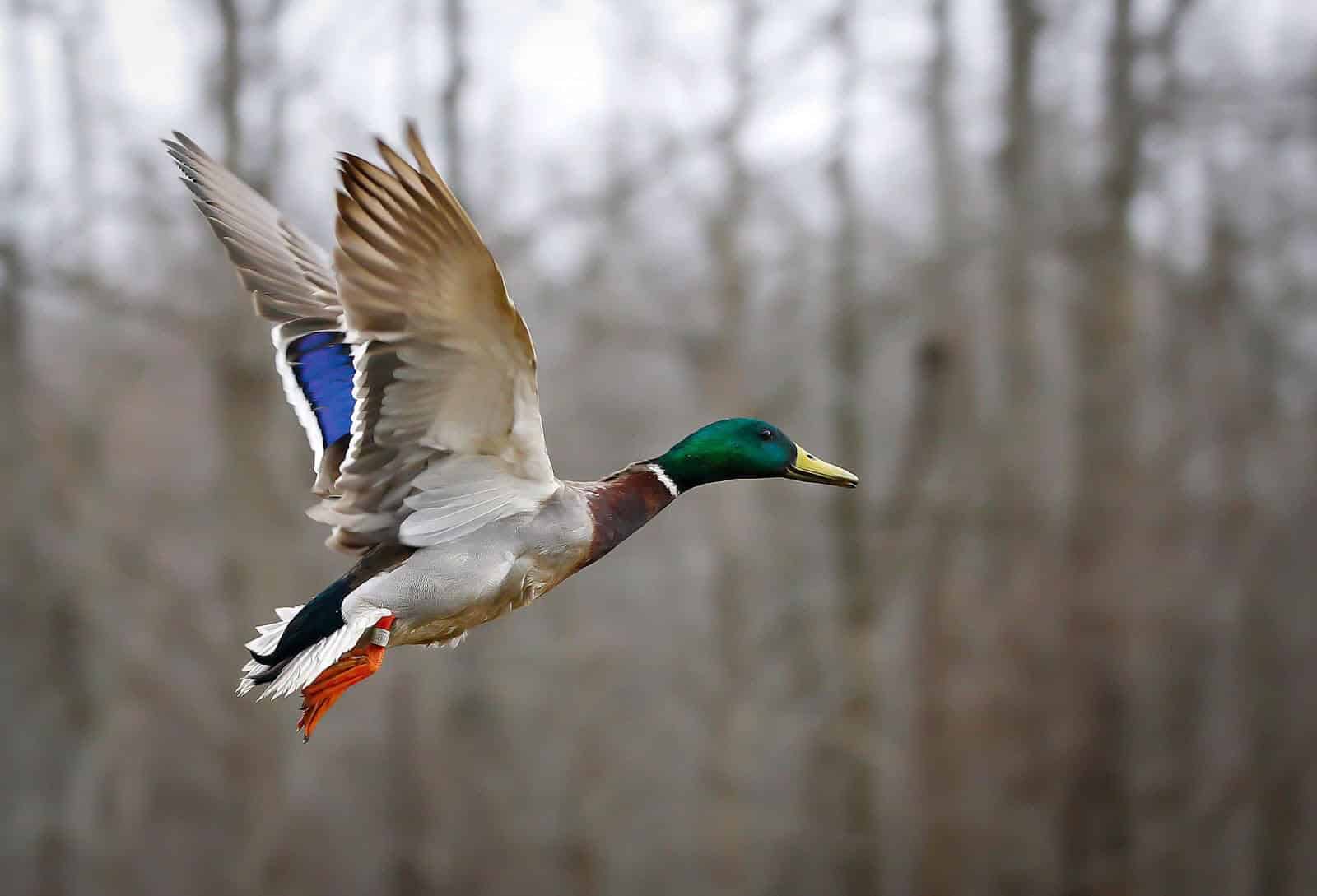
* Water levels and habitat conditions for public lands are available on the AGFC’s website, and the links are here: For both the AGFC’s greentree reservoirs and the moist-soil units, you can go to the “Waterfowl” page on the agfc.com website, and at the top of the page, just below the mallard drake in flight, are the links to the most up-to-date information. Click on the operations plans for either GTRs or moist-soil units at the top of that page for the updated figures. The numbers are updated on those pages only when new information is added from the field biologists; if there are no changes in levels or conditions, it is not updated.
Click HERE for All Waterfowl Dates and Limits
Recent News
Subscribe to Our Weekly Newsletter E-mails
Don’t miss another issue. Sign up now to receive the AGFC Wildlife Weekly Newsletter in your mailbox every Wednesday afternoon (Waterfowl Reports are published weekly during waterfowl season and periodically outside the season). Fishing Reports arrive on Thursdays. Fill in the following fields and hit submit. Thanks, and welcome!