Late January duck estimate falls short of 2025’s count
BY Jim Harris
ON 02-06-2026
LITTLE ROCK — Arkansas Game and Fish Commission biologists beat the winter storm for as much surveying as possible in the final January aerial waterfowl survey of the season. The four fliers were able to cover the Arkansas Delta, the Arkansas River Valley and most of southwest Arkansas before the snow-and-ice storm began arriving Jan. 23.
Conducting randomly selected, transect-based survey flights in the Delta, biologists estimated 337,479 mallards and 694,286 total ducks in the last weeks of January, while duck population estimates in the Arkansas River Valley totaled 25,542 ducks, including 12,075 mallards. Staff performing cruise surveys in southwest Arkansas reported an estimated 19,365 ducks, with 8,030 of those being mallards.
Arctic goose population estimates totaled 1,478,989 light (lesser snow and Ross’s) geese and 246,472 greater white-fronted geese in the Delta in late January.
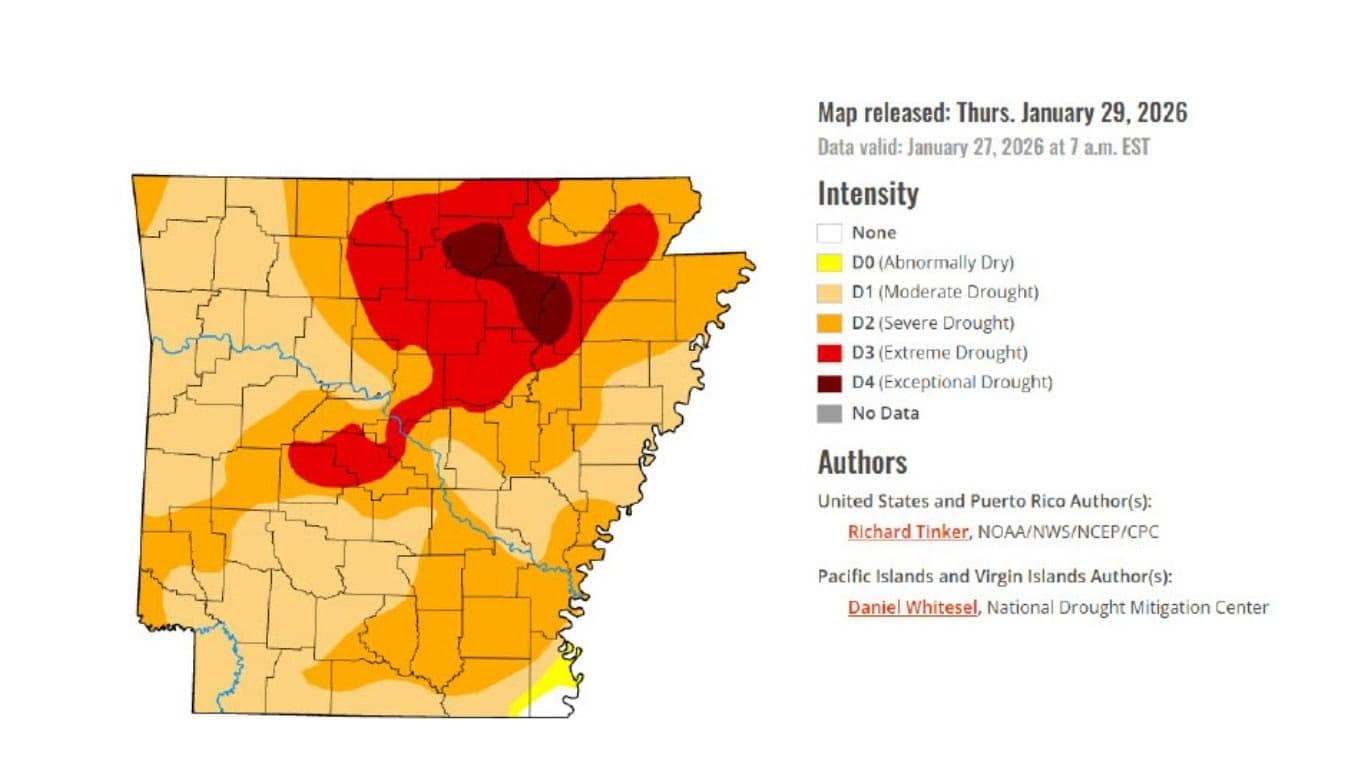
Brett Leach, the AGFC’s waterfowl program coordinator, said, “This duck season was characterized by dry conditions, ranking from the third driest on record in northeast Arkansas to the 22nd driest in the southeast portion of the state. January continued to see dry conditions and was classified as in even further drought, with 99 percent of the state in moderate to exceptional drought.”
With limited habitat most of the season because of the drought, the 2026 late-January Delta mallard population estimate was 121,205 mallards below the 2025 late-January estimate, and 343,221 mallards below the late-January long-term average (2010-2025). Total duck population estimates in the Delta were 99,456 birds below last year’s late-January count and 503,937 birds below the long-term average. Mallards typically account for about 55 percent of all ducks in the Delta during the late-January survey; however, this survey period showed mallards made up 49 percent of the total duck estimate.
During this period, biologists saw most mallards covering four Delta survey zones: the Bayou Meto-Lower Arkansas River, the Black River-Upper White, the L’Anguille River, and the Lower St. Francis River. Estimates were more than 50,000 mallards in each of the four survey zones. Total duck estimates also were greatest in those four survey zones, while Big Creek in east Arkansas accounted for just over 90,000 total ducks estimated.
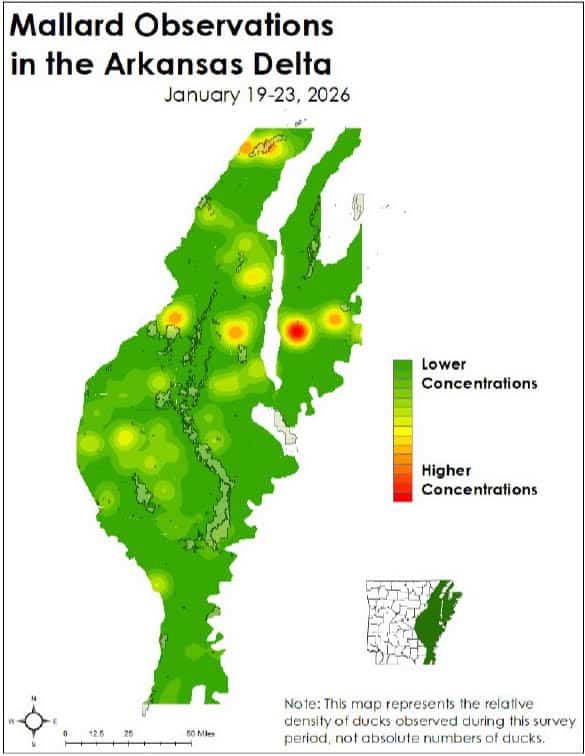
“Hot spot maps indicate several key duck concentration areas in the northern half of the Delta and fairly evenly distributed throughout the central portion of the Delta,” Leach noted in his report.
“Hot spot maps indicate several key duck concentration areas in the northern half of the Delta and fairly evenly distributed throughout the central portion of the Delta,” Leach noted in his report.
Mallard estimates in the Arkansas River Valley, he added, were 68 percent below the late-January long-term average, while total duck estimates were 54 percent below the long-term average. Mallards typically make up 61 percent of the total duck estimate in the River Valley in late January, but were 47 percent of this count. Two-thirds of the mallards estimated for the region were seen in the Point Remove-Plumerville survey zone, and total duck estimates also were strongest there.
Leach reported that southwest Arkansas’s duck numbers saw an uptick in bird numbers in this survey period compared to the two previous surveys for 2025-26. Mallard counts were 4 percent below the late-January long-term average, while total duck populations were 21 percent below average. Of the mallards recorded, the majority (75 percent) were concentrated along the Red River between U.S. Highway 82 and the Sulphur River.
Leach and AGFC Wildlife Management Division employees Tristan Bulice, William Guy and Derek Furr conducted the last aerial survey. See this current survey and information charges as well as this past December’s and the midwinter surveys at https://www.agfc.com/
####
CUTLINES:
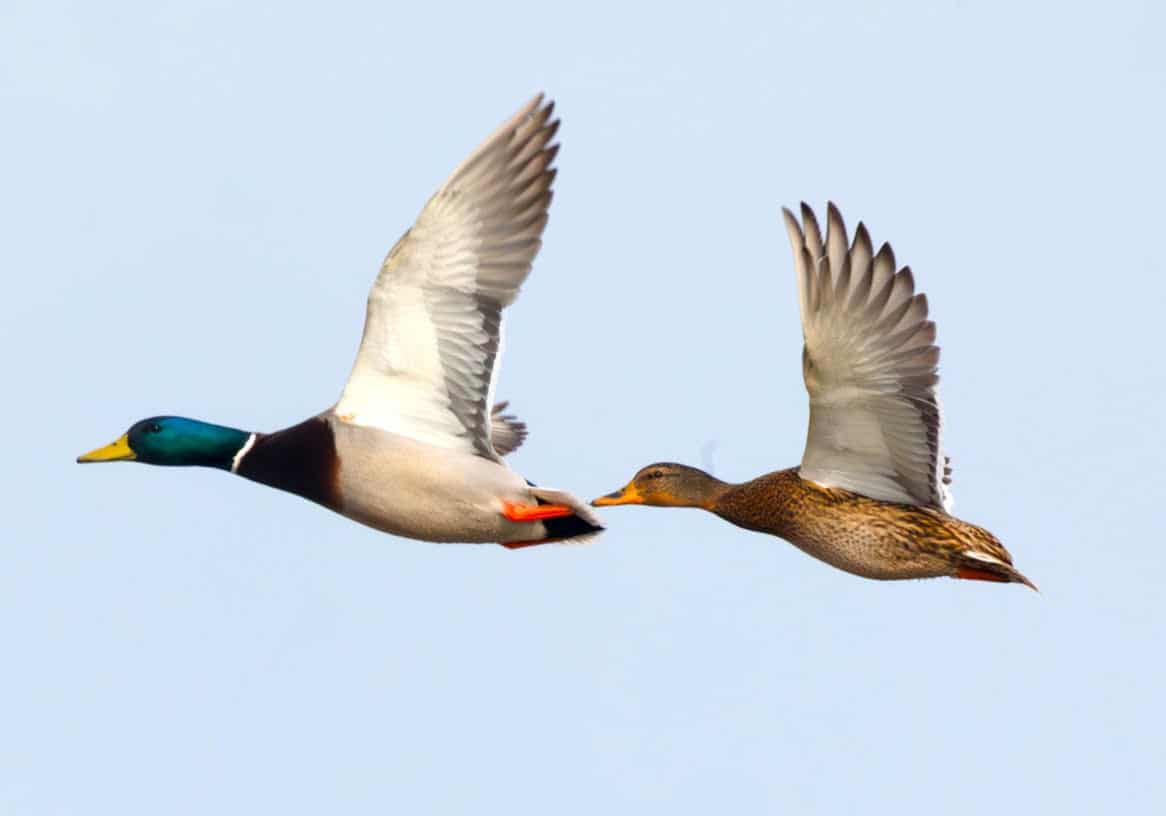
FLYING DUCKS
A mallard drake and hen are paired up and headed elsewhere from Holland Bottoms in this early 2025 photo by AGFC photographer Mike Wintroath.
DROUGHT MAP
The latest state drought map from the National Oceanic and Atmospheric Administration staff.
DENSITY MAP
Mallards were in four distinct areas of Arkansas during the late-January aerial survey, according to AGFC waterfowl biologists.
Recent News
Arkansas Wildlife Weekly Fishing Report
Jul. 23, 2026

Greenwood Native Hampton Receives Monty Carmikle Award
Jul. 22, 2026
Subscribe to Our Weekly Newsletter E-mails
Don’t miss another issue. Sign up now to receive the AGFC Wildlife Weekly Newsletter in your mailbox every Wednesday afternoon (Waterfowl Reports are published weekly during waterfowl season and periodically outside the season). Fishing Reports arrive on Thursdays. Fill in the following fields and hit submit. Thanks, and welcome!