Where there’s smoke, there’s habitat: Prescribed fire missing piece to many management puzzles
ON 02-04-2026
LITTLE ROCK — When snow and sleet blanket The Natural State, the benefits of fire are on full display for most Arkansans as they remain within reach of a warm fire. The rejuvenating effects of controlled fire are just as critical to the vibrance of many plant communities and wildlife habitat, but its use is often misunderstood, especially when used as a tool in early spring, when some birds are beginning to nest.
“The Southeast (U.S.) has a long history of naturally and culturally applied fire; except for a relatively brief period of fire suppression during European settlement, there’s always been fire in Arkansas,” Emily Roberts, Statewide Fire Program coordinator for the Arkansas Game and Fish Commission, said. “Arkansans are rekindling this fire history by applying prescribed fire to meet a lot of different objectives ranging from fuel reduction to wildlife habitat.”
Roberts says prescribed fire offers so many more benefits than clearing debris. On the right site, clearing the leaf litter and grass thatch to promote sunlight penetration can stimulate native grasses and wildflowers.
“We’ve been able to reclaim rare habitats like glades and prairies that host rare plants and wildlife by removing invasive vegetation and reintroducing fire,” Roberts said. “The native plants that are able to reestablish during restoration projects like this provide better cover and forage for wildlife. Think of how few species could use an eastern red cedar thicket versus how many could use a diverse glade with different plant species flowering and seeding all throughout the year.”
Time to Burn
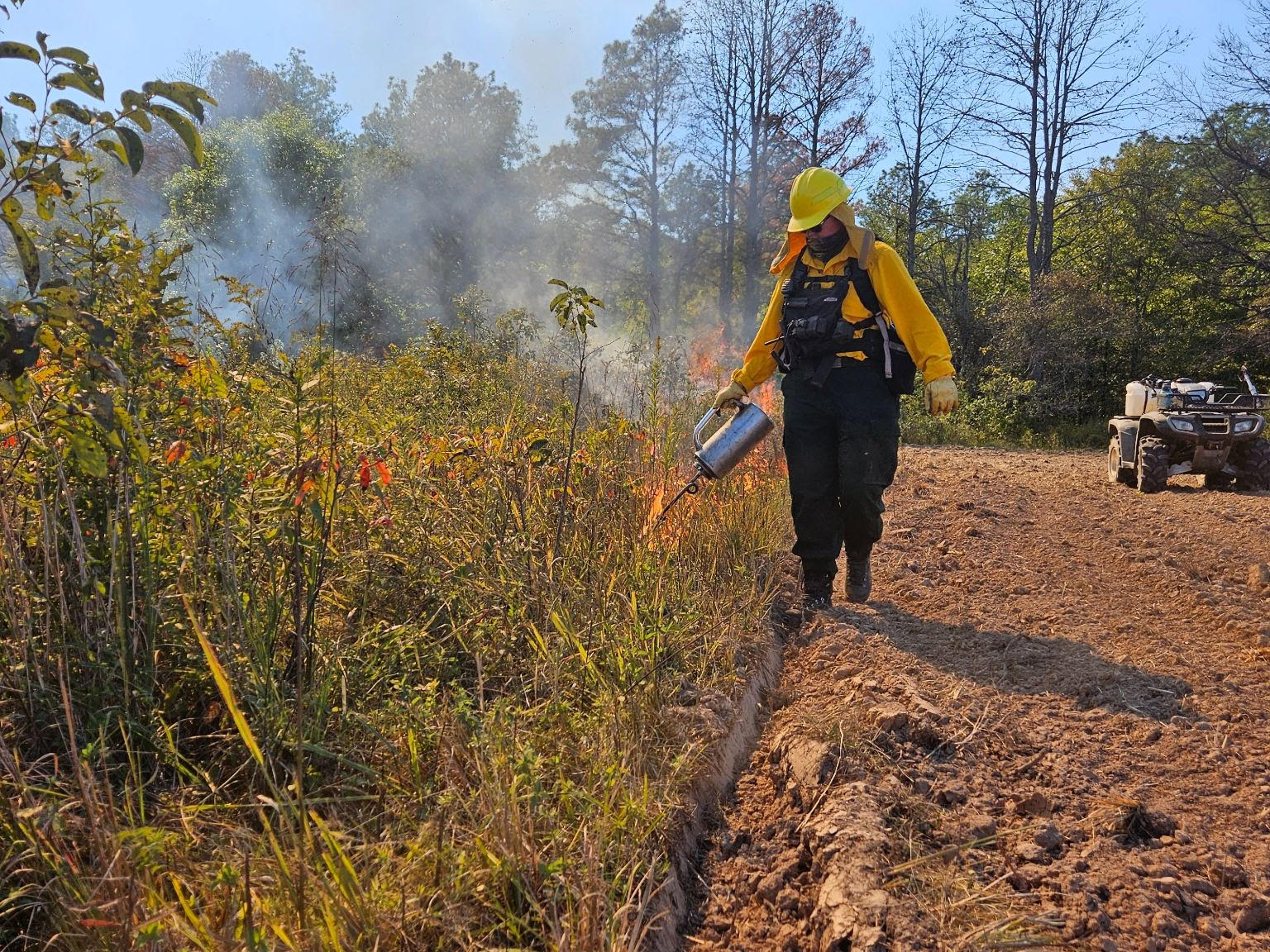
Prescribed fires are much more detailed than a person in a yellow jumpsuit walking across some land, setting brush ablaze. The site must be prepared with firebreaks to contain the fire, and managers need a specific set of conditions that involve relative humidity, temperature, wind speed and direction. All of these conditions are written into a burn plan based on the objective of the burn, topography, vegetation type and other factors.
“We’ve historically completed 70 percent of our burn acreage between February and April,” Roberts said. “We’ve recently begun to move some of that acreage to July-October to better mimic the natural fires caused by lightning strikes that our prairies, savannas and woodlands initially adapted to. Maintenance and fuel reduction burns conducted in high-quality, or remnant, habitats also are shifting to November through January, when possible, to avoid repeated effects on early flowering plants in spring.
Roberts says there simply isn’t enough time or manpower to complete all the prescribed burn acres in the AGFC’s annual goal during the short windows of time Arkansas weather typically allows. That means biologists and burn bosses must re-prioritize burn units each year.
“Each year our spring burn season provides us with a weather window during which we can conduct prescribed fire,” Roberts said. “This window can be especially important when the weather of the previous year didn’t give us many opportunities to burn, like in 2024 when we had burn bans in the fall and then above-average rainfall over the winter.”
Roberts says wildlife habitat managers also carefully consider how often a unit is burned.
“If a prairie or open savanna doesn’t see a burn within 2-3 years, we usually see woody plants take over, forming dense thickets and shading out the plants underneath, reducing the habitat’s ability to provide quality forage and cover for wildlife, including turkeys, quail and other ground-nesting birds,” Roberts said. “Our woodland systems are typically on a longer rotation of every 3-5 years.”
Managing turkey habitat is critical, and may occasionally require some April and May burns, but managers prioritize burn units during this time that have not been burned in the last three years and are not serving as high-quality habitat.
“We also heavily consider burn unit size and adjacent refuge habitat when planning these burns,” Roberts said.
Whole Truth
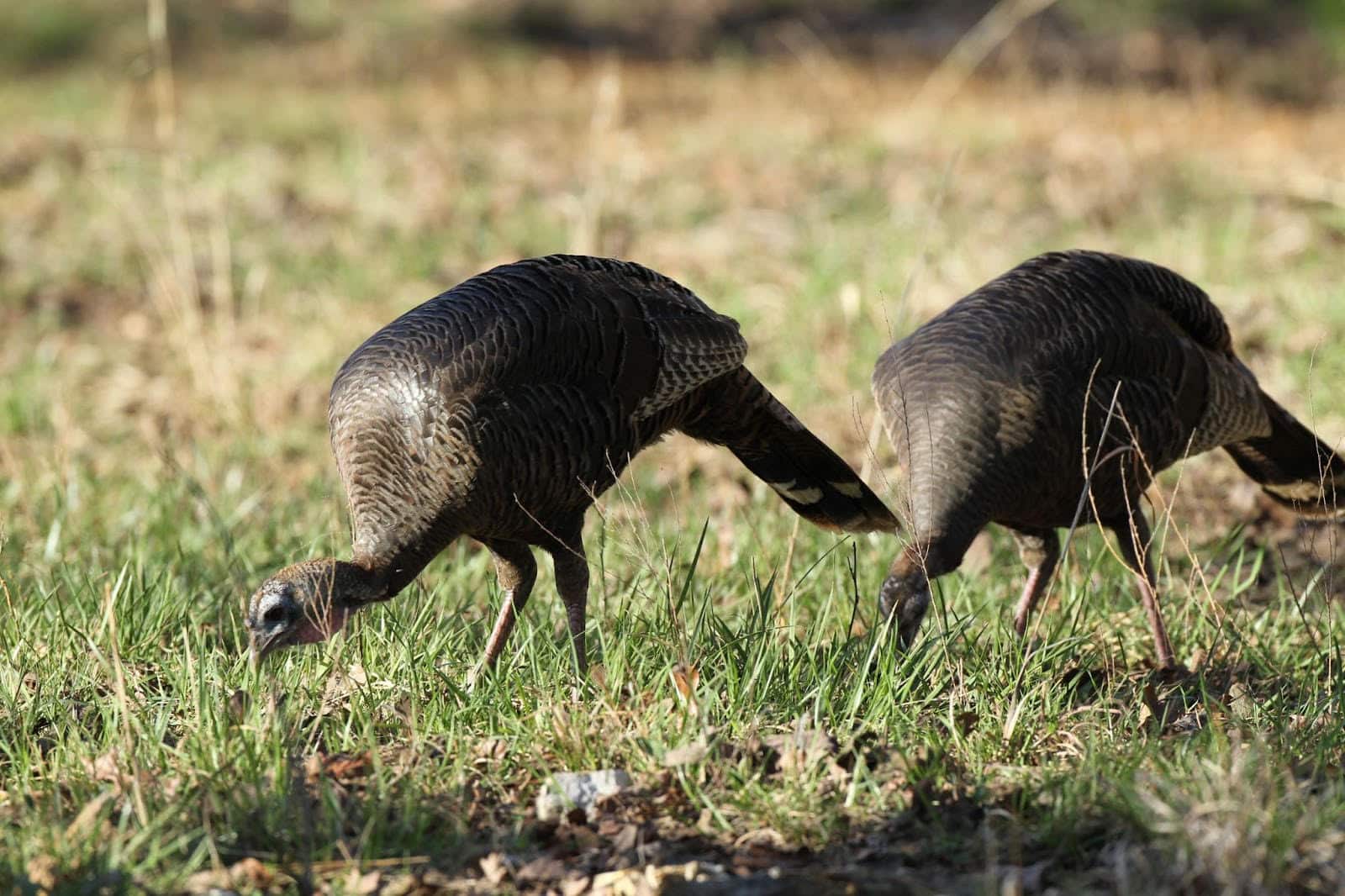
Despite all these efforts, a picture or two occasionally pops up showing a turkey nest sitting in an area where a prescribed fire had been conducted. David Moscicki, AGFC Turkey Program coordinator, says basing an argument on that snapshot is like watching a preview of a thriller movie and assuming that’s the whole story.
“What the picture doesn’t show are the hundreds of failed nests each year from hens being killed or chased by predators in an area too dense for her to see danger coming,” Moscicki said. “There’s no way to tell when the nest was abandoned. Jeremy Wood, the AGFC’s previous turkey program coordinator, completed his master’s thesis on this very subject. In his research, only 6 percent of the turkey nests he located and monitored would have been exposed to fire had the nest still been active at the time of the event. And, in those cases, the nests failed because of nest predators or hens abandoning them before any fire occurred. Zero nests marked during that research failed due to a burn. Some looked like it, but they had long been abandoned when the fire occurred.”
Moscicki adds that even if a hen pulls off a nest in these denser habitats, poult mortality is so high that nearly all of these young birds are essentially doomed from the start.
“In addition to needing cover, poults need nearby access to bugging grounds where broad-leaved annual plants attract insects that will provide the protein needed for fast growth,” Moscicki said. ”The further away these sorts of areas are from the nest site, the lower the chances poults have to survive to adulthood.”
Small Acres, Big Benefits
The AGFC and its partners have conducted prescribed burns on 18,000 to 30,000 acres of AGFC’s 380,000-plus acres of land each of the last five years. That’s less than 8 percent of the acreage in AGFC-owned wildlife management areas.
“Even in some of the most intensively managed areas, we’re only burning about 20 to 30 percent of the area in a given year,” Roberts said. “Gene Rush WMA, for example, has seen about 3,500 acres of prescribed fire per year in the last three years. The area is 17,652 acres, and local turkey hunters will tell you that it’s consistently one of the best turkey-hunting areas owned by the AGFC.”
Moscicki said, “The Camp Robinson Special Use Area and Stone Prairie complex is another example of prescribed fire helping transform and maintain prime wildlife habitat. During the last three years, we’ve averaged 1,457 acres of prescribed fire annually on these 5,018 acres. We see fantastic turkey harvest numbers there, with 11 of the 15 permit winners harvesting a bird the year before last. We’re also seeing the resurgence of wild quail on Stone Prairie, which is very exciting.”
Partners, Private and Public
The benefits of prescribed fire are taking root in Arkansas, but the AGFC cannot do it alone. The agency manages just under 12 percent of the state’s public land, making partnerships with organizations like the U.S. Forest Service and The Nature Conservancy vital. The real frontier, however, is private land, which makes up almost 90 percent of the state. Through the AGFC’s Private Lands Habitat Division and the Conservation Incentive Program, the AGFC has been able to foster prescribed burn associations. These groups help landowners join together to conduct prescribed burns on their land, playing a lead role in habitat management across Arkansas.
####
CUTLINES:
WALKING PLOWED EDGE
AGFC burn crew members maintain an open grassland on Little Bayou WMA. AGFC image.
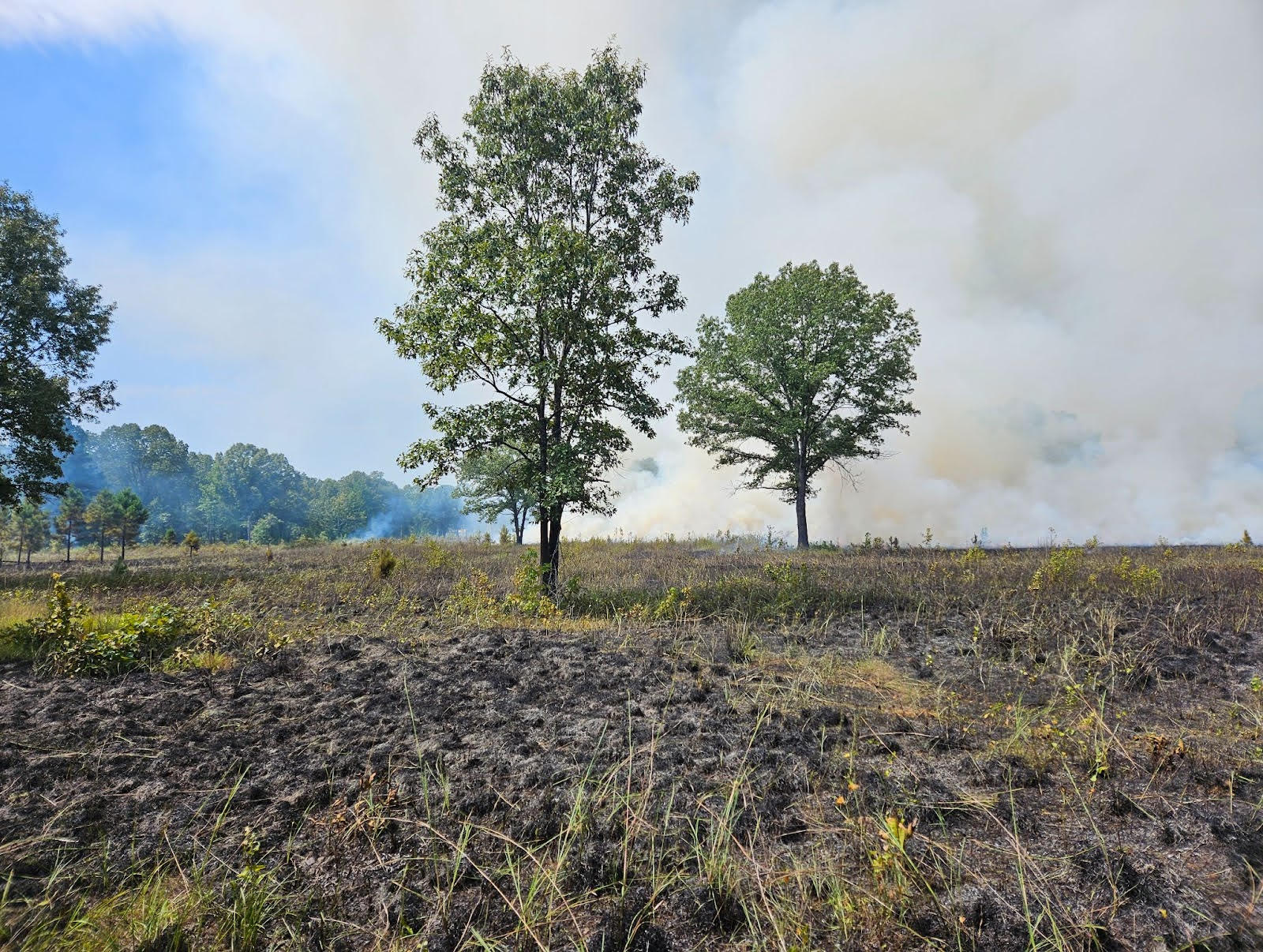
OPEN FIELD WITH TWO TREES
Growing season burns like this one at Stone Prairie WMA often leave patches of cover to promote wildlife use and regrowth at the same time. AGFC image.
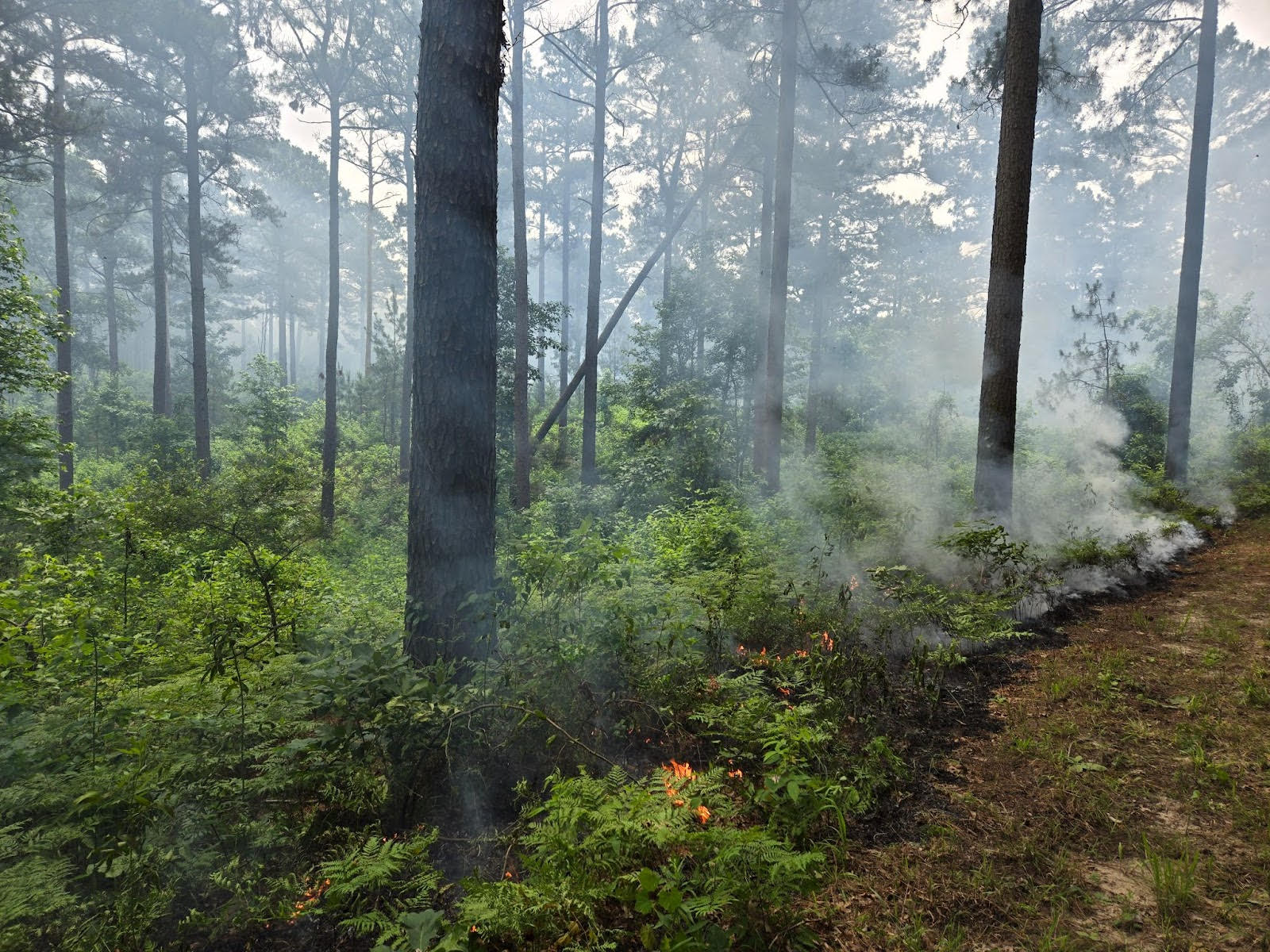
BURNING LINE IN DENSE FOREST
This unit of Nacatoch Ravines Natural Area WMA had fallen out of rotation and become too dense for good turkey nest sites before the Nature Conservancy burned it to reclaim the lost habitat. AGFC image.
TURKEY HENS
Turkey hens need a variety of cover types to produce a clutch of eggs, hatch them and raise the poults. AGFC image.
AERIAL OF FIRE VIDEO
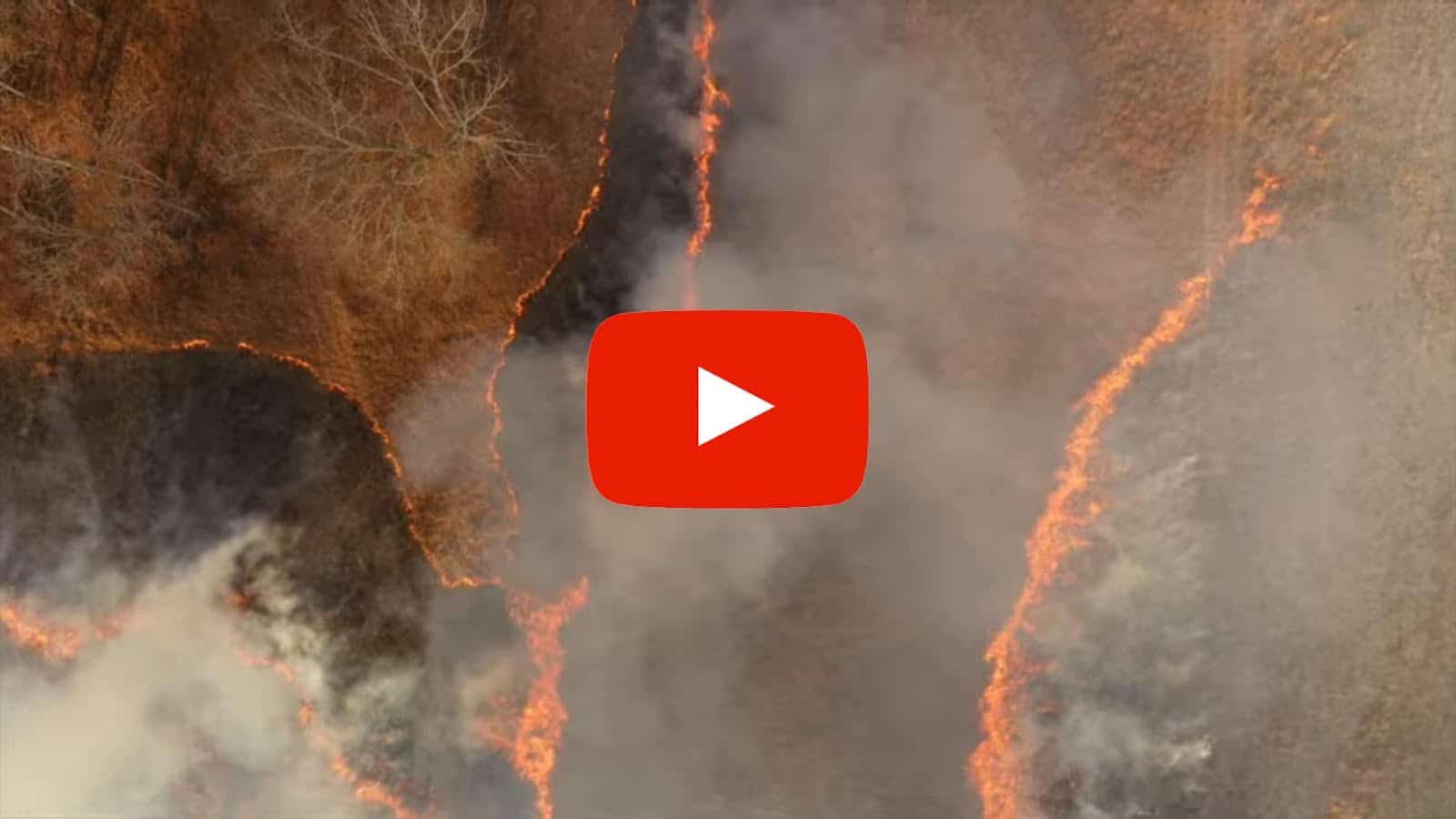
Click to watch a video of the importance of grassland restoration efforts by the AGFC and its partners. AGFC image.
Recent News
Subscribe to Our Weekly Newsletter E-mails
Don’t miss another issue. Sign up now to receive the AGFC Wildlife Weekly Newsletter in your mailbox every Wednesday afternoon (Waterfowl Reports are published weekly during waterfowl season and periodically outside the season). Fishing Reports arrive on Thursdays. Fill in the following fields and hit submit. Thanks, and welcome!