January Duck Numbers Likely Low: Midwinter Survey Coming; Anecdotal Reports Not Promising
BY Jim Harris
ON 01-14-2026
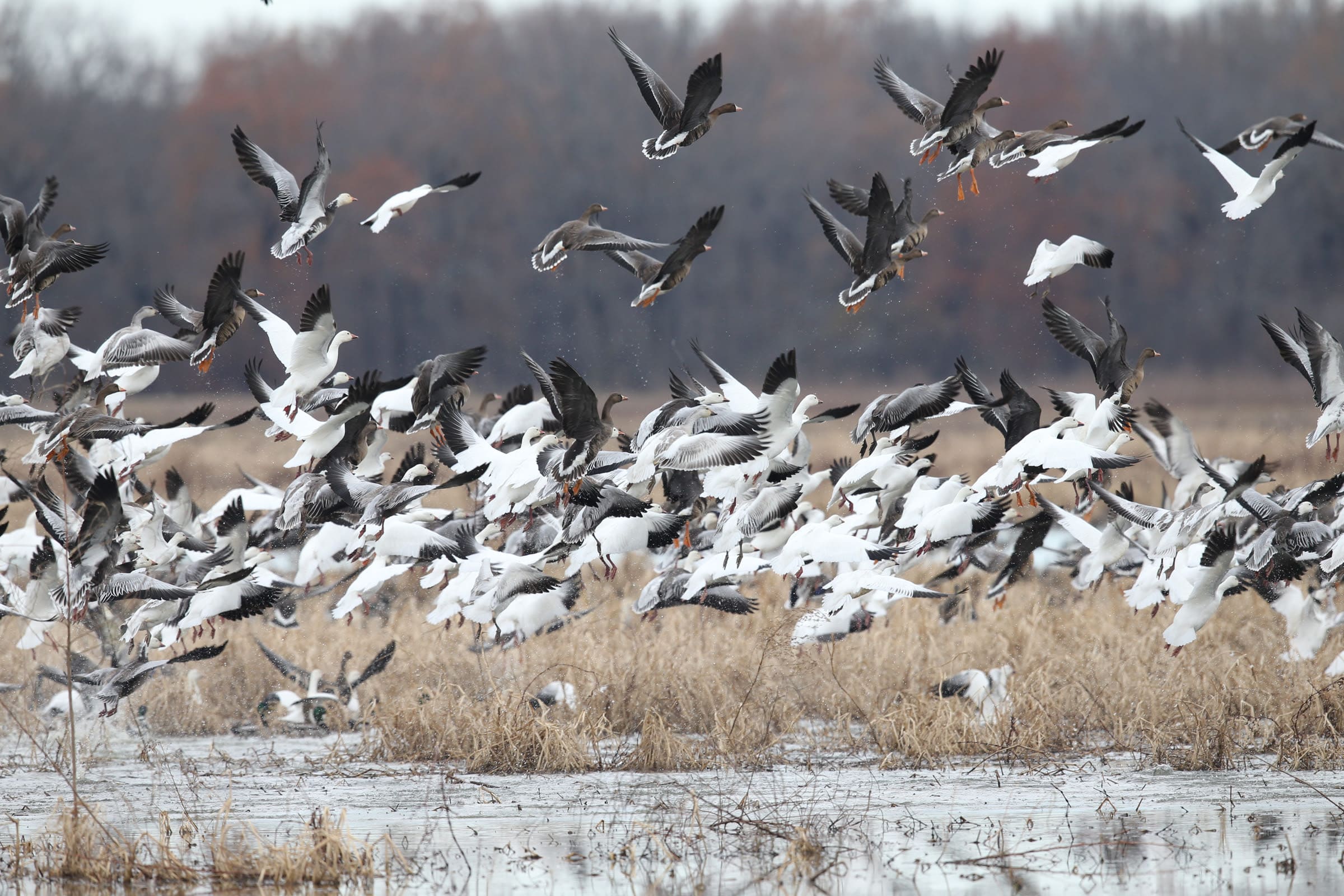
Arkansas Game and Fish Commission biologists were able to survey the waterfowl landscape last week with no significant delays (unlike December’s aerial survey attempts), and the results from those flights and counts for the annual midwinter survey will be out in the coming days.
But from anecdotal reports and speaking this week with Brett Leach, the AGFC’s waterfowl coordinator, the biologists may not have come across as many promising numbers of ducks as they saw before Christmas. Leach indicated that he had seen ducks from the air in the Plumerville area of the Arkansas River Valley when he took to the air, but the randomly selected transects that send him over an area to be counted, and that number imported into the algorithm for the waterfowl estimate, did not put him over near as many ducks as he’d hoped to see.
Keep a lookout later this week and click THIS LINK for the midwinter survey when it is released. We’ll also cover it in this newsletter next week.
Migration maps that indicate waterfowl observations based on biologist reports and other data showed a strong amount of ducks counted and/or estimated in eastern Arkansas near the Mississippi River a week ago, which fell in line with the aerial survey results that were released from late December.
That December estimate of mallards in the Delta by the aerial  count was nearly 500,000 birds, a big jump over the December 2024 estimate. Birds were observed in a few clumps around limited water sources, which introduced greater uncertainty into the overall estimate, which reported 1.4 million total ducks in the Delta. Arctic geese were estimated at more than 2 million.
Clear skies, a good wind and cooler temps seemed to help some waterfowlers over the weekend, we heard through the duck hunting grapevine. There are ducks being harvested in southeast Arkansas, according to anecdotal reports.
Arkansas hunters will be looking at highs in the 40s and lows at night in the 20s this weekend, which might lock up some areas of water and move ducks around to more open water areas overnight. By midweek of next week, though, we’ll be back to seeing daytime temps in the 50s to 60 degrees. The extended forecast does not show a drastic cold push into Arkansas before the end of the season Jan. 31.
There is snow in parts of Illinois, which might move the large amounts of birds (both ducks and geese) seen in the southern part of that state in the past week, according to reports from Ducks Unlimited, which spoke with bird observers, biologists and hunters in that region.
Numbers from Missouri’s conservation areas in the Bootheel are very low. Eagle Bluffs CA had 2,500 ducks counted on Jan. 4, Ted Shanks CA was reported a 3,000 total ducks on Dec. 29, and the best news was the 13,500 ducks estimated Jan. 11 at Ten Mile Pond CA, which is closest to the Mississippi River. Best duck harvest per hunter reported was the 1.72 ducks per hunter harvested at Ted Shanks (160 ducks for 93 hunters) and reported at the end of December; those total estimates were higher at Ten Mile Pond, where average duck harvest per hunter was 1.22 in its Jan 11 report. Missouri’s conservation area hunting is by permit only, and hunters report their harvest at the end of their hunt. Most of Missouri’s ducks by the end of December appeared to be in the upper middle and northern portions of the state, according to the Missouri Department of Conservation.
Meanwhile, Mississippi’s aerial survey in December estimated 92,947 mallards and 390,183 total ducks. Mississippi Department of Wildlife, Fisheries and Parks biologists were scheduled to survey the week of Jan. 5, like Arkansas’s biologists, but results were not available at press time.
The Louisiana Department of Wildlife and Fisheries in mid-December estimated 1.665 million total ducks in the state, with 13,000 being mallards, 244,000 gadwalls and 434,000 pintails, along with 209,000 green-winged teal and 198,000 blue-winged teal. Dabblers (scaup, ringnecked and canvasback) accounted for 361,000 of the estimate.


* Remember: Hunters have access to about 40 private, leased WRICE fields that the AGFC makes available for hunting through the Waterfowl Rice Incentive Conservation Enhancement program. As we noted last week, despite the dry conditions out on the landscape (10 of the WRICE fields weren’t up for bid this week because of a lack of water) hunters are definitely taking advantage of the opportunity like never before. Following up on last week’s 814 applications, there were 853 applicants this week for one of the 40 fields. A winning applicant may take up to three hunters along for all-day hunting at the WRICE field on Saturday and Sunday.
You just need to apply, on the agfc.com website (under “Get a License) or HERE, from 3 p.m. Thursday to midnight Sunday for the following weekend. Information is provided to the winning applicant on Mondays.
The AGFC’s permit application process is also open for the same period to land a spot in the wildlife management areas that require a permit to hunt. Those permits are for one day only, and hunting ends at noon. Youth and mobility-impaired blinds that are available in those WMAs also may be applied for from Thursday to Sunday, and that includes those youth and mobility-impaired blinds that are available on Tuesdays and Thursdays. The application fee for all permit applications is $5, online at agfc.com under “Get a License,” or by clicking HERE.
* Water levels and habitat conditions for public lands are available on the AGFC’s website, and the links are here: For both the AGFC’s greentree reservoirs and the moist-soil units, go to the “Waterfowl” page on the agfc.com website, and at the top of the page, just below the mallard drake in flight, are the links to the most up-to-date information. Click on the operations plans for either GTRs or moist-soil units at the top of that page for the updated figures. The numbers are updated on those pages only when new information is added from the field biologists; if there are no changes in levels or conditions, it is not updated.
Click HERE for All Waterfowl Dates and Limits
Recent News
Bat Week Offers Fresh Look at Misunderstood Mammals
Oct. 23, 2026

Arkansas Wildlife Weekly Fishing Report
Oct. 22, 2026
Subscribe to Our Weekly Newsletter E-mails
Don’t miss another issue. Sign up now to receive the AGFC Wildlife Weekly Newsletter in your mailbox every Wednesday afternoon (Waterfowl Reports are published weekly during waterfowl season and periodically outside the season). Fishing Reports arrive on Thursdays. Fill in the following fields and hit submit. Thanks, and welcome!